 书单
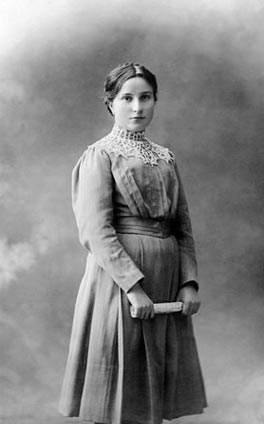
Maria Valtorta
- 生卒
- 1897 – 1961
- 国籍
- 意大利
照片:作者不详,公有领域,来自维基共享资源「Maria Valtorta2.jpg」(经缩小)。
生平与创作
这个词条暂时没有中文维基百科条目,下面是英文维基百科的内容(英文原文):
Maria Valtorta (14 March 1897 – 12 October 1961) was an Italian Catholic writer. A Franciscan tertiary and a lay member of the Servants of Mary, she reported that she had personal conversations with, and dictations from, Jesus Christ. She lived much of her life bedridden in Viareggio in Tuscany.
She is best known for her 5,000 page book The Poem of the Man-God, first published in 1956 and later titled The Gospel as Revealed to Me. The book was mostly written from 1944 to 1947 and was later translated into many languages. The book was placed on the Index Librorum Prohibitorum in 1959. In 2025, the Dicastery for the Doctrine of the Faith stated that her writings do not have a supernatural origin.
Various Biblical experts, historians, and scientists continue to support and criticize the book to this day. Her work has been compared to the writings of other Catholic authors claiming visions and yearly conferences have been held in Italy regarding her works.
Life
Early life and education
Valtorta was born in 1897 in Caserta, just north of Naples, in the Campania region of Italy, where her father's military regiment was stationed. She was the only child of parents who had both been born in the Lombardy region. Her father, Giuseppe, was in the Italian cavalry; her mother, Iside, was a teacher of French. In 1898 the family moved with his father's regiment to Faenza in Emilia-Romagna.
In 1900 her father's regiment moved to Milan, and the Valtorta family lived in Lombardy until his retirement about 12 years later. In 1907 the regiment moved to Voghera where Maria attended school and where the park "Gardens of Maria Valtorta" was inaugurated in her name in 2013.
In March 1909, just before her 12th birthday, Maria was sent to the Collegio Bianconi boarding school in Monza, just north of Milan. She studied there until March 1913 when just before her 16th birthday she had to leave Lombardy with her family for Florence, in Tuscany, due to her father's retirement from the military.
A decade in Florence
The First World War (1914–1918) started about a year after the Valtorta family had settled in Florence, and Italy entered the war in April 1915 on the side of the allies. In 1917 Valtorta volunteered as a Samaritan nurse, and for 18 months worked at a military hospital set up in Florence to care for the wounded soldiers who had returned from the war.
In March 1920, when she was 23 years old, Maria was walking on a street in Florence with her mother, when the young and delinquent son of her mother's dress maker (who was a fascist) struck her in the back with an iron bar and shouted a slogan against the wealthy and the bourgeoisie.
As a result of that injury, she was confined to bed for a few months and although she seemed to have recovered, the complications from that incident eventually confined her to bed for 28 years, from April 1934 to the end of her life.
Settling in Viareggio
In October 1924, when Maria was 27 years old, the Valtorta family moved from Florence to Viareggio, on the coast of the Mediterranean, as part of her father's final retirement. Over time, Maria's back injury affected her health in a progressive manner, and the last day she was able to leave her house on her own, given her high level of fatigue, was 4 January 1933. From 1 April 1934 she was no longer able to leave her bed at all.
In 1935, a year after she was bed-ridden, Martha Diciotti began to care for her. Valtorta's father died in 1935 and her mother in 1943, after which she was mostly alone in the house, with Martha Diciotti taking care of her to the end of her life. After 1941, except for a brief wartime evacuation to Sant'Andrea di Compito in Lucca, from April to December 1944, during the Second World War, Valtorta's life was spent in her bed at her house in Via Antonio Fratti in Viareggio.
In 1942, Valtorta was visited by Romualdo Migliorini, then a priest of the Servants of Mary and later a bishop. He became her spiritual director and suggested she write her autobiography, which she completed in 1943.
In her autobiography Valtorta wrote that both in Florence and Viareggio, she had deep religious experiences which transformed her life. In 1925, soon after moving to Viareggio, she was influenced by the autobiography of Thérèse de Lisieux, and made a vow to offer herself to God as a victim soul and to renew that offer each day.
From handwriting to publication
After completing her autobiography, in 1943 Valtorta began handwriting a series of what she claimed were messages from Jesus. From 1943 to 1947 Valtorta hand wrote about 15,000 pages in her notebooks, 10,000 of which were later selected as the basis of her main book The Poem of the Man-God, and the rest were gradually organized and published after her death.
Valtorta wrote her text in a series of 122 school notebooks purchased for her by her priest. She used a fountain pen to write in her numbered notebooks, but did not write the episodes for her Poem in chronological order, and instead included markings as to how they should be ordered after the book had been completed.
Valtorta was initially reluctant to have any of her handwritten notes published but in 1947 her spiritual director convinced her to agree to their publication. Nonetheless, the first four-volume edition of the book was published anonymously.
In February 1948, the priests Miglorini, Corrado Berti, and their prior Chechin had a private audience with Pope Pius XII about her work, which was reported on in the L'Osservatore Romano. Although Pius XII had expressed admiration for the book, in 1949 the Holy Office summoned Berti and ordered him not to publish it.
In 1952 Michele Pisani agreed to publish Valtorta's work and a contract was signed by Valtorta in October 1952. The first edition of her Poem was published in 1956 and the Pisani form has since continued to publish the rest of her writings,
以上文字摘自英文维基百科「Maria Valtorta」(有删节,去掉了参考文献等尾部小节),按 CC BY-SA 4.0 使用,作者为维基百科的各位编者。
资料卡
- 出生
- 1897 年 3 月 14 日
- 出生地
- 卡塞塔
- 逝世
- 1961 年 10 月 12 日
- 逝世地
- 维亚雷焦
- 职业
- 诗人、作家、神秘主义者、修女
- 使用语言
- 意大利语
- 领域
- 诗歌、神秘主义
- 代表作
- Il Poema dell’Uomo Dio
资料卡来自 Wikidata Q434595(CC0),众包数据,个别字段可能不全。
本站收录的作品(1)
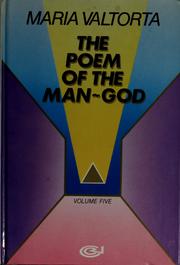
作品年表(2 本)
本站书库里署名Maria Valtorta的书(Open Library 上至少 10 人加过书架的才收),按首版年份排(有本站书页的用 Wikidata 记的首版年,其余用 Open Library 的);年份偶尔记成后来的版本或译本,以原书为准。全部作品见 Open Library。
- 1956Poema dell'Uomo-Dio书架 14
- 2011Daivamanuṣyant̲e snēhagīta书架 55