 书单
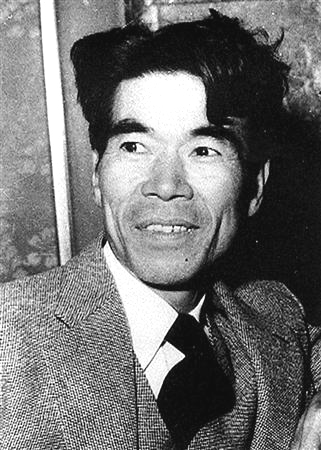
吉川英治
- 生卒
- 1892 – 1962
- 国籍
- 日本、大日本帝国
- 外文名
- Eiji Yoshikawa
照片:作者不详,公有领域,来自维基共享资源「Eiji Yoshikawa.jpg」(经缩小)。
生平与创作
吉川英治(日语:よしかわ えいじ、1892年8月11日—1962年9月7日)是一名日本小说家。
生平
本名吉川英次,生于神奈川县。主攻历史小说,以改编史书闻名。当作家之前曾从事过多种不同的职业,在发表《鸣门秘帖》后正式成为畅销作家。在1935年开始于报上每日连载其代表作《宫本武藏》,获得大众好评。战后亦有持续发表。
他的读者层很广,有“日本国民作家”的称号。
主要长篇代表作品
《鸣门秘帖》(1933年)
《宫本武藏》(1936年5月 - 39年9月)
《三国志》(1939年5月 - 1940年),在台湾由远流出版社代理并以《三国英雄传》作为书名出版,共10卷。
《新书太阁记》(1941年)
《新・平家物语》(1951年)
《私本太平记》(1959年4月 - 62年4月)
《源赖朝》(1940年12月 - 41年3月)
以上文字摘自维基百科「吉川英治」(去掉了参考文献等尾部小节),按 CC BY-SA 4.0 使用,作者为维基百科的各位编者。
中文维基百科的条目比较短,下面附上英文维基百科的内容(英文原文):
Eiji Yoshikawa (吉川 英治, Yoshikawa Eiji; Japanese pronunciation: [jo.ɕi̥.kaꜜ.wa | eꜜi.(d)ʑi, -ka.wa eꜜi-, -eꜜː.(d)ʑi], August 11, 1892 – September 7, 1962) was a Japanese historical novelist, best known for his revisions of classics and retelling of historical events through the lens of semi-biographical fiction books.
He was mainly influenced by classics such as The Tale of the Heike, Tale of Genji, Water Margin and Romance of the Three Kingdoms, many of which he retold in his own style. As an example, Yoshikawa took up Taiko's original manuscript in 15 volumes to retell it in a more accessible tone and reduce it to only two volumes.
His other books also serve similar purposes and, although most of his novels are not original works, he created a huge amount of work and a renewed interest in the past. He was awarded the Cultural Order of Merit in 1960 (the highest award for a man of letters in Japan), the Order of the Sacred Treasure and the Mainichi Art Award just before his death from lung cancer in 1962.
Early life
He was born Hidetsugu Yoshikawa (吉川英次, Yoshikawa Hidetsugu) in Kanagawa Prefecture, in what is now a part of Yokohama. Because of his father's failed business, he had to drop out of primary school to work. When he was 18, after a near-fatal accident working at the Yokohama docks, he moved to Tokyo and became an apprentice in a gold lacquer workshop. Around this time, he became interested in comic haiku. He joined a poetry society and started writing comic haiku under the pseudonym "Kijiro".
In 1914, with The Tale of Enoshima, he won first prize in a novel-writing contest sponsored by the publisher Kodansha. He joined the newspaper Maiyu Shimbun in 1921, and in the following year he began publishing serializations, starting with Life of Shinran.
He married Yasu Akazawa in 1923, the year of the Great Kantō earthquake. His experiences in the earthquake strengthened his resolve to make writing his career. In the following years he published stories in various periodicals published by Kodansha, who recognized him as their number one author. He used 19 pen names before settling on Eiji Yoshikawa. He first used this pen name with the serialization of Sword Trouble, Woman Trouble. His name became a household word after Secret Record of Naruto was serialized in the Osaka Mainichi Shimbun; from then on his writing became much more popular.
In the early 1930s, his writing became introspective, reflecting growing troubles in his personal life. But in 1935, with the serialization of Musashi, about famed swordsman Miyamoto Musashi, in the Asahi Shimbun, his writing settled firmly into the genre of historical adventure fiction.
Upon the outbreak of war with China in 1937 the Asahi Shimbun sent him into the field as a special correspondent. At this time he divorced Yasu Akazawa and married Fumiko Ikedo. In 1938, Yoshikawa joined the Pen butai (lit. "Pen corps"), a government organisation which consisted of authors who travelled the front during the Second Sino-Japanese War to write favourably of Japan's war efforts in China. During the war he continued writing novels, and became more influenced by Chinese culture. Among the works of this period are Taiko and his re-telling of the Romance of the Three Kingdoms.
At the end of the war he stopped writing for a while and settled down to enjoy a quiet retirement in Yoshino (present-day Oumeshi) on the outskirts of Tokyo, but by 1947 he had started writing again. His post-war works include New Tale of the Heike, published in the Asahi Weekly (1950), and A Private Record of the Pacific War (1958).
On September 7, 1962, he died from cancer-related complications.
English translations
Four of his books have been translated into English. They are:
Miyamoto Musashi, translated as Musashi
Translated by Charles S. Terry
(1981) Musashi. New York: HarperCollins. ISBN 978-0-06-859851-0 (cloth)
(1989) Musashi Book I: The Way of the Samurai. New York: Pocket Books. ISBN 0-671-73483-0 (paper)
(1989) Musashi Book II: The Art of War. New York: Pocket Books ISBN 978-0671677206 (paper)
以上文字摘自英文维基百科「Eiji Yoshikawa」(有删节,去掉了参考文献等尾部小节),按 CC BY-SA 4.0 使用,作者为维基百科的各位编者。
资料卡
- 母语名
- 吉川英治
- 笔名
- Кидзиро
- 出生
- 1892 年 8 月 11 日
- 出生地
- 横滨市
- 逝世
- 1962 年 9 月 7 日
- 逝世地
- 东京
- 职业
- 小说家、作家、编剧、新闻工作者、诗人
- 使用语言
- 日语
- 写作语言
- 日语
- 创作体裁
- 历史小说
- 代表作
- 宫本武藏
- 获奖
- 日本文化勋章(1960)、菊池宽奖(1953)、文化功劳者(1960)、朝日奖(1955)
资料卡来自 Wikidata Q221957(CC0),众包数据,个别字段可能不全。
本站收录的作品(1)
作品年表(3 本)
本站书库里署名吉川英治的书(Open Library 上至少 10 人加过书架的才收),按首版年份排(有本站书页的用 Wikidata 记的首版年,其余用 Open Library 的);年份偶尔记成后来的版本或译本,以原书为准。全部作品见 Open Library。