 书单
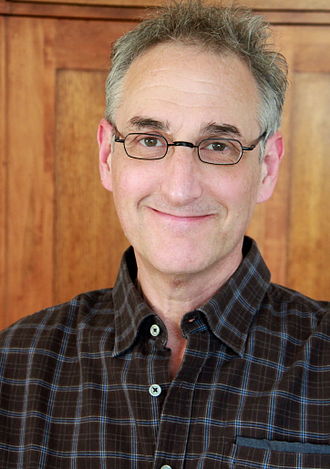
Steven Hassan
- 生卒
- 1954 –
- 国籍
- 美国
照片:Misia Landau,CC BY-SA 3.0,来自维基共享资源「Steven Hassan 2012 Headshot.jpg」(经缩小)。
生平与创作
这个词条暂时没有中文维基百科条目,下面是英文维基百科的内容(英文原文):
Steven Alan Hassan (pronounced ) is an American mental health professional and author who specializes in the area of cults. In his early career, in the late 1970s, he participated in deprogramming, but since then has advocated non-coercive exit counseling.
Hassan has written four books on the subject of mind control and is often described in the media as an expert on mind control and cults. Hassan's view of undue influence in such groups is echoed by some scholars with backgrounds in psychology and psychiatry. Some researchers in the sociology of religion are critical of his application of mind-control theory to what they characterise as new religious movements (NRM).
Hassan is a former member of the Unification Church. He founded Ex-Moon Inc. in 1979. In 1999, he founded the Freedom of Mind Resource Center.
Early life and Unification Church
Hassan was raised in a Jewish family in Queens, New York. At age 19, while pursuing a poetry degree at Queens College, Hassan was recruited into the Unification Church, and was a member for 2+1⁄2 years.
Hassan was involved in recruiting, fundraising, and political campaigning for the Unification Church of the United States. He was "a former Unification Church high official" and "a national leader of CARP" (Collegiate Association for the Research of Principles, the Unification Church's campus organization). He described living in communal housing and sleeping less than four hours a night. He said that he believed President Richard Nixon was the Archangel and that, during the Watergate scandal, he and other members of the church engaged in prayer and fasting to "prove their loyalty to the president". He surrendered his bank account to the Unification Church, and quit college and his job to work for the organization. Hassan said that "he was ready to kill or die for" Sun Myung Moon. His membership in the church concerned and confused his family.
In 1976, after working for two full days without sleep, Hassan fell asleep while driving, resulting in a serious automobile crash that required medical care. Hassan's parents hired "deprogrammers" who seized him from his sister's home and took him to an apartment. After five days of isolation and intensive deprogramming, Hassan became convinced that he had been "brainwashed" by the church. Feeling shame at his gullibility and guilt for his recruitment of others, he decided to "dedicate his life to studying cults and developing strategies to help their members escape." Hassan returned to his Jewish faith after leaving the Unification Church.
Career
Institutions
In 1999 Hassan founded the Freedom of Mind Resource Center. The center is registered as a domestic profit corporation in the Commonwealth of Massachusetts, and Hassan is its president and treasurer. Hassan posts dossiers on the site about organizations he has investigated or received complaints about.
Exit counseling
Hassan took part in some deprogrammings of others in the late 1970s, but has been critical of them since 1980 and has instead advocated exit counseling. Hassan's preferred approach, exit counseling, is also a form of family-initiated intervention, but distinguishes itself by allowing the subject to leave at any time and by adopting a non-violent, persuasive approach. In Combatting Cult Mind Control (1988), Hassan writes that although "the non-coercive approach will not work in every case, it has proved to be the option most families prefer. Forcible intervention can be kept as a last resort if all other attempts fail."
Michael Langone, a psychologist and advocate for exit counseling, questions Hassan's humanistic counseling approach in a 1995 work. According to Langone, Hassan's "Strategic Intervention Therapy" operates on the assumption that, deep down, all members of "mind control groups" want to get out of the group. In the context of family intervention, the "counselor knows best what the cultist really wants" approach contains the risk of the counselor "manipulating the cultist from point A ("I'll talk to you because my family requested it") to point B ("I want to leave the cult") while mistakenly believing that he is helping the cultist "grow"." For Langone, the fact that the counselor's assistance has in no way been sought by the subject casts further doubt on the ethical propriety of such manipulation.
Although exit counseling models like Hassan's emphasise the voluntary nature of the procedure, Shupe questioned in 2011 how willing the NRM member can be when: (i) they are not actually the client of the counselor (who has been hired by others), and (ii) they are not aware that the counselor's primary, preconceived purpose is to convince them to abandon their faith.
Education and writing
In 1985 Hassan completed a Master's degree in counseling psychology at Cambridge College. Hassan studied hypnosis and is a member of the International Society of Hypnosis. In Combatting Cult Mind Control he describes his own recruitment as the result of the unethical use of powerful psychological influence techniques by members of the church.
Hassan spent several years developing and promoting a model to evaluate cults and cult-like groups. In his third book, Freedom of Mind: Helping Loved Ones Leave Controlling People, Cults, and Beliefs (2012), Hassan presents Lifton's and Margaret Singer's models of evaluation alongside his own model represented by the acronym "BITE": control of Behavior, Information, Thought and Emotion.
以上文字摘自英文维基百科「Steven Hassan」(有删节,去掉了参考文献等尾部小节),按 CC BY-SA 4.0 使用,作者为维基百科的各位编者。
资料卡
- 出生
- 1954 年
- 出生地
- 美国
- 职业
- 心理治疗师、作家、心理保健顾问、教育学家
- 使用语言
- 英语
- 就读学校
- 剑桥学院、Fielding Graduate University
资料卡来自 Wikidata Q329289(CC0),众包数据,个别字段可能不全。
本站收录的作品(1)
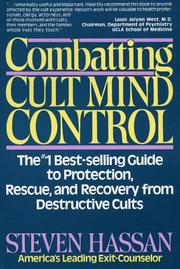
作品年表(2 本)
本站书库里署名Steven Hassan的书(Open Library 上至少 10 人加过书架的才收),按首版年份排(有本站书页的用 Wikidata 记的首版年,其余用 Open Library 的);年份偶尔记成后来的版本或译本,以原书为准。全部作品见 Open Library。
- 1988Combatting cult mind control书架 28
- 2019The Cult of Trump书架 13