 书单
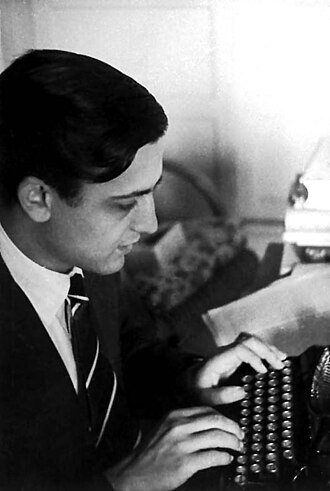
Luis Martín-Santos
- 生卒
- 1924 – 1964
- 国籍
- 西班牙
照片:Iranlit,CC BY-SA 4.0,来自维基共享资源「Martin santos.jpg」(经缩小)。
生平与创作
这个词条暂时没有中文维基百科条目,下面是英文维基百科的内容(英文原文):
Luis Martín-Santos Ribera (11 November 1924 – 21 January 1964) was a Spanish psychiatrist and author of Time of Silence, often cited as one of the most important Spanish novels of the twentieth century.
Biography
Martín-Santos was born in Larache, Morocco in 1924; son of the military doctor Leandro Martín-Santos. At five years of age his family moved to San Sebastián, where he would ultimately spend most of his life. He studied medicine in Salamanca and received his doctorate in psychiatry in Madrid, where he developed friendships with specialists such as Juan José López Ibor, Pedro Laín Entralgo, and Carlos Castilla del Pino. At the same time, he became interested in literature and became an habitué of the Café Gijón, where he met many prominent writers of his generation, including Ignacio Aldecoa, Rafael Sánchez Ferlosio, and Juan Benet. He also spent some time with Alfonso Sastre.
In 1951 he became director of the regional psychiatric hospital in San Sebastian and would remain there the rest of his life. He also participated in the so-called "Academia Errante," a debate forum created by restless Spanish intellectuals in the sixties who were searching for new forms of expression. He read Jean-Paul Sartre extensively and became interested in existentialism.
He married Rocío Laffón Bayo in 1953, with whom he had three children. In 1955, he wrote a thesis entitled Dilthey, Jaspers y la comprensión del enfermo mental (Dilthey, Jaspers, and Understanding the Mentally Ill), followed in 1964 by Libertad, temporalidad y transferencia en el psicoanálisis existencial (Freedom, Temporality, and Transference in Existential Psychoanalysis). He became a member of the Partido Socialista Obrero Español (PSOE), a clandestine organization, and was thrown into prison on three occasions. Later, he joined the Executive Committee and became friends with the socialist leader Enrique Múgica Herzog.
Near the end of 1960 he finished writing the novel Time of Silence, which was published in 1962 with twenty censored pages. An uncensored edition was not published until 1981. In this novel he makes innovative use of interior monologue, second-person narrative, indirect free style, stream of consciousness, and mythification; narrative devices that had been pioneered earlier by James Joyce.
His wife Rocío died, possibly a suicide, in 1963. That same year, he began writing Tiempo de destrucción (Time of Destruction), but it was left incomplete when he died in a traffic accident in Vitoria, Spain on 21 January 1964. It was published, as he left it, in 1975. The same publisher had also released a posthumous collection of his short stories, entitled Apólogos, in 1970.
Time of Silence was the basis for the film Tiempo de silencio, directed by Vicente Aranda.
Works
Dilthey, Jaspers y la comprensión del enfermo mental 1955
Libertad, temporalidad y transferencia en el psicoanálisis existencial 1964
Tiempo de silencio
Tiempo de destrucción
Apólogos 1970
以上文字摘自英文维基百科「Luis Martín-Santos」(去掉了参考文献等尾部小节),按 CC BY-SA 4.0 使用,作者为维基百科的各位编者。
资料卡
- 母语名
- Luis Martin-Santos Ribera
- 本名
- Luis Martin Ribera
- 笔名
- Luis
- 出生
- 1924 年 11 月 11 日
- 出生地
- 拉腊什
- 逝世
- 1964 年 1 月 21 日
- 逝世地
- 维多利亚-加斯泰斯
- 职业
- 精神科医师、作家、小说家、新闻工作者、诗人、医师作家、医生
- 使用语言
- 西班牙语
- 写作语言
- 西班牙语
- 就读学校
- 萨拉曼卡大学
- 代表作
- Tiempo de silencio
资料卡来自 Wikidata Q1381427(CC0),众包数据,个别字段可能不全。
本站收录的作品(1)
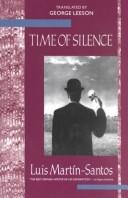
作品年表(1 本)
本站书库里署名Luis Martín-Santos的书(Open Library 上至少 10 人加过书架的才收),按首版年份排(有本站书页的用 Wikidata 记的首版年,其余用 Open Library 的);年份偶尔记成后来的版本或译本,以原书为准。全部作品见 Open Library。
- 1961Tiempo de silencio书架 15