书单
Bruce Pascoe
- 生卒
- 1947 –
- 国籍
- 澳大利亚
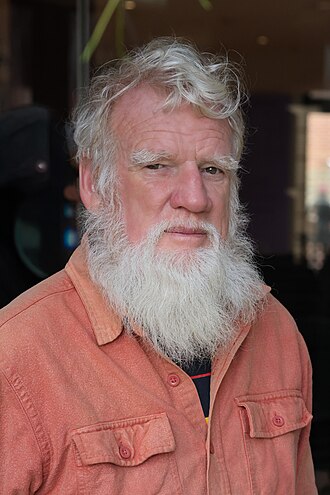
照片:Yu Chu Chin,CC BY-SA 4.0,来自维基共享资源「Bruce Pascoe at The European Mind book launch, Adelaide, 6 October 2026 (028A3780).jpg」(经缩小)。
生平与创作
这个词条暂时没有中文维基百科条目,下面是英文维基百科的内容(英文原文):
Bruce Pascoe (born 1947) is an Australian writer of literary fiction, non-fiction, poetry, essays and children's literature. As well as his own name, Pascoe has written under the pen names Murray Gray and Leopold Glass. Pascoe identifies as Aboriginal. Since August 2020, he has been Enterprise Professor in Indigenous Agriculture at the University of Melbourne.
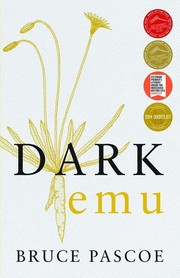
Pascoe is best known for his work Dark Emu: Black Seeds: Agriculture or Accident? (2014), in which he argues that traditional Aboriginal and Torres Strait Islander peoples engaged in agriculture, engineering and permanent building construction, and that their practices provide possible models for future sustainable development in Australia.
Early life and education
Pascoe was born in Richmond, Victoria in 1947. He grew up in a poor working-class family; his father, Alf, was a carpenter, and his mother, Gloria Pascoe, went on to win a gold medal in lawn bowls at the 1980 Arnhem Paralympics. Pascoe spent his early years on King Island where his father worked at the tungsten mine. His family moved to Mornington, Victoria, when he was 10 years old, and then two years later moved to the Melbourne suburb of Fawkner. He attended the local state school before completing his secondary education at University High School, where his sister had won an academic scholarship. Pascoe went on to attend the University of Melbourne, initially studying commerce but then transferring to Melbourne State College. After graduating with a Bachelor of Education, he was posted to a small township near Shepparton. He later taught at Bairnsdale for nine years.
Career
While on leave from his teaching career, Pascoe bought a 300-hectare (740-acre) mixed farming property and occasionally worked as an abalone fisherman. In his spare time he began writing short stories, poetry and newspaper articles.
In 1982 he moved back to Melbourne and sought to publish a journal of short stories. He came into conflict with existing publishers and instead decided to form his own company, raising A$10,000 in capital with his friend Lorraine Phelan. He ran Pascoe Publishing and Seaglass Books with his wife, Lyn Harwood.
From 1982 to 1998 Pascoe edited and published a new quarterly magazine of short fiction, Australian Short Stories, which published all forms of short stories by both established and new writers, including Helen Garner, Gillian Mears and Tim Winton. The first issue came close to selling out its initial print run of 20,000.
The main character in his 1988 novel Fox is a fugitive, searching for his Aboriginal identity and home. The book deals with issues such as Aboriginal deaths in custody, discrimination and land rights, as well as blending Aboriginal traditions with contemporary life and education.
Convincing Ground: Learning to Fall in Love with Your Country (2007), whose title is drawn from the Convincing Ground massacre, examines historical documents and eyewitness accounts of incidents in Australian history and ties them in with the "ongoing debates about identity, dispossession, memory and community". It is described in the publisher's blurb as a book "for all Australians, as an antidote to the great Australian inability to deal respectfully with the nation's constructed Indigenous past".
Pascoe featured in the award-winning documentary series which aired on SBS Television in 2008, First Australians, has been Director of Commonwealth Australian Studies project for the Commonwealth Schools Commission, and has worked extensively on preserving the Wathaurong language, producing a dictionary of the language.
Fog a Dox, a story for young adults, won the Prime Minister's Literary Awards in 2013 and was shortlisted for the 2013 Western Australian Premier's Book Awards (Young Adult category) and the 2013 Deadly Awards (Published Book of the Year category). Judges for the PM's Award commented that "The author's Aboriginality shines through but he wears it lightly...", in a story which incorporates Indigenous cultural knowledge.
Dark Emu (2014)
Dark Emu: Black Seeds: Agriculture or Accident?, first published in 2014, challenges the claim that pre-colonial Australian Aboriginal peoples were only hunter-gatherers. Pascoe argues that his examination of early settler accounts and other sources provides evidence of agriculture, aquaculture, engineering and villages of permanent housing in traditional Aboriginal societies. The book won Book of the Year at the NSW Premier's Literary Awards, and was widely praised for popularising past research on the sophistication of Aboriginal economies. The book also attracted controversy. A favourable review of its cultural implications in the academic online magazine The Conversation touched off a debate there about Pascoe's use of his historical sources. A second edition, entitled Dark Emu: Aboriginal Australia and the Birth of Agriculture was published in mid-2018, and a version of the book for younger readers, entitled Young Dark Emu: A Truer History, was published in 2019. The 2019 version was shortlisted for the 2020 Adelaide Festival Awards for Literature in the Children's Literature Award section.
The success of Dark Emu and Young Dark Emu prompted a book-length critique by Peter Sutton and Keryn Walshe who argue that Pascoe selectively quotes sources and misinterprets archaeological and anthropological evidence to draw conclusions which give a misleading view of Aboriginal societies.
In October 2019 it was announced that a documentary film of Dark Emu would be made for television by Blackfella Films, co-written by Pascoe with Jacob Hickey, directed by Erica Glynn and produced by Darren Dale and Belinda Mravicic.
Later work and other roles
In September 2015, in a collaboration with Poets House in New York, a recording of six First Nations Australia Writers Network members reading their work was presented at a special event, which was recorded. Pascoe was one of the readers, along with Jeanine Leane, Dub Leffler, Melissa Lucashenko, Jared Thomas and Ellen van Neerven.
以上文字摘自英文维基百科「Bruce Pascoe」(有删节,去掉了参考文献等尾部小节),按 CC BY-SA 4.0 使用,作者为维基百科的各位编者。
资料卡
- 出生
- 1947 年
- 出生地
- 里士满
- 职业
- 作家
- 就读学校
- 墨尔本大学、墨尔本中学
资料卡来自 Wikidata Q17385690(CC0),众包数据,个别字段可能不全。