书单
Francis Barrett
- 生卒
- 1774 – 1830
- 国籍
- 大不列颠王国
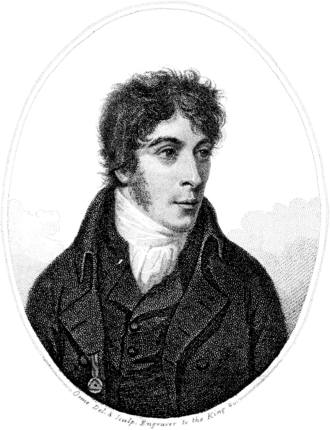
照片:作者不详,公有领域,来自维基共享资源「Francis Barrett author picture.png」(经缩小)。
生平与创作
这个词条暂时没有中文维基百科条目,下面是英文维基百科的内容(英文原文):
Francis Barrett (18 December 1774 - 1830) was an English occultist.
Background
Barrett, an Englishman, claimed himself to be a student of chemistry, metaphysics and natural occult philosophy. He was known to be an extreme eccentric who gave lessons in the magical arts in his apartment and fastidiously translated Kabbalistic and other ancient texts into English, such as von Welling's work, Philosophy of The Universe circa 1735, from German (1801). According to his biographer Francis X. King, Barrett's parents were humble folk married in the parish of St. Martin's in the Fields on 29 September 1772.
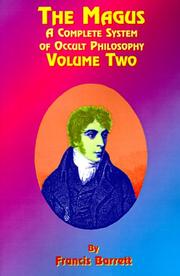
The Magus
Barrett was enthusiastic about reviving interest in the occult arts, and published a magical textbook called The Magus. It was a compilation, almost entirely consisting of selections from Cornelius Agrippa's Three Books of Occult Philosophy, the Fourth Book of Occult Philosophy attributed to Agrippa, and Robert Turner's 1655 translation of the Heptameron of Peter of Abano. Barrett made modifications and modernized spelling and syntax.
The Magus dealt with the natural magic of herbs and stones, magnetism, talismanic magic, alchemy, numerology, the elements, and biographies of famous adepts from history.
The Magus also served as an advertising tool. In it Barrett sought interested people wanting to help form his magic circle. An advertisement in The Magus (Vol. 2, p. 140) refers to an otherwise unknown school founded by Barrett.
According to the advertisement:
The Author of this Work respectfully informs those that are curious in the studies of Art and Nature, especially of Natural and Occult Philosophy, Chemistry, Astrology, etc., etc., that, having been indefatigable in his researches in those sublime Sciences; of which he has treated at large in this book, that he gives private instructions and lectures upon any of the above-mentioned Sciences; in the course of which he will discover many curious and rare experiments.
Those who become Students will be initiated into the choicest operations of Natural Philosophy, Natural Magic, the Cabbala, Chemistry, the Talismanic Arts, Hermetic Philosophy, Astrology, Physiognomy, etc., etc. Likewise they will acquire the knowledge of the Rites, Mysteries, Ceremonies and Principles of the ancient Philosophers, Magi, Cabbalists, and Adepts, etc.
The Purpose of this school (which will consist of no greater number than Twelve Students) being to investigate the hidden treasures of Nature; to bring the Mind to a contemplation of the Eternal Wisdom; to promote the discovery of whatever may conduce to the perfection of Man; the alleviating the miseries and calamities of this life, both in respect of ourselves and others; the study of morality and religion here, in order to secure to ourselves felicity hereafter; and, finally, the promulgation of whatever may conduce to the general happiness and welfare of mankind.
Views
When writing about witches Barrett stated that he did not believe that their power to torment or kill by enchantment, touch or by using a wax effigy came from Satan. He claimed if the Devil wanted to kill a man guilty of deadly sin, he did not need a witch as an intermediary.
Barrett's belief in magical power might be summed up thus:
The magical power is in the inward or inner man. A certain proportion of the inner man longs for the external in all things. When the person is in the appropriate disposition an appropriate connection between man and object can be attained.
以上文字摘自英文维基百科「Francis Barrett (occultist)」(去掉了参考文献等尾部小节),按 CC BY-SA 4.0 使用,作者为维基百科的各位编者。
资料卡
- 出生
- 1774 年 12 月 18 日
- 出生地
- 马里波恩
- 逝世
- 1830 年
- 逝世地
- 伦敦
- 职业
- 作家
- 使用语言
- 英语
资料卡来自 Wikidata Q463195(CC0),众包数据,个别字段可能不全。