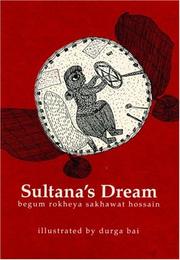
书单
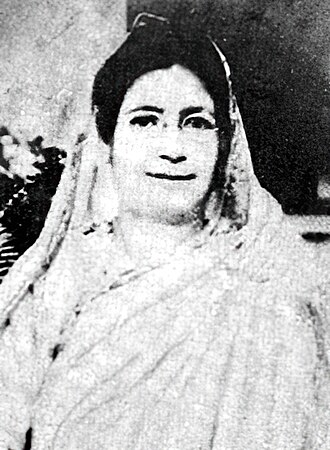
萝琪雅·萨哈瓦·侯赛因
- 生卒
- 1880 – 1932
- 国籍
- 英属印度
- 外文名
- Rokeya Sakhawat Hossain
照片:作者不详,公有领域,来自维基共享资源「Begum Rokeya.jpg」(经缩小)。
生平与创作
萝琪雅·萨哈瓦特·侯赛因(孟加拉语:রোকেয়া সাখাওয়াত হোসেন;英语:Rokeya Sakhawat Hossain;1880年12月9日—1932年12月9日)是一位孟加拉女权主义思想家、作家、教育家和政治活动家。
萝琪雅·萨哈瓦特·侯赛因认为女性缺乏教育是导致其经济地位低下的原因 ,并在加尔各答建立了第一所穆斯林女子学校。 她还写过一部以女儿国为背景的女权主义科幻中篇小说 。
以上文字摘自维基百科「蘿琪雅·薩哈瓦特·侯賽因」(去掉了参考文献等尾部小节),按 CC BY-SA 4.0 使用,作者为维基百科的各位编者。
中文维基百科的条目比较短,下面附上英文维基百科的内容(英文原文):
Rokeya Sakhawat Hossain (9 December 1880 – 9 December 1932), commonly known as Begum Rokeya, was a prominent Bengali feminist thinker, writer, educator and political activist from British India. She is widely regarded as a pioneer of feminism in Bangladesh and India.
She advocated for men and women to be treated equally as rational beings, noting that the lack of education for women was responsible for their inferior economic position. Her major works include Matichur (A String of Sweet Pearls, 1904 and 1922), a two-volume collection of essays articulating her feminist ideas; Sultana's Dream (1905), a feminist science fiction novella set in Ladyland, a realm governed by women; Padmarag (Essence of the Lotus, 1924), portraying the struggles of Bengali wives; and Abarodhbasini (The Confined Women, 1931), a bold critique of the extreme purdah system that imperiled women's freedom and self-worth.
Rokeya held education to be the central precondition of women's liberation, establishing the first school aimed primarily at Muslim girls in Kolkata. She is said to have gone from house to house persuading the parents to send their girls to her school in Nisha. Until her death, she ran the school despite facing hostile criticism and social obstacles.
In 1916, she founded the Muslim Women's Association, an organization that fought for women's education and employment. In 1926, Rokeya presided over the Bengal Women's Education Conference convened in Kolkata, the first significant attempt to bring women together in support of women's education rights. She was engaged in debates and conferences regarding the advancement of women until her death on 9 December 1932, shortly after presiding over a session during the Indian Women's Conference.
Bangladesh observes Rokeya Day on 9 December every year to commemorate her works and legacy. On that day, the Bangladesh government also confers the Begum Rokeya Padak on individual women for their exceptional achievement. In 2004, Rokeya was ranked number 6 in the BBC's poll of the Greatest Bengali of all time.
Background and family
Rokeya was born in 1880 during the British Raj, to an aristocratic mixed Persian-Bengali Muslim family in the village of Pairaband, Rangpur, Bengal Presidency (now Rangpur, Bangladesh). Her ancestors had migrated from Tabriz in Iran to make their fortune in India and had established a zamindari in Rangpur, they had served in the military and judiciary during the Mughal regime. Her father, Zahiruddin Muhammad Abu Ali Haidar Saber, was a zamindar and a multilingual intellectual. He married four times; his marriage to Rahatunnessa Sabera Chaudhurani resulted in the birth of Rokeya, who had two sisters and three brothers, one of whom died in childhood. Rokeya's eldest brother Ibrahim Saber, and second brother Khalilur Rahman, her immediate elder sister Karimunnesa Khanam Chaudhurani, and Humaira Khatun (youngest sister). Saber and Karimunnesa both had a major influence on her life. Karimunnesa wanted to study Bengali, the language of the majority of Bengali people, against her family's wish, who preferred to use Arabic and Persian as the media of education and communication. Ibrahim taught English and Bengali to Rokeya and Karimunnesa. Karimunnesa married at the age of fourteen and later became a poetess. Both of her sons, Abdul Karim Ghaznavi and Abdul Halim Ghaznavi, became politicians and occupied ministerial portfolios under British authorities.
Marriage
Rokeya married at the age of 16, in 1898, to 38-year-old Khan Bahadur Sakhawat Hossain. He was an Urdu-speaking deputy magistrate of Bhagalpur (a present-day district of Bihar state). He earned his bachelor of agriculture degree from England and was a member of the Royal Agricultural Society of England. He married Rokeya after the death of his first wife. As a liberal, he encouraged Rokeya to continue learning Bengali and English. He also encouraged her to write, and on his advice, she adopted Bengali as the principal language for her literary works.
以上文字摘自英文维基百科「Begum Rokeya」(有删节,去掉了参考文献等尾部小节),按 CC BY-SA 4.0 使用,作者为维基百科的各位编者。
资料卡
- 母语名
- রোকেয়া সাখাওয়াত হোসেন
- 出生
- 1880 年 12 月 9 日
- 出生地
- 朗布尔县
- 逝世
- 1932 年 12 月 9 日
- 逝世地
- 加尔各答
- 职业
- 作家、科幻作家、女性主义者
- 使用语言
- 孟加拉语
- 写作语言
- 孟加拉语
- 创作体裁
- 女性主义科幻小说
- 代表作
- Abarodh Basini、苏丹娜之梦、Matichur
资料卡来自 Wikidata Q467083(CC0),众包数据,个别字段可能不全。