书单
百科
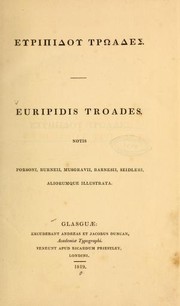
《特洛伊妇女》(英语:The Trojan Women;古希腊语:Τρῳάδες,拉丁化:Trōiades)是古希腊诗人欧里庇得斯的著名悲剧,创作于公元前415年。
内容
《特洛伊妇女》取材于荷马史诗得上半部分《伊利亚特》,映射公元前416年雅典人在墨罗斯岛的大屠杀。
主题和风格
《特洛伊妇女》中,详细描述了特洛伊城被焚烧破坏,男性全部被赶尽杀绝,女性则被当做奴隶,赫克托耳的幼子则被希腊人从高高的城墙上面往下面摔死。
欧里庇得斯在该剧中详细描写这些战争残酷的一面,以抒发对战争惨无人道的针砭和对生命的尊重。
题材
《特洛伊妇女》取材于《荷马史诗》里著名的“特洛伊战争”,耗时10年的战争,只因为特洛伊王子帕里斯带走斯巴达王妃海伦。
以上文字摘自维基百科「特洛伊妇女」(去掉了参考文献等尾部小节),按 CC BY-SA 4.0 使用,作者为维基百科的各位编者。
中文维基百科的条目比较短,下面附上英文维基百科的内容(英文原文):
The Trojan Women (Ancient Greek: Τρῳάδες, romanized: Trōiades, lit. "The Female Trojans") is a tragedy by the Greek playwright Euripides, produced in 415 BCE. Also translated as The Women of Troy, or as its transliterated Greek title Troades, The Trojan Women presents commentary on the costs of war through the lens of women and children. The four central women of the play are the same that appear in the final book of the Iliad, lamenting over the corpse of Hector after the Trojan War.
Hecuba, another tragedy by Euripides, similarly deals with the experiences of women left behind by war and was more popular in antiquity.
The tragedy has inspired many modern adaptation across film, literature, and the stage.
Historical background
Scholar Neil Croally believes that The Trojan Women was written as a reaction to the Siege of Melos in 416 BCE during the Peloponnesian War, in which Athens invaded the Aegean island of Melos, destroyed its city, and slaughtered and enslaved its populace (see History of Milos). However, historian Mark Ringer regards this as unlikely, as Euripides was probably developing his play before the siege of Melos even began, with only a month or two after its fall to make revision, and such commentary could have offended Athenian audiences of the production.
It is the third play in a tetralogy by Euripides, all drawn from the same source material: the Iliad. The other works in the tetralogy include the tragedies Alexandros and Palamedes, and the comedic satyr play Sisyphus, all of which are largely lost, and only fragments survive. The Trojan Women was performed for the first time in 415 BCE as part of this tetralogy at the City Dionysia festival in Athens. Euripides won second place, losing to the obscure tragedian Xenocles.
Plot
Euripides's play follows the fates of the women of Troy after their city has been sacked, their husbands killed, and their remaining families taken away as slaves. However, it begins first with the gods Athena and Poseidon discussing ways to punish the Greek armies because they condoned the rape of Cassandra, the eldest daughter of King Priam and Queen Hecuba and priestess of Apollo, by Ajax the Lesser after dragging her from a statue of Athena. What follows shows how much the Trojan women have suffered as their grief is compounded when the Greeks dole out additional deaths and divide their shares of women. The Greek herald Talthybius arrives to tell the dethroned queen Hecuba what will befall her and her children: Hecuba will be taken away to the Greek king Odysseus; the widowed princess Andromache's lot is to be the concubine of Neoptolemus, the son of the slain Greek warrior Achilles; and Cassandra is destined to become the conquering king Agamemnon's concubine.
Cassandra, who can see the future but is also cursed so that her visions of the future are never believed, is morbidly delighted by this news: she foresees that when they arrive in Argos, her new master's embittered wife Clytemnestra will kill both her new master and her before being killed herself by her own children. She sings a wedding song for herself and Agamemnon that describes their bloody deaths, and is taken away.
Andromache arrives, and Hecuba learns from her that her youngest daughter Polyxena has been killed as a sacrifice at the tomb of Achilles. But more horrible news for the royal family is yet to come. Talthybius reluctantly informs Andromache that her baby son Astyanax has been condemned to die: the Greek leaders are afraid that the boy will grow up to avenge his father Hector, and so rather than take this chance they plan to throw him off from the battlements of Troy to his death.
以上文字摘自英文维基百科「The Trojan Women」(有删节,去掉了参考文献等尾部小节),按 CC BY-SA 4.0 使用,作者为维基百科的各位编者。
资料卡
- 原题
- Τρῳάδες
- 原作语言
- 古希腊语
- 作品形式
- 剧作
- 体裁
- 古希腊悲剧
- 故事发生地
- 特洛伊
- 主要人物
- Athena、Hecuba、Cassandra、Talthybius、Andromache、Helen of Troy、Menelaus、Poseidon、Coryphaia chorus、希腊戏剧合唱团
资料卡来自 Wikidata Q1216943(CC0),众包数据,个别字段可能不全。
改编作品
电影1
- 《特洛伊妇女》The Trojan Women
舞台剧 / 歌剧 / 芭蕾1
取材于它的书2
名单来自 Wikidata(CC0):只列条目里写明「改编自 / 取材于」这本书的作品,不按名字猜;众包数据,可能不全。