 书单
百科
这个词条暂时没有中文维基百科条目,下面是英文维基百科的内容(英文原文):
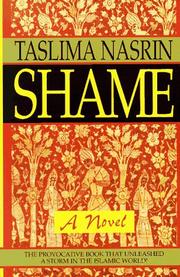
Lajja (Bengali: লজ্জা Lôjja) (Shame) is a novel in Bengali by Taslima Nasrin, a writer of Bangladesh. The word lajja/lôjja means "shame" in Bengali and many other Indo-Aryan languages. The book was written about the violence, rape, looting and killings of Bengali Hindus that took place in December 1992 after the destruction of Babri Masjid took place in India. The book was first published in 1993 in Bengali and was subsequently banned in Bangladesh. It nonetheless sold 50,000 copies in the six months after its publication, though Taslima fled her native Bangladesh after receiving death threats from Islamic groups.
Nasrin dedicated the book "to the people of the Indian subcontinent," beginning the text with the words, "let humanity be the other name of religion." The novel is preceded by a preface and a chronology of events.
Synopsis
Lajja is a response of Taslima Nasrin to anti-Hindu riots that erupted in parts of Bangladesh, soon after the demolition of Babri Masjid in India on 6 December 1992. The book subtly indicates that communal feelings were on the rise, the Hindu minority of Bangladesh was oppressed, and secularism was under shadow.
Plot summary
In Ayodhya, in the state of Uttar Pradesh in India, on 6 December 1992, Babri Masjid is demolished. The demolition has repercussions in Bangladesh. The fire of communal rioting erupts, and the Dutta family feels and faces the heat of the communal hatred. Each member of the family feels about this in his/her own way.
Sudhamoy, the patriarch, feels that Bangladesh, his motherland, will never let him down. Kiranmayee as a faithful wife stands by her husband's views. Suranjan, their son, believes that nationalism will be stronger than communalism but is progressively disappointed. He finds himself adopting communal reactions that contrast entirely with the ideology of patriotism he has always had faith in. Nilanjana curses her brother's apathy and coaxes his brother to take the family to a Muslim friend's house for safety.
It is a story of metamorphosis, in which disastrous events create disillusionment, resulting in violence and resentment.
Translations
Lajja has been translated into many languages including French, Dutch, German, English, Spanish, Italian, Swedish, Norwegian, Finnish, Icelandic, Persian, Arabic, Assamese, Kannada, Hindi, Gujarati, Odia, Urdu, Marathi, Telugu, Tamil, Punjabi, Nepali Malayalam and Sinhalese.
以上文字摘自英文维基百科「Lajja (novel)」(去掉了参考文献等尾部小节),按 CC BY-SA 4.0 使用,作者为维基百科的各位编者。
资料卡
- 原作语言
- 孟加拉语
- 首次出版
- 1993 年
- 作品形式
- 长篇小说
- 故事发生地
- 孟加拉国
资料卡来自 Wikidata Q3595712(CC0),众包数据,个别字段可能不全。