 书单
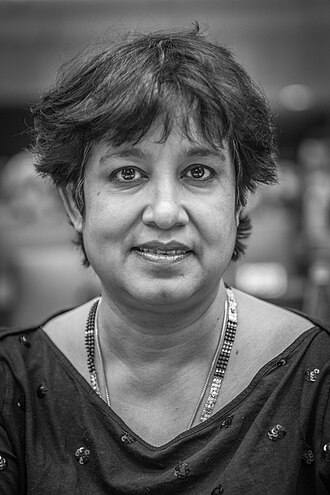
塔斯利马·纳斯林
- 生卒
- 1962 –
- 国籍
- 巴基斯坦、孟加拉国
- 外文名
- Taslima Nasrin
照片:Photo Claude TRUONG-NGOC,CC BY-SA 3.0,来自维基共享资源「Taslima Nasrin par Claude Truong-Ngoc novembre 2013.jpg」(经缩小)。
生平与创作
塔斯利马·纳斯林(Taslima Nasreen,1962年8月25日—),孟加拉国-瑞典作家、医生、女权主义者、人权活动家,曾著书讲述女性遭受的压迫、宗教批评等,多次受到死亡威胁,其著作被翻译曾30多种语言,部分著作在孟加拉国被禁,自1994年起流亡海外。1994年图霍尔斯基奖和萨哈罗夫奖得主。
以上文字摘自维基百科「塔斯利马·纳斯林」(去掉了参考文献等尾部小节),按 CC BY-SA 4.0 使用,作者为维基百科的各位编者。
中文维基百科的条目比较短,下面附上英文维基百科的内容(英文原文):
Taslima Nasrin (born 25 August 1962) is a Bangladeshi-Swedish writer, physician, feminist, secular humanist, and activist. She is known for her writings on feminism and her criticism of Islam; some of her books are banned in Bangladesh.
She gained global attention by the beginning of the 1990s owing to her essays and novels with feminist views and criticism of what she characterises as all "misogynistic" religions. Nasrin has been living in exile since 1994, with multiple fatwas calling for her death. After living more than a decade in Europe and the United States, she moved to India in 2004 and has been staying there on a resident permit, multiple-entry, or 'X' visa since.
Nasrin has been blacklisted and banished from the Bengal region, including both Bangladesh and the Indian state of West Bengal during the governments of Communist Party of India (Marxist) and Trinamool Congress. After Bharatiya Janata Party's victory in state legislative assembly of West Bengal in 2026, she returned to Kolkata after nearly 20 years in exile from the city.
Early life and career
Nasrin was born in East Pakistan to Dr. Rajab Ali and Edul Ara, of Mymensingh. Her father was a physician, and a professor of Medical Jurisprudence in Mymensingh Medical College, as well as at Sir Salimullah Medical College, Dhaka, and Dhaka Medical College. After completing high school in 1976 (SSC) and higher secondary studies in college (HSC) in 1978, she studied medicine at Mymensingh Medical College, an affiliated medical college of the University of Dhaka, and graduated in 1984 with an MBBS degree. Her Hindu ancestor Haradhan Sarkar was a Kayastha.
In college, she wrote and edited a poetry journal called Shenjuti. After graduation, she worked at a family planning clinic in Mymensingh, then practised at the gynaecology department of Mitford hospital and at the anaesthesia department of Dhaka Medical College hospital. While she studied and practised medicine, she saw girls who had been raped; she also heard women cry out in despair in the delivery room if their baby was a girl. Born into a Muslim family, she became an atheist over time. In the course of writing, she took a feminist approach.
Literary career
Early in her literary career, Nasrin wrote mainly poetry, and published half a dozen collections of poetry between 1982 and 1993, often with female oppression as a theme, and often containing very graphic language. She started publishing prose in the late 1980s and produced three collections of essays and four novels before the publication of her documentary novel Lajja (Bengali: লজ্জা, romanized: Lôjja, lit. 'Shame'), in which a Hindu family was attacked by Muslim fanatics and decided to leave the country. Nasrin suffered a number of physical and other attacks for her critical scrutiny of Islam and her demands for women's equality. Hundreds of thousands of people took to the streets demanding her execution by hanging. In October 1993, a radical fundamentalist group called the Council of Islamic Soldiers offered a bounty for her death.
In May 1994, she was interviewed by the Kolkata edition of The Statesman, which quoted her as calling for a revision of the Quran; she claimed she only called for abolition of the Sharia, the Islamic religious law. In August 1994, she was brought up on "charges of making inflammatory statements" and faced criticism from Islamic fundamentalists. A few hundred thousand demonstrators called her "an apostate appointed by imperial forces to vilify Islam"; a member of a militant faction threatened to set loose thousands of poisonous snakes in the capital unless she was executed. After spending two months in hiding, she escaped to Sweden at the end of 1994, consequently ceasing her medical practice and becoming a full-time writer and activist.
以上文字摘自英文维基百科「Taslima Nasrin」(有删节,去掉了参考文献等尾部小节),按 CC BY-SA 4.0 使用,作者为维基百科的各位编者。
资料卡
- 母语名
- তসলিমা নাসরিন
- 出生
- 1962 年 8 月 25 日
- 出生地
- 迈门辛市
- 职业
- 作家、医生、女权活动家、诗人、小说家、专栏作家、女性主义者、新闻工作者 等 9 项
- 使用语言
- 孟加拉语
- 写作语言
- 孟加拉语
- 就读学校
- Mymensingh Medical College
- 文学运动 / 流派
- 无神论、女权论者、行动主义
- 领域
- 诗歌、随笔、新闻学、妇科学、女权论者 等 7 项
- 配偶
- Rudra Mohammad Shahidullah(1982)、Nayeemul Islam Khan(1990)
- 代表作
- Lajja
- 获奖
- 西蒙·德·波伏娃奖(2008)、图霍夫斯基奖(1994)、萨哈罗夫奖(1994)、巴黎第七大学名誉博士(2011);另有 5 项只有外文名
资料卡来自 Wikidata Q208468(CC0),众包数据,个别字段可能不全。
本站收录的作品(1)
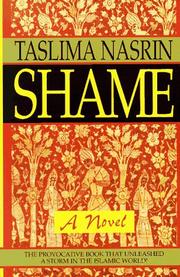
同时代的巴基斯坦作家
Open Library 上的全部作品
正在读取…