书单
百科
这个词条暂时没有中文维基百科条目,下面是英文维基百科的内容(英文原文):
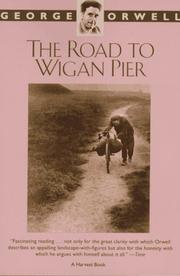
The Road to Wigan Pier is the fifth book by the English writer George Orwell, first published in 1937. Its first half documents his sociological investigations of the bleak living conditions among the working class in Lancashire and Yorkshire in the industrial areas of Northern England before World War II. Its second half is a long essay on his middle-class upbringing, and the development of his political conscience, questioning British attitudes towards socialism. Orwell states plainly that he himself is in favour of socialism, but feels it necessary to point out reasons why many people who would benefit from socialism, and should logically support it, are in practice likely to be strong opponents.
According to Orwell biographer Bernard Crick, publisher Victor Gollancz first tried to persuade Orwell's agent to allow the Left Book Club edition to consist solely of the descriptive first half of the book. When this was refused Gollancz wrote an introduction to the book. "Victor could not bear to reject it, even though his suggestion that the 'repugnant' second half should be omitted from the Club edition was turned down. On this occasion Victor, albeit nervously, did overrule Communist Party objections in favour of his publishing instinct. His compromise was to publish the book with [an introduction] full of good criticism, unfair criticism, and half-truths."
The book grapples "with the social and historical reality of Depression suffering in the north of England, – Orwell does not wish merely to enumerate evils and injustices, but to break through what he regards as middle-class oblivion, – Orwell's corrective to such falsity comes first by immersion of his own body – a supreme measure of truth for Orwell – directly into the experience of misery."
Background
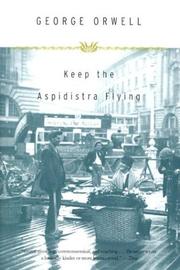
Orwell submitted the typescript of Keep the Aspidistra Flying to Gollancz on 15 January 1936. At some point in the next few days Gollancz asked him to consider a new project – writing a book about unemployment and social conditions in economically depressed northern England. In the period from 31 January to 30 March 1936, Orwell lived in Wigan, Barnsley and Sheffield researching the book.
Gollancz was not only a successful publisher but also a dedicated social reformer. "As a social reformer, a socialist, and an idealist, Gollancz had an unquestioning, perhaps overly optimistic, faith in education; if only people could be made to know the nature of poverty, he thought, they would want to eradicate it, remove from power the government that tolerated it, and transform the economic system that brought it into being." As a successful publisher however, he knew that to reach a large audience he needed something more than a collection of facts, statistics, graphs and dogmatic conclusions.
The view that this was a specific commission with a £500 advance – two years' income for Orwell at the time – is based on a recollection by Geoffrey Gorer who was interviewed for Melvyn Bragg's TV programme Omnibus in 1970. He reported that Gollancz had offered Orwell £500 to underwrite the trip, and but for Gollancz's support Orwell would never have gone. Recent biographers, however, do not repeat this account. On 1 April 1936, Orwell rented a cottage in the remote village of Wallington, Hertfordshire, where he wrote The Road to Wigan Pier. Biographer Michael Shelden points out that the rental for the cottage was less than £2 a month.
Orwell, as well as living off the land, supplemented his income by running the cottage as the village store. Yet, writing to Jack Common in April 1936 about setting up shop, "Orwell sounds hard put to find £20 in order to stock his shelves, rather than a man who had received £500 a couple of months earlier." When it came to marrying, Orwell wrote to Gorer: "I should never be economically justified in marrying, so might as well be unjustified now as later". D. J. Taylor argues that these factors, and the fact that Gollancz was not a person to part with such a sum on speculation, suggest that Gorer was confusing Orwell's eventual earnings from the book with a small contribution for out-of-pocket expenses that Gollancz might have given him.
Orwell set out on the journey on the last day of January 1936, having given up his job at "Booklovers' Corner" and his flat in Kentish Town; he would not live in London again until 1940. He made no plans, but Richard Rees promised to send him names of people in the north connected with The Adelphi or the Adelphi Summer School who might help him – Orwell also established a network of contacts through the National Unemployed Workers' Movement. One of these NUWM contacts was Jack Hilton, a working-class author from Rochdale. Orwell wrote to Hilton seeking lodging and asking for advice on his route. Hilton was unable to provide him lodging, but suggested that he travel to Wigan rather than Rochdale, "for there are the colliers and they’re good stuff." For the next two months Orwell followed a route from Birmingham to Manchester to Leeds. He kept a diary from 31 January to 25 March, which records the unretouched material that he would develop into the first part of The Road to Wigan Pier.
For three weeks in February 1936 he was in Wigan, the longest single stop he would make; March was allotted to Yorkshire – Sheffield, Leeds, Barnsley. He had completed a rough first draft of the book by October and sent off the final version to Moore in December.
Gollancz published the work under the Left Book Club, which gave Orwell a far higher circulation than his previous works. However, Gollancz feared the second half would offend Left Book Club readers and inserted a mollifying preface to the book while Orwell was in Spain. The original edition included 32 illustrations that were photographs of Welsh coal miners and of slums in the East End of London. Orwell did not choose the images and their inclusion may not have been his idea.
Structure
The book is divided into two sections.
Part One
以上文字摘自英文维基百科「The Road to Wigan Pier」(有删节,去掉了参考文献等尾部小节),按 CC BY-SA 4.0 使用,作者为维基百科的各位编者。
资料卡
- 原题
- The Road to Wigan Pier
- 原作语言
- 英语
- 首次出版
- 1937 年 3 月 8 日
- 体裁
- 自传
- 首版出版社
- 维克多·格兰茨出版社
- 前作
- 让叶兰飘扬
资料卡来自 Wikidata Q1197966(CC0),众包数据,个别字段可能不全。