 书单
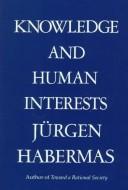
Knowledge and Human Interests (1968)
百科
这个词条暂时没有中文维基百科条目,下面是英文维基百科的内容(英文原文):
Knowledge and Human Interests (German: Erkenntnis und Interesse) is a 1968 book by the German philosopher Jürgen Habermas, in which the author discusses the development of the modern natural and human sciences. He criticizes Sigmund Freud, arguing that psychoanalysis is a branch of the humanities rather than a science, and provides a critique of the philosopher Friedrich Nietzsche.
Habermas's first major systematic work, Knowledge and Human Interests has been compared to the philosopher Paul Ricœur's Freud and Philosophy (1965). It received positive reviews, which identified it as forming part of an important body of work. However, critics have found Habermas's attempt to discuss the relationship between knowledge and human interests unsatisfactory, and his work obscure in style. Some commentators have found his discussion of Freud valuable, while others have questioned his conclusions.
Summary
Habermas discusses the history of positivism, aiming to provide an analysis of "the connections between knowledge and human interests." He relates his ideas to those of the philosopher Karl Marx, explaining that he develops an idea "implicit in Marx's theory of society". He states that psychoanalysis occupies an important place as an example within his framework. He argues that modern philosophical discussion has been focused on the question of deciding how reliable knowledge is possible, the field of epistemology. In his view, rationalism and empiricism were both concerned with "the metaphysical demarcation of the realm of objects and the logical and psychological justification of the validity of a natural science characterized by formalized language and experiment."
According to Habermas, while physics was sometimes the model for "clear and distinct knowledge" in the 19th century, philosophy and science remained distinct, as did epistemology and philosophy of science. He argues that since the philosopher Georg Wilhelm Friedrich Hegel's critique of the work of the philosopher Immanuel Kant, science and philosophy have become disconnected, with the result that science is no longer "seriously comprehended by philosophy", making it necessary to reexamine the nature of science and scientific knowledge and the role of the philosophy of science. Other philosophers Habermas discusses include Johann Gottlieb Fichte, Auguste Comte, Ernst Mach, Charles Sanders Peirce, Wilhelm Dilthey, and Edmund Husserl; in the course of discussing Dilthey, he examines hermeneutics.
In his discussion of the work of Sigmund Freud, the founder of psychoanalysis, Habermas argues that psychoanalysis is the "only tangible example of a science incorporating methodical self-reflection", but that while it had the potential to exceed the limits of positivism, this has remained unrealized because of its "scientific self-misunderstanding", for which Freud was responsible. He also provides a critique of the philosopher Friedrich Nietzsche, arguing that Nietzsche tacitly accepted some "basic positivist assumptions".
Background and publication history
According to Habermas, he first expounded the views he developed in the book in his Frankfurt inaugural address of June 1965, while his discussion of positivism, pragmatism and historicism had its origins in lectures he delivered in Heidelberg in 1963 and 1964. He expressed his indebtedness to the philosopher Karl-Otto Apel and the psychoanalysts Alexander Mitscherlich and Alfred Lorenzer.
Knowledge and Human Interests was first published by Suhrkamp Verlag in 1968, with the exception of its appendix, which had been published in Merkur in 1965 (reprinted in Technik und Wissenschaft als 'Ideologie', 1968). In 1972, an English translation by the philosopher Jeremy J. Shapiro was published by Heinemann Educational Books. In 1987, an English edition was published by Polity Press in association with Blackwell Publishers.
Reception
Knowledge and Human Interests received positive reviews from Fred E. Jandt in the Journal of Applied Communication Research, Thomas B. Farrell in the Quarterly Journal of Speech, and the sociologist Anthony Giddens in the American Journal of Sociology, a mixed review from the sociologist Steven Lukes in the British Journal of Sociology, and a negative review from the sociologist David Martin in the Jewish Journal of Sociology.
Jandt found the book promising, though he considered it difficult to assess because of Habermas's competence in fields ranging from the logic of science to the sociology of knowledge. Farrell found the book ambitious in its goals and dispassionate in its approach. He believed that it formed part of a body of work which "comprises a dialectic sufficiently rigorous to indict and perhaps dislodge behavioral and scientistic theories of communication." Giddens described the book as one of Habermas's "major writings", adding that it was comparable to works such as Legitimation Crisis (1973) and "culminates the first phase of Habermas's career and remains perhaps the most hotly debated of his works." He credited Habermas with developing and clarifying his arguments that the social sciences require connecting hermeneutics with empiricist philosophies of science.
以上文字摘自英文维基百科「Knowledge and Human Interests」(有删节,去掉了参考文献等尾部小节),按 CC BY-SA 4.0 使用,作者为维基百科的各位编者。
资料卡
- 原题
- Erkenntnis und Interesse
- 译者
- Jeremy J. Shapiro
- 原作语言
- 德语
- 首次出版
- 1968 年
- 体裁
- 非虚构文学
- 主题
- 知识论
资料卡来自 Wikidata Q1355022(CC0),众包数据,个别字段可能不全。
更多资料与书评
在哪读
于尔根·哈贝马斯 的其他作品
作者页 ›


相似的书
 豆瓣 #58
 豆瓣 #175









 豆瓣 #74