书单
百科
这个词条暂时没有中文维基百科条目,下面是英文维基百科的内容(英文原文):
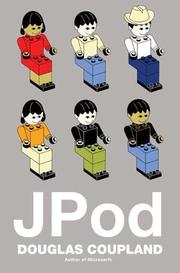
JPod is a novel by Douglas Coupland published by Random House of Canada in 2006. Set in 2005, the book explores the strange and unconventional everyday life of the main character, Ethan Jarlewski, and his team of video game programmers whose last names all begin with the letter 'J'.
JPod was adapted into a CBC television series of the same name co-created by Douglas Coupland and Michael MacLennan. It premiered on January 8, 2008, and ran until its cancellation on March 7, 2008, leaving the series with a permanent cliffhanger. The first thirteen episodes of the series aired in the United States on The CW.
Plot
JPod is an avant-garde novel of six young adults, whose last names all begin with the letter 'J' and who are assigned to the same cubicle pod by someone in human resources through a computer glitch, working at Neotronic Arts, a fictional Burnaby-based video game company. Ethan Jarlewski is the novel's main character and narrator, who spends more time involved with his work than with his dysfunctional family. His stay-at-home mother runs a successful marijuana grow-op which allows his father to abandon his career and work as a futile movie extra. Ethan's realtor brother Greg involves himself with Asian crime lord Kam Fong who serves as the plot's crux of character connection.
The JPod staff are required to insert a turtle character based on Jeff Probst into the skateboard game that they are developing as 'BoardX'. The marketing manager, Steven Lefkowitz, mandates the turtle's addition to the game, much to the team's chagrin, to please his son during a custody battle. "JPod" is then drastically challenged and changed when Steve goes missing and the new executive replacement declares further deeply unpopular changes to the game, including changing Jeff the turtle into an adventurous prince who rides a magic carpet, and renaming it "SpriteQuest". The JPodders, upset that they would not be able to finish their game, decide to sabotage SpriteQuest by inserting a deranged Ronald McDonald-inspired character into a secret level where Ronald works malevolence, thus creating a culturally-suitable game for the target market.
Ethan begins to date the newest addition to JPod, Kaitlin, and their relationship grows as she discovers that most of the members of the team, including herself, are mildly autistic. Kaitlin develops a hugging machine after researching how autistic people enjoy the sensation of pressure from non-living things on their skin.
Douglas Coupland, as a character, is inserted into the novel when Ethan visits China to bring a heroin-addicted Steve back to Canada. This Google-version of Douglas Coupland consistently bumps into Ethan and manages to weave himself into the narrator's life. JPod finds itself in a digital world where technology is everything and the human mind is incapable of focusing on just one task.
Related works and influences
BookShorts; a short video film depicting characters of JPod was filmed in 2006 by BookShorts.com project with support from Random House Canada.
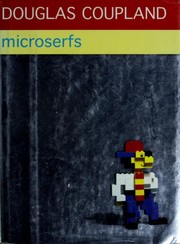
Microserfs; JPod has been described frequently as an updating of Coupland's 1995 novel Microserfs for the 2000s. Publishers Weekly even called JPod "Microserfs 2.0". Both novels centre around a group of eccentric young programming professionals. Both books are narrated by a young male (Ethan Jarlewski in JPod, Daniel Underwood in Microserfs). Both of these characters write the novel manuscript on a laptop, and both novels feature random product names, slogans, and messages in varying font size. In Microserfs, Daniel types in these random messages in an attempt to tap into his computer's subconscious, while in JPod, the messages reflect the stream of messages, and consciousness, that computer users experience every day. The narrator in both novels also begins and maintains a relationship with a female co-worker; Daniel dates Karla and Ethan dates Kaitlin. Both novels also deal heavily with lifestyle in the modern age of technology. In addition, the characters in both novels are introduced by the narrator through a piece of pop culture: in Microserfs, Daniel lists his co-workers' dream categories in a game of Jeopardy! and in JPod, Ethan asks his co-workers to design an eBay page for themselves. Finally, both novels touch on autism, a condition Coupland has himself. In Microserfs, Daniel says that he thinks that all tech people are autistic, and in JPod, Kaitlin describes all of her co-workers and her boss as mildly autistic. Hugging machines as described in the novel have actually been developed to help those with autism.
Sitcoms; JPod was called by one reviewer "a 448 page sitcom". The style of humour is very similar to that of sitcoms, and especially of Arrested Development. The humour mostly originates from character flaws. The characters themselves do not have much depth, and their flaws are exaggerated for comic effect. For example, John Doe is obsessed with being an 'average person' and many of his actions result from this singular character trait.
Terry; Terry is Douglas Coupland's pictorial biography of Terry Fox, written to commemorate the 25th anniversary of Terry's 1981 death and published in 2005. Coupland was writing both Terry and JPod simultaneously, and Coupland was quoted in the Jerusalem Post saying that all of his "more noble character traits went into [Terry]. There was a tar-pit of ooze left over that wanted to go somewhere. JPod was it." This helps to explain the malicious version of Douglas Coupland (Anti-Doug) who appears in the novel.
Epistolary novels; Parts of the text of JPod are written as e-mails, text messages, and other messages written by the characters themselves. Therefore, JPod can be considered partly an epistolary novel; however, much of the novel is also standard narrative format.
以上文字摘自英文维基百科「JPod」(有删节,去掉了参考文献等尾部小节),按 CC BY-SA 4.0 使用,作者为维基百科的各位编者。
资料卡
- 原题
- JPod
- 原作语言
- 英语
- 首次出版
- 2006 年
- 作品形式
- 长篇小说
- 体裁
- 书信体小说、讽刺
- 首版出版社
- 加拿大蓝灯书屋
- 前作
- Eleanor Rigby
- 续作
- The Gum Thief
资料卡来自 Wikidata Q6108788(CC0),众包数据,个别字段可能不全。