书单
百科
这个词条暂时没有中文维基百科条目,下面是英文维基百科的内容(英文原文):
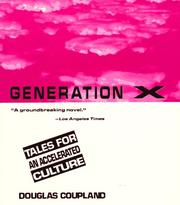
Generation X: Tales for an Accelerated Culture is the first novel by Douglas Coupland, published by St. Martin's Press in 1991. The novel, which popularized the term "Generation X", is a framed narrative in which a group of youths exchange heartfelt stories about themselves and fantastical stories of their creation.
Coupland released the similarly titled Generation A in September 2009.
Synopsis
Generation X is a framed narrative, like Chaucer's The Canterbury Tales or The Decameron by Boccaccio. The framing story is that of three friends—Dag, Claire, and the narrator, Andy—living together in the Coachella Valley in southern California. The tales are told by the various characters in the novel, which is arranged into three parts. Each chapter is separately titled rather than numbered, with titles such as "I Am Not a Target Market" and "Adventure Without Risk Is Disneyland".
The novel was set circa 1990, in the then-rapidly growing and economic booming-turned-into-depressed communities of Palm Springs and the Inland Empire region. Some characters were born and raised in Los Angeles and suburban Orange County.
Part One
The first part of the novel takes place over the course of a picnic. Andrew, Dag, and Claire tell each other stories—some personal, others imagined—over the course of the day. Through these tales, the reader glimpses the characters' motivations and personalities.
Part Two
The initial group of characters is expanded in this section, which introduces stories from additional characters: Claire's boyfriend Tobias, Claire's friend and Dag's love interest Elvissa, Andy's brother Tyler, and Andy's boss and neighbour and his wife, Mr. and Mrs. MacArthur. Each character represents a cultural type; Elvissa is constantly stuck in the past, Tobias is a "yuppie", Tyler is a "global teen", and the neighbours represent members of an older generation.
The frame is muted here, as the narrative draws back to reveal more of the main characters, while allowing for other characters' stories to be heard.
Part Three
In this section, the novel continues to pull back its focus, as Andy and Claire travel away from California. Again, the frame is enlarged to include additional characters. Claire travels to New York, while Andy takes a dreaded trip to visit his family in Portland. Through the characters' personal and mental journeys, more tales are told and more of the characters' personal stories are revealed.
Characters
Andrew "Andy" Palmer
The book's narrator and main character. Andy is a bartender (a "McJob", as he describes it). He is close friends with Dag and Claire. He is from Portland, Oregon.
Dagmar "Dag" Bellinghausen
A former office worker, he now works with Andy at the bar, and lives next door to him. He is obsessed with the possibility of a nuclear holocaust, and is prone to occasional erratic behavior. Unlike the other characters (who are American), he is a Canadian, from Toronto.
Claire Baxter
A friend of Andy and Dag that lives in a neighboring bungalow. She is from a large family connected by multiple divorces. She wants to live life as Andy and Dag are trying to, but struggles, partially because of her relationship with Tobias. She is from Los Angeles, California.
Tobias
Claire's boyfriend, a superficial yuppie. He finds the lifestyle of Andy, Dag, and Claire to be interesting, but is unable to commit to it. Neither Andy nor Dag likes him, and he is a foil to the other characters in the novel. Yuppies in the novel were thought to represent Orange County (where they grew up), the Inland Empire (where they live) and L.A. (where they commuted to work).
Elvissa
Claire's best friend, and Dag's love interest. She finds herself constantly trapped in the past, never quite catching up to the modern world. The character represented the poverty and desolation of the Mojave and Sonoran deserts of California, particularly Palm Springs when spring breakers once partied there and where young gay couples moved en masse during the 1980s.
Tyler
Andy's little brother who is five years younger than Andy. As the youngest child in a large family, he is somewhat spoiled, but secretly wishes he could live as Andy does. He is described as a "global teen" and bears great similarity to the main character in Coupland's second novel, Shampoo Planet, that shares his name and mannerisms.
Inspiration
Title
Coupland has presented different narratives concerning the origin of the title Generation X. In one version, the title came from the work of Paul Fussell. In Fussell's 1983 book Class, the term category X designated a part of America's social hierarchy rather than a generation. As Coupland explained in a 1995 interview, "In his final chapter, Fussell named an 'X' category of people who wanted to hop off the merry-go-round of status, money, and social climbing that so often frames modern existence." However, in a 1989 magazine article Coupland attributed the term Generation X to Billy Idol, since it is the name of the band Idol broke through with.
Novel
Coupland felt that people his age were being misclassified as members of the Baby Boomer generation.
I just want to show society what people born after 1960 think about things... We're sick of stupid labels, we're sick of being marginalized in lousy jobs, and we're tired of hearing about ourselves from others
Later, Coupland described his novel as being about "the fringe of Generation Jones which became the mainstream of Generation X". Generation Jones is a term for tail-end Boomers, born between 1954 and 1964, who felt disconnected from the experiences of older Boomers such as the Vietnam War and the hippie subculture.
Character names
The characters are named after locations in Antarctica.
以上文字摘自英文维基百科「Generation X: Tales for an Accelerated Culture」(有删节,去掉了参考文献等尾部小节),按 CC BY-SA 4.0 使用,作者为维基百科的各位编者。
资料卡
- 原题
- Generation X: Tales for an Accelerated Culture
- 原作语言
- 英语
- 首次出版
- 1991 年
- 作品形式
- 长篇小说
- 首版出版社
- 圣马丁出版社
- 续作
- Shampoo Planet
- 故事发生地
- 加利福尼亚州
资料卡来自 Wikidata Q633210(CC0),众包数据,个别字段可能不全。