书单
克拉普最后的磁带 (1959)
百科
这个词条暂时没有中文维基百科条目,下面是英文维基百科的内容(英文原文):
Krapp's Last Tape is a 1958 one-act play, in English, by Samuel Beckett. With a cast of one man, it was written for an Irish actor Patrick Magee and first titled "Magee monologue". It was inspired by Beckett's experience of listening to Magee reading extracts from Molloy and From an Abandoned Work on the BBC Third Programme in December 1957.
It is considered to be among Beckett’s major dramas.
History
First publication
In a letter to a London bookseller Jake Schwartz on 15 March 1958, Beckett wrote that he had "'four states, in typescript, with copious notes and dirty corrections, of a short stage monologue I have just written (in English) for Pat Magee. This was composed on the machine from a tangle of old notes, so I have not the MS to offer you."
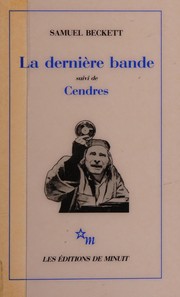
According to Ackerley and Gontarski, "It was first published in Evergreen Review 2.5 (summer 1958), then in Krapp's Last Tape and Embers (Faber, 1959), and Krapp's Last Tape and Other Dramatic Pieces (Grove, 1960)." Beckett’s own translation of the play into French, La Dernière Bande, was published in Les Lettres Nouvelles on 4 March 1959.
The available printed texts must not be taken as definitive. "By the mid-1950s Beckett was already talking and working like a director. In a letter to Rosset's editorial assistant, Judith Schmidt, on 11 May 1959, Beckett referred to the staging of Krapp's Last Tape as its 'creation'," and he made numerous significant changes to the text over the years as he was involved in directing the play.
Others
The first German performance, on 28 September 1959, was directed by Walter Henn at Berlin's Schillertheater, where 10 years later, on 5 October 1969, Samuel Beckett himself staged his text in a most successful performance (with Martin Held as Krapp).
The first American performance, on 14 January 1960, was directed by Alan Schneider and starred Donald Davis.
Synopsis
The curtain rises on a "late evening in the future." Krapp, an old man, is sitting in his den in the dark, lit by a light above his desk. On his desk are a tape recorder and a number of tins containing reels of recorded tape. He reads aloud from a ledger to find a certain tape, but the words alone are not jogging his memory. He takes childish pleasure in saying the word ‘spool’.
The tape dates from the day he turned 39. His recorded voice says that he has just celebrated the occasion alone "at the wine house," jotting down notes in preparation for the later recording session. "The new light above my table is a great improvement," states the recorded Krapp, before describing how much he enjoys leaving it to wander off into the darkness so that he may return to the zone of light, identifying it with his essential self.
The voice reports that he has just reviewed an old tape from when he was in his late twenties. It amuses him to comment on his impressions of what he was like in his twenties, and the 69-year-old Krapp joins in the derisory laughter. The young man he was back then is described as idealistic and unrealistic in his expectations.
The voice reviews his last year, talking about sitting on a bench outside the nursing home and waiting for the news that his mother had died. Krapp in the current day is more interested in his younger self's use of the rather archaic word "viduity" (the state of being a widow) than the reaction of the voice on the tape to their mother's death. He stops listening to look up the word in a large dictionary. He returns to the tape; at the moment he learns of his mother's death, his younger self is in the process of throwing a rubber ball to a dog. He ends up simply leaving the ball with the dog.
The voice starts to describe the revelation he experienced at the end of a pier. Krapp grows impatient when his younger self starts enthusing about this. He fast-forwards to near the end of the tape to escape the onslaught of words, where suddenly the mood has changed and he finds himself in the middle of a description of a romantic liaison between himself and a woman in a punt. Krapp lets it play out and then rewinds the tape to hear the complete episode.
Afterwards, Krapp loads a fresh tape and begins to recount his year. He is scathing when it comes to his assessment of his thirty-nine-year-old self. He finds he has nothing he wants to record for posterity, save the fact he "revelled in the word spool." He mentions a trip to the park and attending Vespers, where he dozed off and fell off the pew. He also mentions his recent literary disappointments: "seventeen copies sold", presumably of his last book, eleven of which have gone not to interested readers but to foreign libraries. His sex life has been reduced to periodic visits by an old prostitute. Unlike his younger selves, Krapp has nothing good to say about the man he has become and even the idea of making a "last effort" when it comes to his writing upsets him.
He retreats into memories from his dim and distant past, gathering holly and walking the dog of a Sunday morning. He then remembers the girl on the punt and wrenches off the tape he has been recording, swapping back to the prior tape and replaying the entire section again. This time he allows the tape to play to the very end, with the thirty-nine-year-old Krapp determinedly not regretting the choices he has made, certain that what he would produce in the years to come would more than compensate him for any potential loss of happiness.
Krapp makes no response to this but allows the tape to play on, silent, until the final curtain.
以上文字摘自英文维基百科「Krapp's Last Tape」(有删节,去掉了参考文献等尾部小节),按 CC BY-SA 4.0 使用,作者为维基百科的各位编者。
资料卡
- 原题
- Krapp's Last Tape
- 原作语言
- 英语
- 首次出版
- 1959 年
- 作品形式
- 剧作
- 主要人物
- Krapp
资料卡来自 Wikidata Q1171426(CC0),众包数据,个别字段可能不全。
改编作品
电影2
- Krapp’s Last Tape
- 《世界之友》Friend of the World
名单来自 Wikidata(CC0):只列条目里写明「改编自 / 取材于」这本书的作品,不按名字猜;众包数据,可能不全。