书单
The Confusions of Young Törless (1906)
百科
这个词条暂时没有中文维基百科条目,下面是英文维基百科的内容(英文原文):
The Confusions of Young Törless (German: Die Verwirrungen des Zöglings Törleß), or Young Törless, is the literary debut of the Austrian philosophical novelist and essayist Robert Musil, first published in 1906. Musil's novel is ostensibly a bildungsroman, a story of a young disoriented man searching for morals in society and their meaning for him.
Background
The expressionistic novel, based on Musil's personal experiences at a boarding school in Mährisch Weißkirchen, today Hranice (in Austria-Hungary, now in the Czech Republic) was written according to Musil "because of boredom". In later life, however, Musil denied that the novel was about youthful experiences of his own. Due to its explicit sexual content, the novel at first caused a scandal among the reading public and the authorities of Austria-Hungary.
Synopsis
Three students of an Austrian boarding school, Reiting, Beineberg and Törless, catch their classmate Basini stealing money from one of the three and decide to punish him themselves instead of turning him in to the school authorities. They start with bullying and abusing him, first physically and then psychologically and sexually, while also blackmailing him by threatening to denounce him. Their abusive treatment of Basini becomes openly sexual and increasingly sadistic; nevertheless, he endures all the torture even when, after being deprived of any dignity, he is discredited by the entire class.
Törless' moral and sexual confusion leads him to join Beineberg and Reiting's degradation of Basini; he is both sexually attracted to Basini and Beineberg and repelled by them. He observes and takes part in the torture and rape of Basini while telling himself that he is trying to understand the gap between his rational self and his obscure irrational self; he is a disturbed and despairing observer of his own states of consciousness. Basini professes love for Törless and Törless comes to reciprocate somewhat, but is ultimately repelled by Basini's unwillingness to stand up for himself. This disgust with Basini's passivity ultimately leads him almost off-handedly to stand up to Beineberg and Reiting. When the torment becomes unbearable, Törless covertly advises Basini to turn himself in to the headmaster as a way out of the situation.
An investigation is commenced, but the only party to be found guilty is Basini. Törless makes a strange existential speech to the school authorities about the gap between the rational and irrational ("...after all, things just happen"), which puzzles the authorities more than anything else. They decide he is in need of careful monitoring, something the institute cannot provide, and suggest to his parents that he be privately educated, a conclusion that he comes to on his own.
Other subplots include Törless' experience with the local prostitute Božena, his encounter with his mathematics teacher, and his analysis of his parents' attitudes toward the world.
Editions and translations
Die Verwirrungen des Zöglings Törleß. Wien/Leipzig: Wiener Verlag, 1906.
Die Verwirrungen des Zöglings Törleß. München/Leipzig: Georg Müller, 1911.
Die Verwirrungen des Zöglings Törleß. 11th.-15th. thousand. Berlin: Ernst Rowohlt, 1931 [Revised edition; published Dec. 1930].
Die Verwirrungen des Zöglings Törleß. Reinbek bei Hamburg: Rowohlt Taschenbuch Verlag, 1998. (rororo 10300.)
Die Verwirrungen des Zöglings Törleß. Based on the revised edition 1930; with detailed commentary. Ed. by Werner Bellmann. Epilog: Filippo Smerilli. Stuttgart: Reclam, 2013.
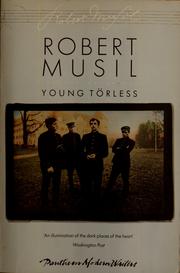
Young Törless. Translated by Eithne Wilkins and Ernst Kaiser. Pantheon Books, 1955.
The Confusions of Young Törless. Translated by Shaun Whiteside, with an introduction by J. M. Coetzee. Penguin Classics, 2001.
The Confusions of Young Master Törless. Translated by Christopher Moncrieff. Alma Classics, 2013.
The Confusions of Young Törless. Translated by Mike Mitchell, with an introduction and notes by Ritchie Robertson. Oxford University Press, 2014.
Reception
Later, various prefigurings of fascism were identified in the text, including the characters of Beineberg and Reiting, who seem to be orderly pupils by day but shamelessly abuse their classmate psychologically, physically and sexually by night.
Adaptation
The German director Volker Schlöndorff made the 1966 film Young Törless based on the novel.
以上文字摘自英文维基百科「The Confusions of Young Törless」(去掉了参考文献等尾部小节),按 CC BY-SA 4.0 使用,作者为维基百科的各位编者。
资料卡
- 原题
- Die Verwirrungen des Zöglings Törleß
- 原作语言
- 德语
- 首次出版
- 1906 年
- 作品形式
- 长篇小说
资料卡来自 Wikidata Q1112285(CC0),众包数据,个别字段可能不全。