书单
百科
这个词条暂时没有中文维基百科条目,下面是英文维基百科的内容(英文原文):
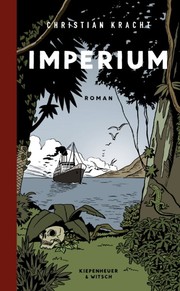
Imperium is a 2012 novel by the Swiss writer Christian Kracht. It recounts the story of August Engelhardt, a German who in the early 20th century founded a religious order in German New Guinea based on nudism and a diet consisting solely of coconuts. The fictionalized narrative is an ironic pastiche.
The novel was well received by readers and literature critics alike and in 2012 was awarded the Wilhelm Raabe Literature Prize.
Plot
August Engelhardt is the author of an 1898 pamphlet entitled A Carefree Future, where he describes a utopian society founded on nudism and a diet of coconuts, so-called cocovorism. An ardent vegetarian, Engelhardt argues that just as man is God's embodiment in the animal kingdom, so too is the coconut God's embodiment in the plant kingdom; cocovorism, he concludes, is therefore the path to divinity. Fleeing the persecution he endured for his peculiarities, Engelhardt travels from Germany to the Bismarck Archipelago in German New Guinea to realize his ideas on a coconut plantation. During a stop in Ceylon, however, he meets a Tamil named Govindarajan, who also claims to be a fruitarian, in order to gain Engelhardt's trust, before robbing him of his savings. Engelhardt arrives destitute at Herbertshöhe, where he meets Emma Forsayth, known as Queen Emma, from whom he acquires the island Kabakon on credit. He also meets a sailor named Christian Slütter who studies to become a captain. Engelhardt establishes his order and hires natives as laborers for the coconut plantation, financing everything through loans and credit. He practices nudism, eats nothing but coconuts and begins advertising his new paradise abroad.
The first to answer Engelhardt's call to Kabakon and the Order of the Sun is a German named Aueckens. His initial rapport with Engelhardt crumbles when the latter discovers that he is both a homosexual and an antisemite, neither of which Engelhardt approves of. Shortly after raping Makeli, a native boy, Aueckens is found dead under mysterious circumstances. According to the perfunctory police report, he died from a falling coconut. Engelhardt then hears about a project in Fiji similar to his own, which heartens and intrigues him. A man named Mittenzwey is said to be a light eater who nourishes himself only with sunlight. Engelhardt visits Mittenzwey but discovers him to be a fraud, who in collaboration with Govindarajan accepts expensive gifts from his followers but eats food in secret.
Several years later, Max Lützow, a popular German musician suffering from hypochondria who has grown tired of the bourgeois lifestyle in Europe, arrives at Kabakon to join Engelhardt's order. His ailments soon cured, Lützow writes to German newspapers and praises cocovorism. While garnering ridicule in Germany, Lützow's letters nevertheless entice a group of young, ill-prepared Germans to embark for the Bismarck Archipelago, where they arrive destitute and fall prey to tropical diseases. Disgusted by their squalidness, Engelhardt finds them unworthy disciples and agrees to send them back home to unburden the colony. After a few years Engelhardt and Lützow fall out with each other, and the latter leaves the island. He marries Emma Forsayth but dies tragically and grotesquely immediately after the hasty wedding ceremony.
Engelhardt, abandoned, undernourished, paranoid and ill with leprosy, eventually becomes a problem for Albert Hahl, the Governor of Rabaul. Hahl hires Christian Slütter to shoot Engelhardt. When Slütter arrives at Kabakon, Engelhardt has rejected most of his philosophy, developed an abstruse antisemitic conspiracy theory, and now advocates cannibalism as the path to divinity. All the native islanders have left the plantation except Makeli, who is missing two fingers. Slütter reveals Hahl's request but refrains from killing Engelhardt.
As the years pass, Engelhardt becomes a minor zoo attraction for curious gawkers, among them Emil Nolde. During World War I, Kabakon is seized by Australian soldiers, and Engelhardt vanishes into the rainforest. After World War II, American soldiers discover the aged Engelhardt in a cave on the island of Kolombangara. He has survived by eating nuts, grass and bugs, and his leprosy has disappeared. Engelhardt tells his life story to an eager American reporter, and his biography is turned into a Hollywood film.
Origin
The real Engelhardt died in 1919, while Kracht's character lives until after World War II. Early in the novel Engelhardt is likened to Adolf Hitler. Kracht has stated that his idea behind this was that Engelhardt and Hitler drew ideas from the same period's "overall esoteric panorama."
Publication
The German edition was published by Kiepenheuer & Witsch on 16 February 2012. Two weeks after the release it had sold 80,000 copies. An English translation by Daniel Bowles was published by Farrar, Straus and Giroux in 2015. It has also been published in Spanish, Croatian, Korean, Turkish, French, Danish, Hungarian, Slovenian, Estonian, Russian, Swedish, Italian, Ukrainian, Macedonian, Hebrew, Norwegian, Dutch, Lithuanian, Romanian and Czech, with Portuguese, Mongolian, Serbian, and Bulgarian versions in preparation.
Reception
Critical response
Rheinische Post's literature critic Lothar Schröder wrote:
It is a book about visions, about a romantic, about German history up to World War II—and all of that is written in a light, self-ironic tone, so that every page is a bright reading pleasure. Kracht finds a language like it was perhaps 100 years ago, so neatly stilted, twirled, charmingly long-winded, always witty, often humorous. ... One should, no, one must celebrate Kracht—cult writer of Faserland and 1979. The only opportunity to do so is to read him.
以上文字摘自英文维基百科「Imperium (Kracht novel)」(有删节,去掉了参考文献等尾部小节),按 CC BY-SA 4.0 使用,作者为维基百科的各位编者。
资料卡
- 原题
- Imperium
- 原作语言
- 德语
- 首次出版
- 2012 年 2 月 16 日
- 作品形式
- 长篇小说
- 首版出版社
- Kiepenheuer & Witsch
- 故事发生地
- 德属新几内亚
- 故事年代
- 德属新几内亚
- 主要人物
- August Engelhardt、Emma Forsayth、Albert Hahl
资料卡来自 Wikidata Q1562043(CC0),众包数据,个别字段可能不全。