书单
百科
这个词条暂时没有中文维基百科条目,下面是英文维基百科的内容(英文原文):
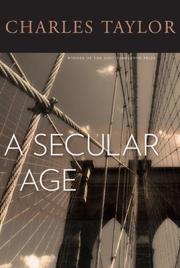
A Secular Age is a book written by the philosopher Charles Taylor which was published in 2007 by Harvard University Press on the basis of Taylor's earlier Gifford Lectures (Edinburgh 1998–99). The noted sociologist Robert Bellah has referred to A Secular Age as "one of the most important books to be written in my lifetime."
Background and overview
In recent years, secularity has become an important topic in the humanities and social sciences. Although there continue to be important disagreements among scholars, many begin with the premise that secularism is not simply the absence of religion, but rather an intellectual and political category that itself needs to be understood as a historical construction. In this book, Taylor looks at the change in Western society from a condition in which it was almost impossible not to believe in God, to one in which believing in God is simply one option of many. He argues against the view that secularity in society is caused by the rise of science and reason. He argues that this view is far too simplistic and does not explain why people would abandon their faith. Taylor starts with a description of the Middle Ages and presents the changes to bring about the modern secular age. The Middle Ages were a time of enchantment. People believed in God, angels, demons, witches, the Church's sacraments, relics, and sacred places. Each of these types of things had mysterious, real effects on individuals and society. The early Middle Ages were content to have two speeds for people's spiritual development. The clergy and a few others were at the faster, more intense speed. Everyone else was only expected to plod along at a slower spiritual speed. The High Middle Ages had a strong focus on bringing everyone along to a higher realm of spirituality and life.
Up until a few hundred years ago, the common viewpoint of the North Atlantic world was basically Christian. Most people could not even consider a viewpoint without God. The culture has changed so that multiple viewpoints are now conceivable to most people. This change is accomplished through three major facets of Deism: one, an anthropocentric shift in now conceiving of Nature as primarily for people; two, the idea that God relates to us primarily through an impersonal order that He established; and three, the idea that religion is to be understood from Nature by reason alone. Deism is considered the major intermediate step between the previous age of belief in God and the modern secular age. Three modes of secularity are distinguished: one, secularized public spaces; two, the decline of belief and practice; and three, cultural conditions where unbelief in religion is a viable option. This text focuses on secularity three.
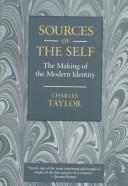
In his previous work, Sources of the Self: The Making of Modern Identity, Taylor focused on the developments which led to the identity of modern individuals in the West. This work focuses on the developments which led to modern social structures. The content of Sources of the Self is complementary to A Secular Age. Taylor discussed the political implications of A Secular Age in an interview with The Utopian.
Outline
Preface/Introduction
In his book, Taylor explores the concept of 'secularization' in the modern West and its relationship to religion, examining the different kinds of lived experiences involved in understanding one's life as a believer or unbeliever. He emphasizes that belief and unbelief are not rival theories, but different ways of experiencing life, and that both are reflective and contextualized. For believers, fullness is found in God, while for unbelievers, it is found in reason, nature, or inner depths. In the middle condition, daily activities between these extremes, meaning is created.
Part I: The Work of Reform
Taylor rejects the "subtraction" theory of secularization: that religion has been 'subtracted' (ie removed) from society. Rather, he argues that a movement of Reform in Christianity, which aimed to raise everyone up to the highest levels of religious devotion and practice, caused the move to secularization. This led to a disciplinary society that started to take action against rowdiness and indiscipline. The success of the project encouraged an anthropocentrism that opened the gates for a godless humanism. Taylor sees "three important forms of social self-understanding": the economy, the public sphere, and the practices and outlooks of democratic self-rule. Both the economy and the public sphere are conceived as existing independent of the political power.
Part II: The Turning Point
The program of Reform created a distance between humans and God, leading to the rise of exclusive humanism and a move away from traditional religion. The changing understanding of God in recent centuries is more complicated than just a move to an indifferent universe, and the motive force behind the Enlightenment's use of reason and science was reformed Christianity. The new epistemic predicament led to a shift towards exploring impersonal orders with disengaged reason and forming societies under the normative provisions of the Modern Moral Order, which represents a significant change in horizon.
以上文字摘自英文维基百科「A Secular Age」(有删节,去掉了参考文献等尾部小节),按 CC BY-SA 4.0 使用,作者为维基百科的各位编者。
资料卡
- 原题
- A Secular Age
- 原作语言
- 英语
- 首次出版
- 2007 年
- 体裁
- 随笔
- 首版出版社
- 哈佛大学出版社
- 主题
- 世俗主义
资料卡来自 Wikidata Q3819129(CC0),众包数据,个别字段可能不全。