书单
百科
这个词条暂时没有中文维基百科条目,下面是英文维基百科的内容(英文原文):
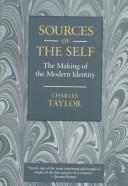
Sources of the Self: The Making of the Modern Identity is a work of philosophy by Charles Taylor, published in 1989 by Harvard University Press. It is an attempt to articulate and to write a history of the "modern identity".
Summary
The book "is an attempt to articulate and write a history of the modern identity ... what it is to be a human agent: the senses of inwardness, freedom, individuality, and being embedded in nature which are at home in the modern West."
Part I: Identity and the Good
Before considering the sources of the modern identity, Taylor illuminates the inescapable and yet often unarticulated, or unseen, moral frameworks within which contemporary moral values exist. Taylor articulates these moral frameworks in terms of three axes. The first axis refers to beliefs about the value of human life, how people should be treated, the respect we afford to human life and the moral obligations these beliefs demand from us. The second moral axis refers to beliefs about the kind of life that is worth living, beliefs that permeate our choices and actions in our day to day existence. The third axis refers to the dignity we afford to ourselves and others based on how we understand our role and perhaps usefulness in society.
Taylor illuminates and emphasizes the moral framework for our values because he feels it is invisible to many in contemporary society. Those, for example, who ascribe either explicitly or unreflectively to a utilitarian moral outlook, rationally calculate the greatest good for the greatest number. Many followers of Immanuel Kant also depend on a rational formula for moral action. In Kantian terms this is calculated in terms of reasoning towards moral maxims that would be universally acceptable. Utilitarians and Kantians, however, neglect to enquire why particular goods constitute the greatest good. Why, Taylor asks, would the greatest good be articulated in terms of benevolence as opposed to hedonism? What are the motives that lead a society, and individuals within that society, to rationally calculate a benevolent formula for mutual existence? Utilitarians and followers of Kant provide an answer to these questions in terms of how we calculate the outcome of our acts and (for Kantians) the motives behind our actions. Taylor describes such moral frameworks as procedural; a framework that emphasizes the process by which we come to act and does not articulate the substantive qualitative distinctions about what constitutes a moral good and how differing goods can be of differing value.
Taylor argues that qualitative distinctions about the constitution and value of moral goods are intrinsic to human existence. He positions his thesis in contrast to the naturalist understanding of human life, and first considers a reductive naturalism that holds that all human activity, and hence all human values, can be reduced to laws of nature—laws of nature that preclude qualitative distinctions among moral goods. In response to reductive naturalism, Taylor first notes the ad hominem argument that those who espouse some form of reductive naturalism nonetheless make, and cannot avoid but to make, qualitative distinctions as to the goods by which they live their lives. At the same time, Taylor recognizes that the moral frameworks of past generations, frameworks such as those that understood man as God's creature, have become fractured and that countless other moral frameworks have emerged. The reductive naturalist may object that these frameworks are simply interpretations or re-interpretations of contemporary understandings of the natural world and man's place in it. Moreover, all such moral frameworks are no more than passing modes of interpretation that have no true bearing on man's existence.
Taylor responds to this objection by discussing identity. It is not simply an ad hominem argument that the reductive naturalist cannot avoid making qualitative distinctions among moral goods. Rather, the qualitative distinctions that the reductive naturalist, or anyone else, makes are constitutive of that person's identity; an identity that involves one's understandings of self as a person within a particular family, religion, profession, nation and so on. Taylor argues that the qualitative distinctions we make are intrinsic to the way we conduct our lives, they constitute an orientation towards the world. To provide the best account of human life, the identity that orients each of us towards particular kinds of activity and social understandings must be accounted for. Such an orientation is irreducible to any set of laws of nature that does not account for the qualitative distinctions in moral goods that a particular individual or particular cultural community adhere to; distinctions that in differing cultural communities at differing times place differing values upon differing social intuitions.
Taylor recognizes another, more sophisticated, form of naturalism that he referred to as projectionist naturalism. The projectionist recognizes the irreducibility of human identity to laws of nature. People orient to the world within moral frameworks that guide their action. However, the projectionist will argue, such orientations are a subjective tint upon a value-neutral universe. The projectionist claim is often highlighted at the cusp of two cultures where one moral claim, say, putting a woman in purdah to protect modesty conflicts with another such as a woman's right to self-determination. In such a case, a moral axis (the dignity of persons) can be understood within very different frameworks. And yet, the projectionist will argue, there is no resolution to the conflict, because there are no universal criteria for resolving the subjective beliefs of different cultural communities. There are no universal criteria because qualitative distinctions of goods cannot be measured against a value-neutral universe.
以上文字摘自英文维基百科「Sources of the Self」(有删节,去掉了参考文献等尾部小节),按 CC BY-SA 4.0 使用,作者为维基百科的各位编者。
资料卡
- 原题
- Sources of the Self
- 原作语言
- 英语
- 首次出版
- 1989 年
- 首版出版社
- 哈佛大学出版社
- 主题
- 身份
资料卡来自 Wikidata Q7565180(CC0),众包数据,个别字段可能不全。