书单
百科
这个词条暂时没有中文维基百科条目,下面是英文维基百科的内容(英文原文):
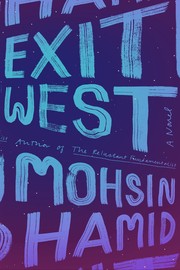
Exit West is a 2017 novel by British-Pakistani author Mohsin Hamid. The novel, which can be considered fantasy or speculative fiction, is about a young couple, Saeed and Nadia, who live in an unnamed city undergoing civil war and finally have to flee, using a system of magical doors that lead to different locations around the globe. The main themes of the novel are emigration and refugee problems.
Scholars have analyzed Exit West for its suggestions about global politics, use of technology, and calls for better treatment of the environment.
Exit West won Los Angeles Times Book Prize for Fiction (2017) and Aspen Words Literary Prize (2018) and was shortlisted for a number of other awards.
Plot
Nadia and Saeed meet when they are working students in an unnamed city. Saeed is more conservative and still lives at home, as custom generally requires, but the more independent Nadia has chosen to live alone and has been disowned by her parents for doing so. Saeed and Nadia meet and eventually fall in love. After Saeed's mother is killed by a stray bullet while searching for a lost earring in her car, Nadia moves in with Saeed and his father, despite not wanting to marry Saeed as propriety requires.
As the militants successfully wrest control of the city from the government and violence becomes an every day part of life, Nadia and Saeed begin chasing rumours that there are doors in the city that serve as portals to other locations. Although most of the doors are guarded by militants, they manage to bribe their way through a door, leaving behind Saeed's father who does not wish to be a burden to them and asks Nadia to promise him never to leave Saeed until they are settled.
The door they go through takes them to Mykonos, where they are among many refugees and settle in a tent city. They eventually obtain the compassion of a local Greek girl who has a rapport with Nadia and helps the two go through a recently discovered door which leads to a luxury home in London. Nadia and Saeed and other migrants settle in the home, claiming it from its owners.
As more migrants penetrate London, hostility between the migrants and the native-born increases, including attacks and mob rule. The migrants are eventually sectioned off in a ghetto with minimal food and electricity called "Dark London." After a raid to clear out migrants goes wrong, the natives decide to try to work together with the new migrants and put them to work clearing the land for Halo London, a city surrounding London-proper, with the promise that they will be given 40 meters and a pipe i.e. a small plot of land and access to utilities. Nadia and Saeed throw themselves into the work as they feel themselves growing apart from each other.
Although the couple are on a list that puts them among the first to obtain a secure home, Nadia asks Saeed to leave through another portal and they eventually take their chance arriving in Marin County, California. They find they are generally welcome there and Nadia finds work at a food co-op while Saeed becomes more and more religious. Eventually, realizing that they no longer have any feelings for one another, Nadia leaves Saeed and moves into a room at the co-op, forming a relationship with a cook who works there. Saeed, meanwhile, marries the native-born daughter of a preacher.
Fifty years later, Nadia returns to the country of her birth and meets up with Saeed, who offers to one day take her to see the stars in Chile.
Background
Since 2010, Hamid has emerged as an author known for writing fiction that explores alternate ways of global living and emphasizes the disadvantages of being born in a third-world country. Hamid wrote Moth Smoke (2000), The Reluctant Fundamentalist (2007), How to Get Filthy Rich in Rising Asia (2013), and then Exit West in 2017. All four stories focus on the experiences and journeys of characters originally from Pakistan.
Written within the era of Trump and Brexit, Mohsin Hamid wrote Exit West as a way for readers to look at the refugee crisis from a different perspective. Hamid explains that borders for countries are extremely “unnatural” and the issue with migrants and refugees is that their movement is thought of as a problem that needs to be solved. Hamid believes that refugees and migrants, or anyone for that matter, should be able to travel freely throughout the world. Hamid also explains that reading can help people see things from a different perspective, which means that people can become more cognizant of others’ situations and see solutions they never thought possible before. Hamid wrote Exit West to broaden people’s thoughts about the refugee crisis. He wanted to give readers an alternative perspective on how the people could operate in one world instead of one nation. With the election of Donald Trump in 2016 and his strict border policies, Hamid is trying to show readers that a world without borders is not only possible, but desirable.
Reception
Reviews
Omar El Akkad in The Globe and Mail calls the novel "a masterpiece of humanity and restraint." Sarah Begley of Time magazine praised its relation to the ongoing Syrian refugee crisis and making a love story of refugees nevertheless feel universal. The Guardian defined it as a "magical vision of the refugee crisis." In December 2017, former U.S. President Barack Obama included Exit West in his list of the best books he read in 2017. Writing in The New Yorker, Jia Tolentino described how "the novel feels immediately canonical, so firm and unerring is Hamid’s understanding of our time and its most pressing questions."
以上文字摘自英文维基百科「Exit West」(有删节,去掉了参考文献等尾部小节),按 CC BY-SA 4.0 使用,作者为维基百科的各位编者。
资料卡
- 原题
- Exit West
- 原作语言
- 英语
- 首次出版
- 2017 年 3 月 2 日
- 作品形式
- 长篇小说
资料卡来自 Wikidata Q29344661(CC0),众包数据,个别字段可能不全。