书单
百科
这个词条暂时没有中文维基百科条目,下面是英文维基百科的内容(英文原文):
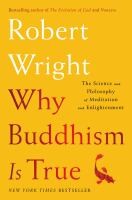
Why Buddhism is True: The Science and Philosophy of Meditation and Enlightenment is a 2017 book by Robert Wright. As of August 2017, the book had peaked at The New York Times No. 4 bestseller in hardcover nonfiction.
Content
In Why Buddhism is True, Wright advocates a secular, Westernized form of Buddhism focusing on the practice of mindfulness meditation and stripped of supernatural beliefs such as reincarnation. He further argues that more widespread practice of meditation could lead to a more reflective and empathetic population and reduce political tribalism. In line with his background, Wright draws heavily on evolutionary biology and evolutionary psychology to defend Buddhism's diagnosis of the causes of human suffering. He argues that the modern psychological idea of the modularity of mind resonates with the Buddhist teaching of no-self (anatman).
Reception
Why Buddhism is True received a number of positive reviews from major publications. The neuroscientist Antonio Damasio, reviewing the book in The New York Times, wrote, "Wright's book is provocative, informative and, in many respects, deeply rewarding." Kirkus Reviews called the book a "cogent and approachable argument for a personal meditation practice based on secular Buddhist principles." Adam Frank, writing for National Public Radio, called it "delightfully personal, yet broadly important".
There were also mixed reviews. Adam Gopnik wrote in The New Yorker that he respected Wright's candor and the reported benefits of his meditative practice, but remained skeptical that any strictly secularized (i.e. stripped of all supernaturality) form of traditional religion could be a compelling enough belief system in the long run. The Washington Post wrote that while Wright "does not make a fully convincing case for some of his more grandiose claims about truth and freedom, his argument contains many interesting and illuminating points."
In 2020, Evan Thompson questioned what he called Buddhist exceptionalism, "the belief that Buddhism is superior to other religions... or that Buddhism isn't really a religion but rather is a kind of 'mind science,' therapy, philosophy, or a way of life based on meditation." Thompson questioned both Wright's version of secularized and naturalized Buddhism and, conversely, Wright's conception of evolutionary psychology that Wright claims Buddhism is uniquely equipped to address.
以上文字摘自英文维基百科「Why Buddhism Is True」(去掉了参考文献等尾部小节),按 CC BY-SA 4.0 使用,作者为维基百科的各位编者。
资料卡
- 原题
- Why Buddhism Is True
- 原作语言
- 英语
- 首次出版
- 2017 年
- 首版出版社
- 西蒙与舒斯特
- 前作
- The Evolution of God
- 主题
- 世俗佛教
资料卡来自 Wikidata Q48726642(CC0),众包数据,个别字段可能不全。