书单
百科
这个词条暂时没有中文维基百科条目,下面是英文维基百科的内容(英文原文):
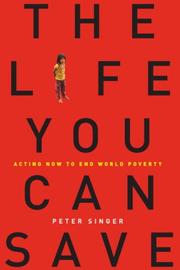
The Life You Can Save: Acting Now to End World Poverty is a 2009 book by Australian philosopher Peter Singer, in which the author argues that citizens of affluent nations are behaving immorally if they do not act to end the poverty they know to exist in developing nations.
The book is focused on giving to charity, and discusses philosophical considerations, describes practical and psychological obstacles to giving, and lists available resources for prospective donors (e.g. charity evaluators). Singer concludes the book by proposing a minimum ethical standard of giving.
In December 2019, Singer announced the release of a revised tenth anniversary edition, available as a free eBook or audiobook from the website of The Life You Can Save, an organization founded to advance the book's ideas.
Synopsis
The philosophical argument
Singer presents the following argument in the book:
First premise: Suffering and death from lack of food, shelter and medical care are bad.
Second premise: If it is in your power to prevent something bad from happening, without sacrificing anything nearly as important, it is wrong not to do so.
Third premise: By donating to aid agencies, you can prevent suffering and death from lack of food, shelter and medical care, without sacrificing anything nearly as important.
Conclusion: Therefore, if you do not donate to aid agencies, you are doing something wrong.
Singer argues that it is obvious that an adult ought to save a child from drowning unless that individual is risking something as valuable as the child's life. Singer points out that as many as 27,000 children die every day from poverty that could be easily and cheaply helped by existing charities (see also List of preventable causes of death).
Singer says that many of his readers enjoy at least one luxury that is less valuable than a child's life. He says his readers ought to sacrifice such a luxury (e.g. bottled waters) and send proceeds to charity, if they can find a reliable charity.
Singer spends time clarifying that people have a right to spend money any way they want, but says that fact does not change the way one ought to spend it. The author also notes that some people may be indifferent to the impact they could have, but says this consideration also fails to change how people ought to act.
Singer's central thesis is that, a given individual may be able to point to others doing nothing, but that individual still ought to do as much as they can. The title of the book comes from the fact that Singer addresses readers directly, asking them what they will do about "the life you can save".
The psychology of giving (or not giving)
Singer says that citizens of richer nations do not donate as much as they could. The author says the reasons are not philosophical, but due to psychological considerations including cognitive dissonance, diffusion of responsibility and the evolutionary history of human ancestors. For instance, according to Singer, cognitive dissonance theory predicts that humans are rationalizing creatures, making it difficult to change their minds on topics (e.g. charity) that cause any anxiety—unless they are highly motivated to bear it during long contemplation.
Singer contends that humans are highly capable of establishing social circles where giving is the norm, and he offers Bill Gates's Giving Pledge as an example. Singer expresses the hope that an entire culture of giving can develop, allowing individuals to fully admit to themselves how selfish certain individuals have become with their money. The author compares individuals like Paul Farmer (a physician that the author describes as making many sacrifices) with billionaire Paul Allen (who, Singer says, spent $200 million to build the Octopus—a 413-foot personal yacht that requires a crew of sixty).
The state of foreign aid today
Singer says there is a common misconception that all charities are inefficient or corrupt. He endorses GiveWell, a charity evaluator, as a way to identify the most reliable, effective charities. Singer then describes some common causes of death and suffering in poor countries along with the costs of their solutions. The author uses the example of $5 nets that can protect children from catching malaria from mosquitos during the night. Singer emphasizes that there are many costs involved with putting these solutions into practice. He refers to charity estimates that roughly $1000 can save a human life (As of 2013, GiveWell's top charity, Against Malaria Foundation, is estimated to save one life roughly every $2300 donated.)
Singer's new standard of giving
Singer says the earth has limited resources, but says this is a weak argument against donating. According to Singer, education and development actually lead to lower birth rates and decrease the risks of overpopulation. Singer adds that affluent nations consume much more food than they need by feeding it to animals and then eating the animals.
Singer settles on a standard of giving: at least 1% of net income (although he goes into more detail about how this percentage might increase as one's income increases). He justifies his decision by saying that, although we ought to give much more, it is not practical to demand much more, and trying to do so may turn people off from giving anything at all.
Singer emphasizes the importance of being practical when it comes to getting as much money as possible to the poor, even if that means holding people to lower standards as a means of changing their habits.
Singer's seven steps
According to the author, there are several steps that one can take to become a part of the solution to end world poverty.
The author asks the reader to calculate at least 1% of their income and then donate it. Singer further suggests taking steps to foster a culture of giving (using social networks while staying positive and avoiding the emotion of guilt due to cognitive dissonance). Singer goes on to offer other ways to promote a culture of giving.
Singer maintains that the last, important step of donating is to feel good about making a difference. He argues that too much guilt may result in inaction, dooming the poor.
以上文字摘自英文维基百科「The Life You Can Save」(有删节,去掉了参考文献等尾部小节),按 CC BY-SA 4.0 使用,作者为维基百科的各位编者。
资料卡
- 原题
- The Life You Can Save
- 原作语言
- 英语
- 首次出版
- 2009 年
- 体裁
- 哲学
- 首版出版社
- 兰登书屋
- 续作
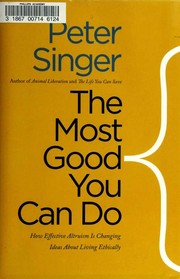
- The Most Good You Can Do
- 主题
- 贫穷
资料卡来自 Wikidata Q6967851(CC0),众包数据,个别字段可能不全。