书单
百科
这个词条暂时没有中文维基百科条目,下面是英文维基百科的内容(英文原文):
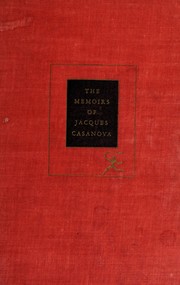
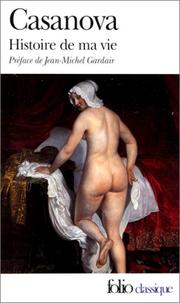
Histoire de ma vie (The Story of My Life) is both the unfinished memoir and autobiography of Giacomo Casanova, a famous 18th-century Venetian adventurer. A previous, bowdlerized version was originally known in English as The Memoirs of Jacques Casanova (from the French Mémoires de Jacques Casanova) until the original version was published between 1960 and 1962. The unexpurgated English translation was published between 1966 and 1971.
From 1838 to 1960, all the editions of the memoirs were derived from the censored editions produced in German and French in the early nineteenth century. Arthur Machen used one of these inaccurate versions for his English translation published in 1894 which remained the standard English edition for many years.
Although Casanova was Venetian, the book is written in French, which was the dominant language of the educated classes at the time. The book covers Casanova's life only through 1774, although the full title of the book is Histoire de ma vie jusqu'à l'an 1797 (History of my Life until the year 1797).
On 18 February 2010, the National Library of France purchased the 3,700-page manuscript of Histoire de ma vie for approximately €7 million (£5,750,000). The manuscript is believed to have been given to Casanova's nephew, Carlo Angiolini, in 1798. The manuscript is believed to contain pages not previously read or published. Following this acquisition, a new edition in the prestigious Bibliothèque de la Pléiade, based on the manuscript, was published from 2013 to 2015.
Contents of the book
The book comprises 12 volumes and approximately 3,500 pages (1.2 million words) covering Casanova's life from his birth to 1774.
Story of the manuscript
Casanova allegedly wrote the first chapters of the book in 1789, during a profound illness.
In 1794, Casanova met Charles Joseph, Prince de Ligne. The two of them established a mutual friendship. The Prince expressed a desire to read Casanova's memoirs, and Casanova decided to polish the manuscript before sending it to the Prince. After reading at least the first three tomes of the manuscript, Charles Joseph suggested that the memoir be shown to an editor in Dresden to publish in exchange for an annuity. Casanova was convinced to publish the manuscript, but chose another route. In 1797, he asked Marcolini Di Fano, minister in the Cabinet of the Saxon court, to help him with the publication.
In May 1798, Casanova was alone in Dux. He foresaw his death and asked for members of his family currently residing in Dresden to come and support him in his last moments. Carlo Angiolini, the husband of Casanova's niece, traveled without delay from Dresden to Dux. After Casanova's death, he returned to Dresden with the manuscript. Carlo himself died in 1808 and the manuscript passed to his daughter Camilla. Because of the Napoleonic Wars, the climate was not favorable for publishing the memoirs of a character belonging to a past age. After the Battle of Leipzig (1813), Marcolini remembered the manuscript and offered 2500 thalers to Camilla's tutor, who judged the offer too modest and refused.
After some years, the recession compromised the wealth of Camilla's family. She asked her brother Carlo to quickly sell the manuscript. In 1821, it was sold to the publisher Friedrich Arnold Brockhaus. Brockhaus asked Wilhelm von Schütz to translate the book into German. Some extracts of the translation and the first volume were published as early as 1822. The collaboration between Brockhaus and Schütz stopped in 1824, after the publication of the fifth volume. The other volumes were then translated by another, unknown translator.
Due to the success of the German edition, the French editor Victor Tournachon decided to publish the book in France. Tournachon had no access to the original manuscript, and so the French text of his edition was translated from the German translation. The text was heavily censored. In response to the piracy Brockhaus brought out a second edition in French, edited by Jean Laforgue (1782–1852) which was very unreliable, as Laforgue altered Casanova's religious and political views as well as censoring sexual references. The French volumes were published from 1826 to 1837. These editions were also successful, and another French pirate edition was prepared with another translation from the German edition. As the German edition was not entirely published at this time, this edition allegedly contains passages invented by the translator.
From 1838 to 1960, all the editions of the memoirs were derived from one of these editions. Arthur Machen used one of these inaccurate versions for his English translation published in 1894 which remained the standard English edition for many years.
The original manuscript was stored in the editor's head office in Leipzig until 1943, when after the closure of the office, Brockhaus himself secured them in a bank, saving them just before the 1943 bombings of Leipzig. In June 1945, it was moved to the new head office in Wiesbaden by American troops. In 1960, a collaboration between Brockhaus and the French editor Plon led to the first original edition of the manuscript.
In 2010, thanks to the support of an anonymous donor, the manuscript was purchased by the Bibliothèque nationale de France for over $9 million, the institution's most expensive acquisition to date.
Main editions
Schütz translation (1822–1828)
This first edition is a censored German translation for Brockhaus (the first half was translated by Wilhelm von Schütz, the remaining parts by an unknown translator). Its "original" title is: Aus den Memoiren des Venetianers Jacob Casanova de Seingalt, oder sein Leben, wie er es zu Dux in Böhmen niederschrieb. Nach dem Original-Manuscript bearbeitet von Wilhelm von Schütz.
Tournachon-Molin translation (1825–1829)
The success of the first German edition spawns the pirate Tournachon-Molin edition, without access to the original manuscript. The first French edition is a German to French translation from the French to German Schütz translation, which results in a very approximate and imperfect text.
以上文字摘自英文维基百科「Histoire de ma vie」(有删节,去掉了参考文献等尾部小节),按 CC BY-SA 4.0 使用,作者为维基百科的各位编者。
资料卡
- 原题
- Histoire de ma vie
- 原作语言
- 法语
- 体裁
- 回忆录、自传
资料卡来自 Wikidata Q649013(CC0),众包数据,个别字段可能不全。
改编作品
电影1
- 《费里尼的卡萨诺瓦》Fellini's Casanova
舞台剧 / 歌剧 / 芭蕾1
- 《卡萨诺瓦回家之路》Casanova's Homecoming
名单来自 Wikidata(CC0):只列条目里写明「改编自 / 取材于」这本书的作品,不按名字猜;众包数据,可能不全。