书单
百科
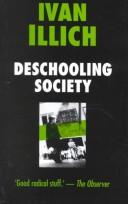
《去学校化社会》(Deschooling Society)出版于1971年,是奥地利哲学家伊万·伊里奇(Ivan Illich)对现代经济条件下教育的批判性论述。这本书使其引起公众注意。书中举例说明了制度化教育的无效性,提出了自我指导的教育,由流动的非正式安排中的社会关系支持。
通过学校普及教育是不可行的。如果尝试通过建立现有学校风格的替代机构,也不会更加可行。既没有教师对学生的新态度,也没有教育硬件或软件 (在教室或卧室) 的激增,还没有最终试图扩大教师的责任,直到它吞没学生的一生,从事普及教育。目前对新的教育 "漏斗" 的搜索必须反其道而行之:教育 "网络"增加了每个人将自己生活的每一个时刻转化为学习、分享和关怀的机会。我们希望为那些对教育进行这种反因素研究的人 – 以及那些寻求替代者,贡献所需要的概念。
最后一句清楚地表明了标题的含义—教育的制度化被认为是使社会制度化的,而去制度化教育的想法可能是去制度化社会的起点。
以上文字摘自维基百科「去学校化社会」(去掉了参考文献等尾部小节),按 CC BY-SA 4.0 使用,作者为维基百科的各位编者。
中文维基百科的条目比较短,下面附上英文维基百科的内容(英文原文):
Deschooling Society is a 1971 book written by Austrian priest Ivan Illich that critiques the role and practice of education in the modern world.
Summary
Deschooling Society begins as a polemical work that then proposes suggestions for changes to education in society and learning in individual lifetimes. For example, he calls for the use of advanced technology to support "learning webs", which incorporate "peer-matching networks", where descriptions of a person's activities and skills are mutually exchanged for the education that they would benefit from. Illich argued that, with an egalitarian use of technology and a recognition of what technological progress allows, it would be warranted to create decentralized webs that would support the goal of a truly equal educational system:
A good educational system should have three purposes: it should provide all who want to learn with access to available resources at any time in their lives; empower all who want to share what they know to find those who want to learn it from them; and, finally, furnish all who want to present an issue to the public with the opportunity to make their challenge known.
Illich proposes a system of self-directed education in fluid and informal arrangements, which he describes as "educational webs which heighten the opportunity for each one to transform each moment of his living into one of learning, sharing, and caring."
Furthermore, he states:Universal education through schooling is not feasible. It would be no more feasible if it were attempted by means of alternative institutions built on the style of present schools. Neither new attitudes of teachers toward their pupils nor the proliferation of educational hardware or software (in classroom or bedroom), nor finally the attempt to expand the pedagogue's responsibility until it engulfs his pupils' lifetimes will deliver universal education. The current search for new educational funnels must be reversed into the search for their institutional inverse: educational webs which heighten the opportunity for each one to transform each moment of his living into one of learning, sharing, and caring. We hope to contribute concepts needed by those who conduct such counterfoil research on education—and also to those who seek alternatives to other established service industries.The final sentence, above, clarifies Illich's view that education's institutionalisation fosters society's institutionalisation, and so de-institutionalising education may help de-institutionalize society. Further, Illich suggests reinventing learning and expanding it throughout society and across persons' lifespans.
Once again, most influential was his 1971 call for advanced technology to support "learning webs":The operation of a peer-matching network would be simple. The user would identify himself by name and address and describe the activity for which he sought a peer. A computer would send him back the names and addresses of all those who had inserted the same description. It is amazing that such a simple utility has never been used on a broad scale for publicly valued activity.According to a review in the Libertarian Forum, "Illich's advocacy of the free market in education is the bone in the throat that is choking the public educators." Yet, unlike libertarians, Illich opposes not merely publicly funded schooling, but schools as such. Thus, Illich's envisioned disestablishment of schools aimed not to establish a free market in educational services, but to attain a fundamental shift: a deschooled society. In his 1973 book After Deschooling, What?, he asserted, "We can disestablish schools, or we can deschool culture." In fact, he called advocates of free-market education "the most dangerous category of educational reformers."
Learning Networks
Developing this idea, Illich proposes four Learning Networks:
Reference Service to Educational Objects - An open directory of educational resources and their availability to learners.
以上文字摘自英文维基百科「Deschooling Society」(有删节,去掉了参考文献等尾部小节),按 CC BY-SA 4.0 使用,作者为维基百科的各位编者。
资料卡
- 原题
- Deschooling Society
- 原作语言
- 英语
- 首次出版
- 1971 年
- 主题
- 教育制度、教育
- 故事发生地
- 美国
资料卡来自 Wikidata Q5263759(CC0),众包数据,个别字段可能不全。