 书单
百科
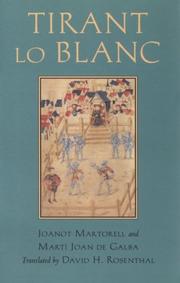
《骑士蒂朗》(巴伦西亚语:Tirant lo Blanch;现代正字法:Tirant lo Blanc)是一部由巴伦西亚骑士朱亚诺·马托雷尔所著的骑士小说,于他去世之后的1490年,才由马蒂·祖安·德·加尔巴在巴伦西亚出版。此书原名意为“白骑士蒂朗”,即本书主角。这部小说是最广为人知的中世纪巴伦西亚语文学之一,还因它对米格尔·德塞万提斯的影响而在西方小说的演化史中扮演了重要角色。
小说的名字在现代巴伦西亚语中拼作“Tirant lo Blanc”,但其实在它的原名“Tirant lo Blanch”中的“h”是不发音的。
故事概要
《骑士蒂朗》讲述了一名来自布列塔尼的中世纪骑士“白脸蒂朗”的一系列横跨欧洲的冒险历程。他在英国和法国参与骑士竞赛,直到拜占庭帝国的皇帝请他帮忙对抗奥斯曼土耳其人,当时这帮伊斯兰入侵者一直是帝国首都君士坦丁堡的巨大威胁。蒂朗接受请求前往拜占庭,皇帝册封他为大公,并任命其为军队统帅。他率军击败土耳其人,将帝国从毁灭中拯救出来。之后,他又持续在地中海东部和北非区域同土耳其人征战。当他即将可以迎娶美丽的拜占庭女继承人时,却不幸身亡。
1453年,拜占庭帝国被奥斯曼帝国灭亡,这对基督教欧洲来说是个沉重打击。因此当马杜尼在写这部小说时,他可能按照自己的意愿,即他所希望的那样改写了历史,这在某种程度上使此书成为了当代架空历史小说的前身。
电影改编
2006年上映的西班牙电影《战国英雄》改编自这部小说,电影剧情主要依照小说的后半部分,即当蒂朗到达君士坦丁堡以后的故事。
以上文字摘自维基百科「騎士蒂朗」(去掉了参考文献等尾部小节),按 CC BY-SA 4.0 使用,作者为维基百科的各位编者。
中文维基百科的条目比较短,下面附上英文维基百科的内容(英文原文):
Tirant lo Blanch (Valencian: [tiˈɾand lo ˈblaŋ(k)]; modern spelling: Tirant lo Blanc), in English Tirant the White, is a chivalric romance written by the Valencian knight Joanot Martorell, finished posthumously by his friend Martí Joan de Galba and published in the city of Valencia in 1490 as an incunabulum edition. The title means "Tirant the White" and is the name of the romance's main character who saves the Byzantine Empire.
The book is considered a masterpiece of Valencian literature and, more generally, of Catalan literature, and it is one of the best known medieval works of literature in the Valencian language (also known as Catalan), notable for its use of many Valencian and Catalan proverbs. It played an important role in the evolution of the Western novel through its influence on the author Miguel de Cervantes and has been called a precursor to the present-day genre of uchronia or alternate history.
Plot
Tirant lo Blanch tells the story of a knight Tirant from Brittany who has a series of adventures across Europe in his quest. He joins in knightly competitions in England and France until the Emperor of the Byzantine Empire asks him to help in the war against the Ottoman Turks, Islamic invaders threatening Constantinople, the capital and seat of the Empire. Tirant accepts and is made Megaduke of the Byzantine Empire and the captain of an army. He defeats the invaders and saves the Empire from destruction. Afterwards, he fights the Turks in many regions of the eastern Mediterranean and North Africa, but he dies just before he can marry the pretty heiress of the Byzantine Empire.
Authorship and composition
Tirant lo Blanc was written between 1460 and 1464 by Valencian knight Joanot Martorell. The place of composition remains unclear, for the whereabouts of the author during his last years of life are unknown: a hypothesis suggests that, upon the death of Alphonse the Magnanimous, the author returned to Valencia and wrote the novel there; another one claims that Martorell wrote it in Barcelona when he joined the court of Charles, Prince of Viana during his rebellion against his father (a theory which befits the dedication of the book to Prince Ferdinand of Portugal); finally, another hypothesis identifies the author with a knight named "Joan Martorell" living in Dénia at the time of composition.
The book was published posthumously in València in 1490, in Nicholas Spiendeler press. The manuscript had been pawned by Martorell to Martí Joan de Galba as a pledge for the repayment of his debts, and Galba himself self-attributed co-authorship of the work in its colophon. Galba's contribution to the final manuscript is still an object of debate among modern scholars.
Themes
Compared to books of the same time period, it lacks the bucolic, platonic, and contemplative love commonly portrayed in the chivalric heroes. Instead the main character is full of life and sensuous love, sarcasm, and human feelings. The work is filled with down to earth descriptions of daily life, prosaic and even bitter in nature.
Language and style
Tirant lo Blanc is a lengthy novel that presents a wide variety of registers and styles. Characters alternate a rhetorical and a colloquial style, a trait that could derive from the fact that the novel was written to be read out aloud. Much of the colloquial style is reinforced by the frequent use of Catalan phraseology, often extracted from other texts in the form of intertextuality.
The lexicon in the first three parts of Tirant is significantly more archaic than the lexicon in the last two parts and the colophon, a fact that has been used to argue in favour of a double authorship of the novel. When it comes to dialectal variation, the lexical choices by Martorell alternate, throughout the entire novel, between Valencian and general Catalan geosynonyms (for example, “alqueria” and “mas”; in English “hamlet”), with a slight preference for Valencian forms as long as they were also present in the formal register used by the Royal Chancillery of the Crown of Aragon.
以上文字摘自英文维基百科「Tirant lo Blanch」(有删节,去掉了参考文献等尾部小节),按 CC BY-SA 4.0 使用,作者为维基百科的各位编者。
资料卡
- 原题
- Tirant lo Blanch
- 原作语言
- 加泰罗尼亚语
- 首次出版
- 1490 年 11 月 20 日
- 体裁
- 骑士文学
- 首版出版社
- 马蒂·祖安·德·加尔巴
- 主要人物
- Tirant lo Blanc、Carmesina、Plaerdemavida、Guillem de Varoïc
资料卡来自 Wikidata Q559667(CC0),众包数据,个别字段可能不全。