书单
百科
这个词条暂时没有中文维基百科条目,下面是英文维基百科的内容(英文原文):
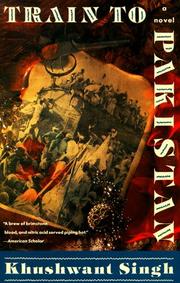
Train to Pakistan is a historical novel by writer Khushwant Singh, published in 1956. It recounts the Partition of India in August 1947 through the perspective of Mano Majra, a fictional border village.
Instead of depicting the Partition in terms of only the political events surrounding it, Khushwant Singh digs into a deep local focus, providing a human dimension which brings to the event a sense of reality, horror, and believability.
Plot
Mano Majra, the fictional village on the border of Pakistan and India in which the story takes place, is predominantly Muslim and Sikh.
The town is next to a railroad station that is frequently visited by trains on a certain schedule. Jaggat Singh, a local hooligan has an affair with the daughter of the local Imam - Nooran. One day in Mano Majra, a group of robbers enter Hindu moneylender Lala Ram Lal's home and murder him while stealing his belongings. The criminals, who were previously acquainted with Jaggat, throw a bag of broken bangles in the courtyard of his house as they leave. Jaggat who had snuck out of the village that night to see Nooran sees the criminals as they undo their head coverings in the forest, recognizing one as Malli of another neighboring village. The next day, a magistrate and a group of soldiers arrive in the station. At the same time, Iqbal, a foreign educated man who is politically active arrives. He is of Sikh descent but is clean shaven, cuts his long hair, and is circumsized. The magistrate is given befitting accommodations by the superintendent, who arranges for a group of performers and a young prostitute to entertain him. The magistrate orders for Jaggat and Iqbal to be arrested, making up fake charges. Iqbal is charged as Iqbal Mohammed, a leader of the Muslim League, when in fact he is of Sikh origin and is of the People's League of India. He was assigned to Mano Majra to educate the people there to rise up and claim independence from the corrupt government.
A train arrives in the station, from Pakistan, and it is full of dead Sikhs. The police burn their corpses but the next day marks the beginning of the winter monsoon, putting out the fire. As time passes, tensions rise, the nearby Sutlej River gets flooded and the villagers see the corpses of hundreds of dead people.
The magistrate gets increasingly stressed and is consoled by the young prostitute, who he takes a liking to. The villagers hear of increased violence on both Sikh and Muslim sides to each other. Malli and his gang are taken to the prison but later released. They are Sikh and the magistrate wants to blame a Muslim group for the murder of Lal, to encourage the remaining Mano Majra Muslims to leave peacefully for Pakistan. Another train of dead Sikhs arrive and the magistrate tells the superintendent to ensure that the Muslims will leave to a nearby refugee camp. The Sikhs and Muslims have lived together in Mano Majra for generations. One Muslim said, "What have we to do with Pakistan? We were born here. So were our ancestors. We have lived amongst [Sikhs] as brothers" (126). The Mano Majra Sikhs say they will look after the Muslim people's belongings as they go to the camp for a few days and tearful goodbyes are exchanged. When the cars from the Muslim commander arrive, they say the refugees can only take what they can carry, bringing up the question of their cattle and expensive belongings. The Sikh police officer in charge decides to give the role of safeguarding the belongings to Malli, who is from another village. The villagers are horrified as Malli and his friends loot all the houses.
The Sikhs begin to gather in the Gurudwara to sleep. Everyone is on edge. A young Sikh soldier and a group of armed men enter one night and aim to recruit men to kill the refugees on the train to Pakistan leaving the next night. Many of the people on the train are Muslims from Mano Majra. At first there is apprehension but the young leader appeal to emotions of the people with stories of atrocities committed against Sikhs. Iqbal, who has returned to the village and is staying at the Gurudwara, tries to convince Meet Singh (the caretaker of the Gurudwara) to influence people not to do this. Iqbal is wondering whether or not he should be a martyr for his cause but is disawayed because no one will know of his valiant effort.
The day of the planned attack arrives. The magistrate is worried because the young girl was Muslim and is on the train. The Sikh militants develop a plan to put a large steel rope 20 feet high above the tracks. This is to push off everyone on the top of the train. The plan is to also shoot at the windows to kill everyone inside the train as well.
While the militants see the train coming due to their system of flashlights to warn people ahead of the location of the train, a large man climbs one of the poles of the wire. Juggut, knowing Nooran is in one of the rail-cars, acts on instinct and hacks away at the wire. He is shot several times but tries his best to hold on and cut it apart. The train is moving so fast that the wire might cut the people on the top of train in two. He is shot and killed, sacrificing his life and saving his lover and the rest of the train to Pakistan.
Analysis
Social structure and cultural understanding among the people about the book
In a relatively short book, the reader gets to know a lot of characters in detail. Examination of the varied groups of people not only increases cultural and social understanding of that time and place, but also shows that the blame could not be placed on any one group; all were responsible.
"Muslims said the Hindus had planned and started the killing. According to the Hindus, the Muslims were to blame. The fact is, both sides killed. Both shot and stabbed and speared and clubbed. Both tortured. Both raped" (1).
以上文字摘自英文维基百科「Train to Pakistan」(有删节,去掉了参考文献等尾部小节),按 CC BY-SA 4.0 使用,作者为维基百科的各位编者。
资料卡
- 原题
- Train to Pakistan
- 首次出版
- 1956 年
- 作品形式
- 长篇小说
- 体裁
- 历史类虚构作品
资料卡来自 Wikidata Q3764753(CC0),众包数据,个别字段可能不全。
改编作品
电影1
名单来自 Wikidata(CC0):只列条目里写明「改编自 / 取材于」这本书的作品,不按名字猜;众包数据,可能不全。
更多资料与书评
在哪读
Khushwant Singh 的其他作品
作者页 ›