 书单
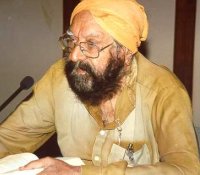
Khushwant Singh
- 生卒
- 1915 – 2014
- 国籍
- 英属印度、印度
照片:LoC SALRP project. PD https://www.loc.gov/acq/ovop/delhi/salrp/khushwantsingh.ht 等,公有领域,来自维基共享资源「Khushwantsingh.jpg」(经缩小)。
生平与创作
这个词条暂时没有中文维基百科条目,下面是英文维基百科的内容(英文原文):
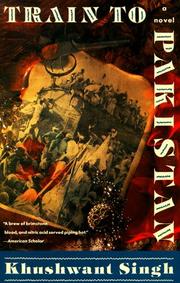
Khushwant Singh FKC (born Khushal Singh, 2 February 1915 – 20 March 2014) was an Indian author, lawyer, diplomat, journalist and politician. His experience in the 1947 Partition of India inspired him to write Train to Pakistan in 1956 (made into film in 1998), which became his most well-known novel.
Born in Punjab, Khushwant Singh was educated in Modern School, New Delhi, St. Stephen's College, and graduated from Government College, Lahore. He studied at King's College London and was awarded an LL.B. from University of London. He was called to the bar at the London Inner Temple. After working as a lawyer in Lahore High Court for eight years, he joined the Indian Foreign Service upon the Independence of India from British Empire in 1947. He was appointed journalist in the All India Radio in 1951, and then moved to the Department of Mass Communications of UNESCO at Paris in 1956. These last two careers encouraged him to pursue a literary career. As a writer, he was best known for his trenchant secularism, humour, sarcasm and an abiding love of poetry. His comparisons of social and behavioural characteristics of Westerners and Indians are laced with acid wit. He served as the editor of several literary and news magazines, as well as two newspapers, through the 1970s and 1980s. Between 1980 and 1986 he served as Member of Parliament in Rajya Sabha, the upper house of the Parliament of India.
Khushwant Singh was awarded the Padma Bhushan in 1974; however, he returned the award in 1984 in protest against Operation Blue Star in which the Indian Army raided Amritsar. In 2007, he was awarded the Padma Vibhushan, the second-highest civilian award in India.
Early life
Khushwant Singh (Punjabi: Gurmukhi: ਖ਼ੁਸ਼ਵੰਤ ਸਿੰਘ, Shahmukhi: خْوَشْوَنْت سِن٘گھ) was born in Hadali, Khushab District, Punjab (which now lies in Pakistan), in a Khatri Sikh family of the Khurana Clan. He was the younger son of Sir Sobha Singh and Veeran Bai. Births and deaths were not recorded in his time, and for him his father simply made up 2 February 1915 for his school enrollment at Modern School, New Delhi. But his grandmother Lakshmi Devi asserted that he was born in August, so he later set the date for himself as 15 August. Sobha Singh was a prominent builder in Lutyens' Delhi. His uncle Sardar Ujjal Singh (1895–1983) was previously Governor of Punjab and Tamil Nadu.
His birth name, given by his grandmother, was Khushal Singh (meaning "Prosperous Lion"). He was called by a pet name "Shalee". At school his name earned him ridicule as other boys would mock him with an expression, "Shalee Shoolee, Bagh dee Moolee" (meaning, "This shalee or shoolee is the radish of some garden.") He chose Khushwant so that it rhymes with his elder brother's name Bhagwant. He declared that his new name was "self-manufactured and meaningless". However, he later discovered that there was a Hindu physician with the same name, and the number subsequently increased.
He entered the Delhi Modern School in 1920 and studied there till 1930. There he met his future wife, Kanwal Malik, one year his junior. He studied Intermediate of Arts at St. Stephen's College in Delhi during 1930-1932. He pursued higher education at Government College, Lahore, in 1932, and got his BA in 1934 by a "third-class degree". Then he went to King's College London to study law, and was awarded an LL.B. from University of London in 1938. He was subsequently called to the bar at the London Inner Temple.
Career
Khushwant Singh started his professional career as a practising lawyer in 1939 at Lahore in the Chamber of Manzur Qadir and Ijaz Husain Batalvi. He worked at Lahore Court for eight years where he worked with some of his best friends and fans including Akhtar Aly Kureshy, Advocate, and Raja Muhammad Arif, Advocate. In 1947, he entered the Indian Foreign Service for the newly independent India. He started as Information Officer of the Government of India in Toronto, Canada, and moved on to be the Press Attaché and Public Officer for the Indian High Commission for four years in London and Ottawa. In 1951, he joined the All India Radio as a journalist. Between 1954 and 1956 he worked in Department of Mass Communication of the UNESCO at Paris. From 1956 he turned to editorial services. He founded and edited Yojana, an Indian government journal in 1951–1953; The Illustrated Weekly of India, a newsweekly National Herald. He was also appointed as editor of Hindustan Times on Indira Gandhi's personal recommendation.
During his tenure, The Illustrated Weekly became India's pre-eminent newsweekly, with its circulation raising from 65,000 to 400,000. After working for nine years in the weekly, on 25 July 1978, a week before he was to retire, the management asked Singh to leave "with immediate effect". A new editor was installed the same day. After Singh's departure, the weekly suffered a huge drop in readership. In 2016 Khushwant Singh enters Limca Book of Records as a tribute.
Politics
From 1980 to 1986, Singh was a member of Rajya Sabha, the upper house of the Indian parliament. He was awarded the Padma Bhushan in 1974 for service to his country. In 1984, he returned the award in protest against the siege of the Golden Temple by the Indian Army. In 2007, the Indian government awarded Khushwant Singh the Padma Vibhushan.
As a public figure, Khushwant Singh was accused of favouring the ruling Congress party, especially during the reign of Indira Gandhi. When Indira Gandhi announced nation-wide-emergency, he openly supported it and was derisively called an 'establishment liberal'.
Singh's faith in the Indian political system was shaken by the anti-Sikh riots that followed Indira Gandhi's assassination, in which major Congress politicians are alleged to be involved; but he remained resolutely positive on the promise of Indian democracy and worked via Citizens Justice Committee floated by H. S. Phoolka who is a senior advocate of Delhi High Court, and was a member of The Sikh Forum of Lt. Gen. Jagjit Singh Aurora.
以上文字摘自英文维基百科「Khushwant Singh」(有删节,去掉了参考文献等尾部小节),按 CC BY-SA 4.0 使用,作者为维基百科的各位编者。
资料卡
- 母语名
- Khushwant Singh 等 2 项
- 出生
- 1915 年 2 月 2 日
- 出生地
- Hadali
- 逝世
- 2014 年 3 月 20 日
- 逝世地
- 新德里 等 2 项
- 职业
- 作家、新闻工作者、政治人物、外交官、律师、诗人、专栏作家
- 使用语言
- 英语
- 就读学校
- 圣斯蒂芬学院德里分校、伦敦国王学院、政府学院大学 (拉合尔)、德里大学、伦敦大学 等 6 项
- 创作体裁
- 散文、诗歌
- 代表作
- Train to Pakistan、Delhi: A Novel
- 获奖
- 莲花装勋章(1974);另有 1 项只有外文名
资料卡来自 Wikidata Q1740716(CC0),众包数据,个别字段可能不全。
本站收录的作品(1)
作品年表(21 本)
本站书库里署名Khushwant Singh的书(Open Library 上至少 10 人加过书架的才收),按首版年份排(有本站书页的用 Wikidata 记的首版年,其余用 Open Library 的);年份偶尔记成后来的版本或译本,以原书为准。全部作品见 Open Library。
- 1938Japujī书架 10
- 1950The mark of Vishnu and other stories书架 10
- 1956Train to Pakistan书架 293
- 1956Train to Pakistan书架 14
- 1963A history of the Sikhs书架 28
- 1967A bride for the sahib and other stories书架 23
- 1983Delhi书架 86
- 1987Khushwant Singh's joke book书架 12
- 1989The Collected Short Stories of Khushwant Singh书架 16
- 1990India书架 17
- 1992Sex, scotch & scholarship书架 14
- 1999The company of women书架 23
- 1999The Company of Women书架 13
- 2000Khushwant Singh's Book of Unforgettable Women书架 10
- 2002Truth, Love and a Little Malice书架 10
- 2003The end of India书架 11
- 2004Paradise and other stories书架 10
- 2005Jannata书架 15
- 2011Khushwant Singh on women, sex, love and lust书架 36
- 2012Agnostic Khushwant书架 10
- 年份不详The company of women书架 15