 书单
百科
这个词条暂时没有中文维基百科条目,下面是英文维基百科的内容(英文原文):
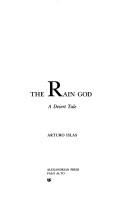
The Rain God is a novel by Arturo Islas. The story involves a Mexican family living in a town on the U.S.-Mexican border over generations. It illustrates the family's struggles with disabilities, religious orthodoxy, racialized violence, and ethnic identification. The Rain God was awarded the best fiction prize from the Border Regional Library Conference in 1985 and was selected by the Bay Area Reviewers Association as one of the three best novels of 1984.
Plot overview
In the opening chapter, Miguel Chico, son of Miguel Grande and Juanita is introduced. He is a product of a Mexican family from the southwest borderlands, the only member of the Angel family to attain a college education, and lives in San Francisco away from the family. Miguel Chico being educated, in therapy, and possibly gay, is viewed with suspicion by many of the family members, who feel obligated to the family, its various small town circumstances, and religious & cultural beliefs.
Nina, Juanita's sister, and her family become the central focus in the following chapter. After a move to a nicer home, her son Antony becomes interested in the emerging Pachuco culture of youth in the area. This causes Nina and her husband to struggle with how to set boundaries and rules for him. After one of their fights, Antony does not return, and is found drowned in all his clothes on in a local river. It's unclear if the death was a suicide, or if he was murdered, as the specter of anti-Mexican white supremacist practices floats around the various characters in the novel.
As the novels various characters and themes are developed, the religious undertones of sin & sinners becomes apparent, mostly because of the way the family moves around and responds to the matriarch: Mama Chona. Mamma Chona's son, Miguel Chico's father, Miguel Grande, is shown to not only be a machista who hates how his son acts (coming home to find him wearing dresses & playing with dolls given to him by his mother and their maid), but the way his wife makes love. He is a cop and fairly respected in the town. Miguel Grande is also dealing with the grief caused by the murder of his brother Felix. In a major scene when he shows up to pick up Felix, Grande assumes it's just another of his brother's drunken nights, but instead he finds his brother almost unrecognizable and missing a testicle. Neither the cops nor the doctor tell him who murdered Felix, but again, foul play is assumed, as Felix was known to fool around with men, even though he was married to a woman and had children.
It is also eventually revealed Grande is having an affair with Lola, who is his wife Juanita's best friend. The community knew of their infidelity, but Juanita chose to ignore it, because she liked the family & life Miguel Grande had granted her, and them. Grande tries to find absolution through Miguel Chico on a trip to SF, but Miguel Chico does not allow it; even mocking and belittling his father. Grande is thus torn between them, but chooses Lola, who also eventual leaves him by moving to L.A., after they are both confronted by Juanita.
By this point it is apparent that Islas uses the "fragmented third person narrative" to not only play with time: is the past the past; how does it shape the present; how does it design or influence the future, but the ways in which all the family members lives are connected to each other. In terms of literary tradition or references, the tension between Miguel Grande and Chico also mirrors the conflict between John and his father in Got Tell It on the Mountain; while Juanita and Lola's relationship can conjure that of Sula and Nel's from Sula. It is clear to the reader that they are in the hands of a skilled writer, as Islas even begins to bend the realism of the family's history and choices.
Chapter four expands and complicates the life Felix Angel. He is a man who helps migrants find work, loves food, and cares deeply for his family, but also cheats on his wife Angie with young men. His sexuality is an open secret in the community. Even Miguel Grande knows of Felix's desires, but does not expose him to the family, or allow it to taint his love of him, which is possibly why he is so hard on Miguel Chico. There is also a strange sequence in the chapter when Felix and Angies' youngest son, Joel, begins to sleep in the bed with them, because he can't sleep and cries at night. Later in the novel we come to find it is likely the first signs of the boys mental illness that leads to drug addiction. To Angie, Felix and Joel's embrace is almost erotic, and she eventually decides to sleep in the living room. In this chapter readers also get access to who killed Felix. He was known to offer and give rides to migrant workers or soldiers who frequented a gay bar near his job. One day he offers a young soldier a ride and Felix makes sexual advances towards him. Islas depicts the brutal murder with startling clarity and in a way that alludes to the way the land itself is eating the Angel family alive.
In the last chapter, Mama Chona is centralized. She fled the Mexican Revolution, blaming both sides for the death of her son. Throughout the whole novel Islas' portrays her as a woman who is judgmental, racist towards indigenous Mexicans, and privileges Castilian ways. In this section those markers are amplified. She picks and chooses which children and grand children she loves and shows affection for. She feels doing labor in the home is beneath her, and attempts to never expose her skin to the sun for fear of it affecting her fair skin. She is so self involved and absorbed she does not acknowledge how her choices have scared her family, and impacted their circumstances. She was so afraid of her own self/body she dies because she ignores it.
In under 200 pages Islas covers so much social, cultural and historical territory. It's a novel that deserves much more attention than has been granted to it.
以上文字摘自英文维基百科「The Rain God」(有删节,去掉了参考文献等尾部小节),按 CC BY-SA 4.0 使用,作者为维基百科的各位编者。
资料卡
- 原题
- The Rain God
- 原作语言
- 英语
- 首次出版
- 1984 年
- 作品形式
- 长篇小说
- 故事发生地
- 旧金山
资料卡来自 Wikidata Q7759311(CC0),众包数据,个别字段可能不全。