书单
百科
这个词条暂时没有中文维基百科条目,下面是英文维基百科的内容(英文原文):
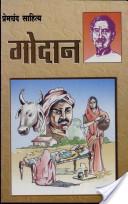
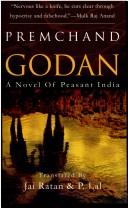
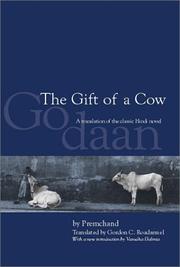
Godaan (Hindi: गोदान, Urdu: گودان, romanized: gōdān, lit. 'cow donation') is a Hindi novel by Munshi Premchand. It was the last completed novel by Premchand. It was first published in 1936 and is considered one of the greatest novels of modern Indian literature and literary experts consider it world-class rivaling to classical literature of west. Themed around the socio-economic deprivation as well as the exploitation of the village poor, the novel was the last complete novel of Premchand. It follows the story of an old poor farmer, stuck in a debt trap, who wants to purchase a cow, but is unable to do so for lack of money. It was translated into English in 1957 by Jai Ratan and Purushottama Lal as The Gift of a Cow. A 1968 translation by Gordon C. Roadarmel is now considered "a classic in itself".
Godaan was made into a Hindi film in 1963, starring Raaj Kumar, Kamini Kaushal, Mehmood and Shashikala. In 2004, Godaan was part of the 27-episode TV series, Tehreer.... Munshi Premchand Ki, [The Writings of Munshi Premchand] based on the writing of Premchand, starring Pankaj Kapur and Surekha Sikri, directed by Gulzar and produced by Doordarshan.
Plot
The story revolves around various characters representing different sections of the Indian community. Hori Mahato's family represents the rural and peasant society. His family includes his wife Dhania, daughters Rupa and Sona, son Gobar, and daughter-in-law Jhunia. The story begins with Hori's desire to own a cow, like many other poor peasants. He purchases a cow from Bhola, a cowherd, on a debt of 80 rupees.
Envious of Hori, his younger brother, Heera, poisons the cow and flees out of fear of police action. When the police arrive to inquire about the cow's death, Hori takes a loan and bribes the police to clear his younger brother's name. Jhunia, Bhola's widowed daughter, elopes with Gobar after becoming pregnant by him. Fearing the reaction of the villagers, Gobar too runs away to the town. Hori and Dhania are reluctant to drive away Jhunia as she is carrying their son's child; they decide to accept her as their daughter-in-law and offer her shelter. The village panchayat fines Hori for sheltering Jhunia, after a personal attack by the Pandit. Hori again is compelled to take a loan and pay the penalty.
Hori accumulates a huge debt from local money lenders and is eventually forced to marry off his daughter Rupa for a mere 200 rupees to save his ancestral land from auction due to unpaid land tax. However, his determination to repay those 200 rupees and get a cow to provide milk for his grandson leads to his death from overwork
In Godaan, Hori epitomizes the downtrodden peasant - a victim of his circumstances, possessing both faults and virtues. Throughout the hardships he endures, Hori stays true to his values and duties. The novel concludes with Hori's death and the bittersweet legacy he leaves behind, defined by fulfilled and unfulfilled dreams, thus providing a moving finale.
Characters
Hori is a peasant from the village of Belari. He is married to Dhania and has two daughters and a son: Sona, Rupa, and Govardhan, respectively. He is depicted as an up-righteous man and struggles throughout his life to preserve his up-righteousness. He is the eldest among his two brothers and following the parents' death, he takes it upon himself to look after them, often times sacrificing the interests of his own family. This is one of the recurring sources of tension in his marriage. Upon the death of his cow, he bribes the police to prevent them from searching Heera's house. He feels orphaned to be out of the community and hence accepts the penalty levied by the panchayat when Gobar brings home a low-caste girl. Similarly, he allows Bhola to take his ox away as he is neither able to pay the cost of it nor willing expel Jhunia from his house. They have accepted her as their daughter-in-law and her child as their grandchild. He is kind and generous. He gives shelter to Seliya, a cobbler's daughter who is exploited by Matadin, a Brahmin, and is shirked by her own people.
Dhania is Hori's wife. She is bold and fiery and cannot tolerate injustice. She raises her voice against injustice, against the wishes of Hori and irritates him. She is vexed when Hori puts up with much oppression from the money lenders and the Brahmin priest. Hori, though he beats her at times for disobeying him, knows that her arguments are correct. She makes him see the truth and the reality of facts. Unlike him, she is not lost in rigmarole of clichés and ideals. She stands by what she thinks is correct and her dharma, rather than the traditional principles of the community. She knowingly accepts into her household, a low-caste girl, as her daughter-in-law. She does not blame only Jhunia for placing them in an embarrassing position. She knows that her son, Gobar, is equally responsible. She is a loving mother. She even takes care of Heera's children when necessary, she willingly accommodates and shelters the pregnant Seliya, the cobbler's daughter. Dhania has never known a life of peace and comfort, as throughout the novel we see her struggling along with her husband for a livelihood. She is strong and irrespective of caste or creed helps the needy.
以上文字摘自英文维基百科「Godaan」(有删节,去掉了参考文献等尾部小节),按 CC BY-SA 4.0 使用,作者为维基百科的各位编者。
资料卡
- 原题
- गोदान
- 原作语言
- 印地语
- 首次出版
- 1936 年
- 作品形式
- 长篇小说
- 体裁
- 社会小说
- 主题
- 印度、贫穷、种姓制度、希望、牛、社会批判
- 故事发生地
- 印度
资料卡来自 Wikidata Q904382(CC0),众包数据,个别字段可能不全。
改编作品
电影1
名单来自 Wikidata(CC0):只列条目里写明「改编自 / 取材于」这本书的作品,不按名字猜;众包数据,可能不全。
更多资料与书评
在哪读
普列姆昌德 的其他作品
作者页 ›