书单
百科
这个词条暂时没有中文维基百科条目,下面是英文维基百科的内容(英文原文):
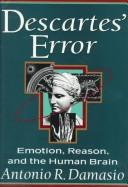
Descartes' Error: Emotion, Reason, and the Human Brain is a 1994 book by neuroscientist António Damásio describing the physiology of rational thought and decision, and how the faculties could have evolved through Darwinian natural selection. Damásio refers to René Descartes's separation of the mind from the body (the mind/body dualism) as an error because reasoning requires the guidance of emotions and feelings conveyed from the body. Written for the layperson, Damásio uses the dramatic 1848 railroad accident case of Phineas Gage as a reference for incorporating data from multiple modern clinical cases, enumerating damaging cognitive effects when feelings and reasoning become anatomically decoupled. The book provides an analysis of diverse clinical data contrasting a wide range of emotional changes following frontal lobe damage as well as lower (medulla) and anterior areas of the brain such as the anterior cingulate. Among his experimental evidence and testable hypotheses, Damásio presents the "somatic marker hypothesis", a proposed mechanism by which emotions guide (or bias) behavior and decision-making, and positing that rationality requires emotional input. He argues that René Descartes's "error" was the dualist separation of mind and body, rationality and emotion.
Publication data
Damásio, António (1994). Descartes' Error: Emotion, Reason, and the Human Brain. Putnam. ISBN 0-399-13894-3.
Harper Perennial, 1995 paperback: ISBN 0-380-72647-5
Penguin, 2005 paperback reprint: ISBN 0-14-303622-X
以上文字摘自英文维基百科「Descartes' Error」(去掉了参考文献等尾部小节),按 CC BY-SA 4.0 使用,作者为维基百科的各位编者。
资料卡
- 原题
- Descartes' Error
- 原作语言
- 英语
- 首次出版
- 1994 年
- 体裁
- 新石器时代
资料卡来自 Wikidata Q2297952(CC0),众包数据,个别字段可能不全。