 书单
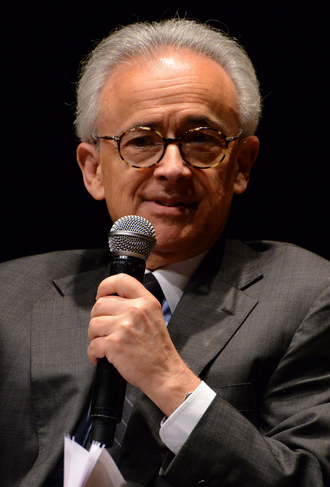
安东尼奥·达马西奥
- 生卒
- 1944 –
- 国籍
- 葡萄牙
- 外文名
- António Damásio
照片:Fronteiras do Pensamento,CC BY-SA 2.0,来自维基共享资源「António Damásio no Fronteiras do Pensamento Porto Alegre 2013 cropped.png」(经缩小)。
生平与创作
安东尼奥·达马西奥(葡萄牙语:António Damásio,1944年2月25日—)是一位葡萄牙裔美国神经科学家,南加州大学和索尔克研究所教授,2005年与其妻子安娜·达马西奥共同获得阿斯图里亚斯亲王奖的科学技术奖,主要作品有《感受与认知——让意识照亮心智》(Feeling and Knowing: Making Minds Conscious)等。
以上文字摘自维基百科「安东尼奥·达马西奥」(去掉了参考文献等尾部小节),按 CC BY-SA 4.0 使用,作者为维基百科的各位编者。
中文维基百科的条目比较短,下面附上英文维基百科的内容(英文原文):
Antonio Damasio (Portuguese: António Damásio; born 25 February 1944) is a Portuguese neuroscientist. He is currently the David Dornsife Chair in Neuroscience, as well as Professor of Psychology, Philosophy, and Neurology, at the University of Southern California, and, additionally, an adjunct professor at the Salk Institute. He was previously the chair of neurology at the University of Iowa for 20 years. Damasio heads the Brain and Creativity Institute, and has authored several books. One of the most renowned neuroscientists of his generation, Damasio's research in neuroscience has shown that emotions play a central role in social cognition and decision-making.
Life and work
During the 1960s, "Damasio studied medicine at the University of Lisbon Medical School, where he also did his neurological residency and completed his doctorate in 1974." "For part of his studies, he researched behavioral neurology under the supervision of Norman Geschwind of the Aphasia Research Center in Boston."
Damasio's main field is neurobiology, especially the neural systems which underlie emotion, decision-making, memory, language and consciousness.
Damasio formulated the somatic marker hypothesis, a theory about how emotions and their biological underpinnings are involved in decision-making (both positively and negatively, and often non-consciously). According to the theory, emotions provide the scaffolding for the construction of social cognition and are required for the self processes which undergird consciousness. "Damasio provides a contemporary scientific validation of the linkage between feelings and the body by highlighting the connection between mind and nerve cells ... this personalized embodiment of mind."
The somatic marker hypothesis has inspired many neuroscience experiments carried out in laboratories in the U.S. and Europe, and has had a major impact in contemporary science and philosophy. Damasio has been named by the Institute for Scientific Information as one of the most highly cited researchers in the past decade. Current work on the biology of moral decisions, neuro-economics, social communication, and drug-addiction, has been strongly influenced by Damasio's hypothesis. An article published in the Archives of Scientific Psychology in 2014 named Damasio one of the 100 most eminent psychologist of the modern era. (Diener et al. Archives of Scientific Psychology, 2014, 2, 20–32). The June–July issue of Sciences Humaines included Damasio in its list of 50 key thinkers in the human sciences of the past two centuries.
Damasio also proposed that emotions are part of homeostatic regulation and are rooted in reward/punishment mechanisms. He recovered William James' perspective on feelings as a read-out of body states, but expanded it with an "as-if-body-loop" device which allows for the substrate of feelings to be simulated rather than actual (foreshadowing the simulation process later uncovered by mirror neurons). He demonstrated experimentally that the insular cortex is a critical platform for feelings, a finding that has been widely replicated, and he uncovered cortical and subcortical induction sites for human emotions, e.g. in ventromedial prefrontal cortex and amygdala. He also demonstrated that while the insular cortex plays a major role in feelings, it is not necessary for feelings to occur, suggesting that brain stem structures play a basic role in the feeling process.
Damasio has continued to investigate the neural basis of feelings and demonstrated that although the insular cortex is a major substrate for this process it is not exclusive, suggesting that brain stem nuclei are critical platforms as well. He regards feelings as the necessary foundation of sentience.
以上文字摘自英文维基百科「Antonio Damasio」(有删节,去掉了参考文献等尾部小节),按 CC BY-SA 4.0 使用,作者为维基百科的各位编者。
资料卡
- 母语名
- António Rosa Damásio
- 出生
- 1944 年 2 月 25 日
- 出生地
- 里斯本
- 职业
- 神经科医生、心理学家、非虚构文学作家、大学教师、哲学家
- 使用语言
- 葡萄牙语、英语
- 就读学校
- 里斯本大学
- 领域
- 神经科学
- 所属团体
- 欧洲科学与艺术院、美国文理科学院
- 配偶
- 安娜·达马西奥
- 代表作
- Descartes' Error
- 获奖
- 阿斯图里亚斯亲王奖科学技术奖(2005)、格文美奖(2014)、美国文理科学院院士、本田奖(2010);另有 9 项只有外文名
资料卡来自 Wikidata Q380207(CC0),众包数据,个别字段可能不全。
本站收录的作品(1)
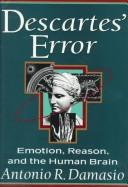
作品年表(4 本)
本站书库里署名安东尼奥·达马西奥的书(Open Library 上至少 10 人加过书架的才收),按首版年份排(有本站书页的用 Wikidata 记的首版年,其余用 Open Library 的);年份偶尔记成后来的版本或译本,以原书为准。全部作品见 Open Library。
- 1994Descartes' error书架 20
- 1999The Feeling of What Happens书架 20
- 2012O Erro de Descartes书架 18
- 2017A Estranha Ordem das Coisas书架 11