书单
百科
这个词条暂时没有中文维基百科条目,下面是英文维基百科的内容(英文原文):
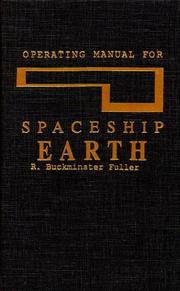
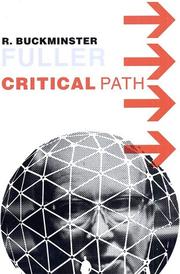
Critical Path is a book written by US author and inventor R. Buckminster Fuller with the assistance of Kiyoshi Kuromiya. First published in 1981, it is alongside Operating Manual for Spaceship Earth one of Fuller's best-known works. Vast in its scope, it describes Fuller's own vision of the development of human civilization, economic history, and his highly original economic ideology based, amongst other things, on his detailed description of why scarcity of resources need no longer be a decisive factor in global politics.
Overview
The following is a list of the main claims and opinions presented in the book, reported without discussion or criticism.
Part One
The first part of the book explains the history and present state of the global economy.
Chapter 1 - Speculative Prehistory of Humanity
Human life began in the atolls of the South Pacific, where the average sea temperature is closest to that of the human body (p. 6). Rather than evolving from simpler organisms, humanity was of extraterrestrial origin and other organisms evolved from us (p. 7). From this base, humanity developed boat-building in Southeast Asia and colonised the rest of the planet (p. 15). There is evidence that the Bronze Age began in Southeast Asia (p. 17). Fuller's Dymaxion World Map is used to show the distribution of humanity over the Earth's surface. Over half the population lives in the regions watered by the Himalayan glaciers (p. 20).
Chapter 2 - Humans in Universe
Our knowledge of the spherical shape of the Earth is central to our understanding of ecology (p. 34). This knowledge probably originated in prehistoric times, was certainly known to the Ancient Greeks, but was then suppressed for centuries by organised religion because it was incompatible with the official story of a Heaven above and a Hell below (p. 43). There has been an evolution of religious ideas from those of the Egyptian pyramid-builders, whose ambition was to deliver a single individual, the pharaoh, into the afterlife, to the modern belief that everybody has a right to enjoy life on Earth (p. 51).
Chapter 3 - Legally Piggily
Fire is the Sun unwinding from the tree's log.
Human history has been shaped by the continual growth and success of greed. City-states were the first institutions to make organised use of extortion (p. 68). This was then followed by the growth of international trade, which appropriates the wealth of the planet for its own ends. Corruption in the form of "lawyer-capitalism" has led the US to become effectively bankrupt (p. 114), with the common people obliged to fund the profitmaking activity of corporations. (p. 101)
Eventually the U.S. taxpayers will be asked to make "free-of-risk" bail-outs of "private" enterprises
Part Two
The second part of the book explains Fuller's getting a perspective.
Chapter 4 - Self-Disciplines of Buckminster Fuller
Fuller's diary, the "Chronofile", is intended to show how much a single human being with little money can do to influence world affairs (p. 128). The mechanical principle of precession is used as a metaphor for the ability of a person to influence the world by applying pressure in an unconventional direction (p. 144). Fuller's religious beliefs are explained (p. 151).
Fuller observed that when he did things for the benefit of others, it had a positive effect on his life, but when he did things merely for his personal benefit, the outcome was negative. This eventually led him to the proposition that if he dedicated his life to the betterment of humanity, he would achieve the greatest positive outcome. So he decided to live his entire life as an experiment to prove or disprove this proposition. He writes (p. 145):
I assumed that nature would "evaluate" my work as I went along. If I was doing what nature wanted done, and if I was doing it in promising ways, permitted by nature's principles, I would find my work being economically sustained—and vice versa, in which latter negative case I must quickly cease doing what I had been doing and seek logically alternative courses until I found the new course that nature signified her approval of by providing for its physical support. Wherefore, I concluded that I would be informed by nature if I proceeded in the following manner:
(A) committed myself, my wife, and our infant daughter directly to the design, production, and demonstration of artifact accommodation of the most evident but as-yet-unattended-to human-environment-advantaging physical evolutionary tasks, and (B) paid no attention to "earning a living" in humanity's established economic system, yet (C) found my family's and my own life's needs being unsolicitedly provided for by seemingly pure happenstance and always only "in the nick of time," and (D) being provided for "only coincidentally," yet found (E) that this only "coincidentally," unbudgetable, yet realistic support persisted, and did so (F) only so long as I continued spontaneously to commit myself unreservedly to the task of developing relevant artifacts, and if I (G) never tried to persuade humanity to alter its customs and viewpoints and never asked anyone to listen to me and spoke informatively to others only when they asked me so to do, and if I (H) never undertook competitively to produce artifacts others were developing, and attended only to that which no others attended then I could tentatively conclude that my two assumptions were valid: (1) that nature might economically sustain human activity that served directly in the "mainstream" realization of essential cosmic regeneration, which had hitherto been accomplished only through seeming "right-angled" side effects of the chromosomically focused biological creatures; and (2) that the generalized physical law of precessional behaviors does govern socioeconomic behaviors as do also the generalized laws of acceleration and ephemeralization.
以上文字摘自英文维基百科「Critical Path (book)」(有删节,去掉了参考文献等尾部小节),按 CC BY-SA 4.0 使用,作者为维基百科的各位编者。
资料卡
- 原题
- Critical Path
- 原作语言
- 英语
- 首次出版
- 1981 年
- 体裁
- 科学幻想
- 首版出版社
- 圣马丁出版社
- 主题
- 历史、文明、经济思想、全球化、地球太空船
资料卡来自 Wikidata Q5186647(CC0),众包数据,个别字段可能不全。