书单
百科
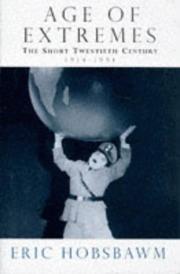
《极端的年代:1914-1991》(英语:The Age of Extremes: The Short Twentieth Century, 1914–1991)是英国历史学家艾瑞克·霍布斯邦创作的一本书,1994年出版,书中提出了“短暂的二十世纪”,与“漫长的十九世纪”对应。
以上文字摘自维基百科「极端的年代:1914-1991」(去掉了参考文献等尾部小节),按 CC BY-SA 4.0 使用,作者为维基百科的各位编者。
中文维基百科的条目比较短,下面附上英文维基百科的内容(英文原文):
The Age of Extremes: The Short Twentieth Century, 1914–1991 is a book by Eric Hobsbawm, published in 1994. In it, Hobsbawm comments on what he sees as the disastrous failures of state socialism, capitalism, and nationalism; he offers an equally sceptical take on the progress of the arts and changes in society in the latter half of the twentieth century.
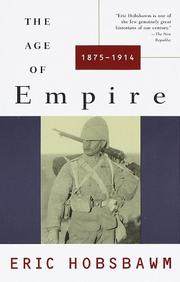
Hobsbawm calls the period from the start of World War I to the fall of the Soviet bloc "the short twentieth century", to follow on "the long 19th century", the period from the start of the French Revolution in 1789 to the start of World War I in 1914, which he covered in an earlier trilogy of histories (The Age of Revolution: Europe, 1789–1848, The Age of Capital: 1848–1875, The Age of Empire: 1875–1914). In the United States, the book was published with the subtitle A History of the World, 1914–1991 (ISBN 978-0-679-73005-7).
Failure of prediction
Hobsbawm points out the abysmal record of recent attempts to predict the world's future. "The record of forecasters in the past thirty or forty years, whatever their professional qualification as prophets, has been so spectacularly bad that only governments and economic research institutes still have, or pretend to have, much confidence in it." He quotes President Calvin Coolidge, in a message to Congress on December 4, 1928, on the eve of the Great Depression, as saying "The country can regard the present with satisfaction and anticipate the future with optimism."
Speaking of the future himself, Hobsbawm largely confines himself to predicting continued turmoil: "The world of the third millennium will therefore almost certainly continue to be one of violent politics and violent political changes. The only thing uncertain about them is where they will lead," and expressing the view that "If humanity is to have a recognizable future, it cannot be by prolonging the past or the present."
In one of his few more concrete predictions, he writes that "Social distribution and not growth would dominate the politics of the new millennium."
Failure of communism
The Russian Revolution of 1917 was not the revolution of the most advanced capitalist societies predicted by Karl Marx. As Hobsbawm, puts it, "Capitalism had proved far easier to overthrow where it was weak or barely existed than in its heartlands." Even within Russia, Hobsbawm doubts the ostensibly "progressive" effects of the revolution: "What remained [after revolution and civil war] was a Russia even more firmly anchored in the past... [W]hat actually governed the country was an undergrowth of smaller and larger bureaucracy, on average even less educated and qualified than before."
It is a central thesis of Hobsbawm's book that, from the start, State Socialism betrayed the socialist and internationalist vision it claimed to uphold. In particular, State Socialism always dispensed with the democratic element of the socialist vision: "Lenin... concluded from the start that the liberal horse was not a runner in the Russian revolutionary race." This anti-liberalism ran deep. In 1933, with Benito Mussolini firmly in control of Italy, "Moscow insisted that the Italian communist leader Palmiro Togliatti withdraw the suggestion that, perhaps, social-democracy was not the primary danger, at least in Italy."
As for support for international revolution, "The communist revolutions actually made (Yugoslavia, Albania, later China) were made against Stalin's advice. The Soviet view was that, both internationally and within each country, post-war politics should continue within the framework of the all-embracing anti-fascist alliance.... There is no doubt that Stalin meant all this seriously, and tried to prove it by dissolving the Comintern in 1943, and the Communist Party of the United States in 1944. "[T]he Chinese Communist regime, though it criticised the USSR for betraying revolutionary movements after the break between the two countries, has no comparable record of practical support for Third World liberation movements."
以上文字摘自英文维基百科「The Age of Extremes」(有删节,去掉了参考文献等尾部小节),按 CC BY-SA 4.0 使用,作者为维基百科的各位编者。
资料卡
- 原题
- The Age of Extremes
- 原作语言
- 英语
- 首次出版
- 1994 年
- 体裁
- 历史类非小说、随笔
- 前作
- 帝国的年代:1875-1914
- 主题
- 历史
资料卡来自 Wikidata Q1368077(CC0),众包数据,个别字段可能不全。