书单
百科
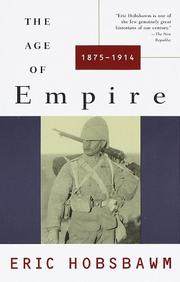
《帝国的年代:1875-1914》(英语:The Age of Empire: 1875–1914)是英国历史学家艾瑞克·霍布斯邦创作的一本书,1987年出版,是其漫长的十九世纪三部曲系列的第三部。
以上文字摘自维基百科「帝国的年代:1875-1914」(去掉了参考文献等尾部小节),按 CC BY-SA 4.0 使用,作者为维基百科的各位编者。
中文维基百科的条目比较短,下面附上英文维基百科的内容(英文原文):
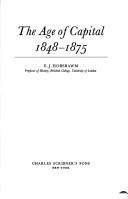
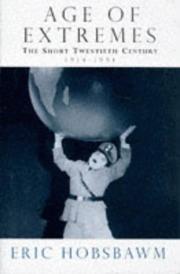
The Age of Empire: 1875–1914 is a book by the British historian Eric Hobsbawm, published in 1987. It is the third in a trilogy of books about "the long 19th century" (coined by Hobsbawm), preceded by The Age of Revolution: Europe 1789–1848 and The Age of Capital: 1848–1875. A fourth book, The Age of Extremes: The Short Twentieth Century, 1914–1991, acts as a sequel to the trilogy.
Themes
The period of less than fifty years described by Hobsbawm began with an economic depression (see Long Depression), but the capitalist world economy quickly recovered, although the dominant British economy was being undermined by the German economy and American economy. Rising productivity resulted in increasing flow of goods, and rising living standards. Despite that, inequality was growing, both on the national and international levels. In the cultural sphere, it was the period of the Belle Époque, the swan-song of aristocracy, increasingly marginalized by the growing affluence of the upper middle class (bourgeois), which can be seen as the class most benefiting from changes of that period.
As part of the Belle Époque it was also a period of peace, with Europe and the Western world involved in only a few minor conflicts. This led to a popular belief that no significant wars would happen in the future, an era of widespread optimism. At the same time, the military-industrial complex in all countries were busily stocking supplies for the conflict to come. In the background, the belief in progress and science was clashing with the old forces of religion. The West, dominating the world through its colonial system, was also increasingly interested in foreign cultures. It was such internal contradictions and tensions that for Hobsbawm defined this era, and spelled its inevitable end.
The ending of the Hobsbawn trilogy sees the end of the era that began with the dual revolution (the French Revolution and the Industrial Revolution). Inspired by Vladimir Lenin, Hobsbawm, a writer widely recognized as a Marxist, traces the development of capitalism, linking it with the development of imperialism that resulted in the First World War. Unlike Lenin, who predicted that this will lead to capitalism's downfall, and with the benefit of almost a century more of a hindsight, Hobsbawm acknowledges that capitalism survived, although in a form different from that which it began with in the late 18th century. Facing the dangers of a competing ideology, that of communism, and another revolution (the Russian Revolution), capitalism, according to Hobsbawm, survived by appeasing the masses and accepting some socialist demands, such as that of the welfare state.
Contents
Overture
The Centenarian Revolution
An Economy Changes Gear
The Age of Empire
The Politics of Democracy
Workers of the World
Waving Flags: Nations and Nationalism
Who's Who or the Uncertainties of the Bourgeoisie
The New Woman
The Arts Transformed
Certainties Undermined: The Sciences
Reason and Society
Towards Revolution
From Peace to War
New Capitalism
Epilogue
以上文字摘自英文维基百科「The Age of Empire: 1875–1914」(去掉了参考文献等尾部小节),按 CC BY-SA 4.0 使用,作者为维基百科的各位编者。
资料卡
- 原题
- The Age of Empire: 1875–1914
- 原作语言
- 英语
- 首次出版
- 1987 年
- 前作
- 资本的年代:1848-1875
- 续作
- 极端的年代:1914-1991
- 主题
- 历史
资料卡来自 Wikidata Q7712845(CC0),众包数据,个别字段可能不全。