书单
百科
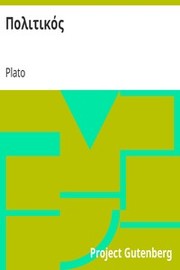
《政治家篇》(古希腊语:Πολιτικός Politikós、拉丁语:Politicus)是柏拉图的一篇哲学对话,是《智士篇》的续作。文中苏格拉底与几名对话者论述“谁是政治家”这一主题。该对话通常被归入柏拉图的晚期作品中。
《智士篇》中描写苏格拉底与来自伊利亚学派的“异乡人”讨论智士、政治家和哲学家的定义问题。异乡人认为三者各有不同,但需要对每个概念进行详细分析以找到它们的区别。《政治家篇》即为柏拉图寻找“政治家”的定义的篇章,然而值得注意的是柏拉图似乎并未在此之后专门撰写一篇《哲学家篇》。
以上文字摘自维基百科「政治家篇」(去掉了参考文献等尾部小节),按 CC BY-SA 4.0 使用,作者为维基百科的各位编者。
中文维基百科的条目比较短,下面附上英文维基百科的内容(英文原文):
The Statesman (Ancient Greek: Πολιτικός, Politikós; Latin: Politicus), also known by its Latin title, Politicus, is a Socratic dialogue written by Plato. The text depicts a conversation among Socrates, the mathematician Theodorus, another person named Socrates (referred to as "Socrates the Younger"), and an unnamed philosopher from Elea referred to as "the Stranger" (ξένος, xénos). It is ostensibly an attempt to arrive at a definition of "statesman," as opposed to "sophist" or "philosopher" and is presented as following the action of the Sophist.
The Sophist had begun with the question of whether the sophist, statesman, and philosopher were one or three, leading the Eleatic Stranger to argue that they were three but that this could only be ascertained through full accounts of each (Sophist 217b). But though Plato has his characters give accounts of the sophist and statesman in their respective dialogues, it is most likely that he never wrote a dialogue about the philosopher.
Contents
The dialogue begins immediately after the Sophist ends, with Socrates (the elder) and Theodorus briefly reflecting on the discussion before the Eleatic Stranger proposes to begin a dialectical investigation with Socrates the Younger into the nature of the statesman. The Eleatic Stranger and Socrates the Younger resume using the method of division employed in the Sophist, pausing to reflect on dialectical methods and a myth similar to the myth of ages. The interlocutors ultimately offer a complicated account of the statesman through a version of division that entails accounting for the object of inquiry 'by carving at the joints' like a 'sacrificial animal' (Statesman 287b-c).
Interpretations
According to John M. Cooper, the dialogue was intended to clarify that to rule or have political power called for a specialized knowledge. The statesman was one who possesses this special knowledge of how to rule justly and well and to have the best interests of the citizens at heart. It is presented that politics should be run by this knowledge, or gnosis. This claim runs counter to those who, the Stranger points out, actually did rule. Those that rule merely give the appearance of such knowledge, but in the end are really sophists or imitators. For, as the Stranger maintains, a sophist is one who does not know the right thing to do, but only appears to others as someone who does. The Stranger's ideal of how one arrives at this knowledge of power is through social divisions. The Stranger takes great pains to be very specific about where and why the divisions are needed in order to rule the citizenry properly.
Texts and translations
Greek text at Perseus
Plato: Statesman, Philebus, Ion. Greek with translation by Harold N. Fowler and W. R. M. Lamb. Loeb Classical Library 164. Harvard Univ. Press (originally published 1925). ISBN 978-0674991828 HUP listing
Fowler translation at Perseus
Jowett translation with introduction at StandardEbooks
Plato. Opera, volume I. Oxford Classical Texts. ISBN 978-0198145691
Plato. Complete Works. Ed. J. M. Cooper and D. S. Hutchinson. Hackett, 1997. ISBN 978-0872203495
以上文字摘自英文维基百科「Statesman (dialogue)」(去掉了参考文献等尾部小节),按 CC BY-SA 4.0 使用,作者为维基百科的各位编者。
资料卡
- 原题
- Πολιτικός
- 原作语言
- 古希腊语
- 所属系列
- Platonic dialogue
- 前作
- 泰阿泰德篇
- 主要人物
- 苏格拉底
资料卡来自 Wikidata Q669911(CC0),众包数据,个别字段可能不全。
更多资料与书评
在哪读
同系列 / 前后作品
 豆瓣 #207
 豆瓣 #225