 书单
百科
这个词条暂时没有中文维基百科条目,下面是英文维基百科的内容(英文原文):
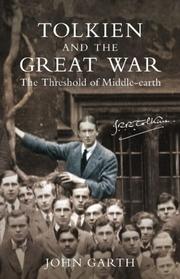
Tolkien and the Great War: The Threshold of Middle-earth is a 2003 biography by John Garth of the philologist and fantasy author J. R. R. Tolkien's early life, focusing on his formative military experiences during the First World War.
The book was warmly welcomed by Tolkien scholars as filling in an important gap in biographical coverage. Christian scholars too admired the book, though Ralph C. Wood thought that it underplayed the importance of Tolkien's Christianity. A reviewer for the Western Front Association thought the account of Tolkien's military service especially good. The book was called "plodding" by Tolkien's biographer, Humphrey Carpenter, but praised by other commentators.
The book won the 2004 Mythopoeic Award for Inklings Studies. It has prompted scholars to examine the influence of the war on Tolkien's writings.
Context
J. R. R. Tolkien was an English Roman Catholic writer, poet, philologist, and academic, best known as the author of the high fantasy works The Hobbit and The Lord of the Rings.
John Garth read English at St Anne's College, Oxford. He trained as a journalist and worked for 18 years on newspapers including the Evening Standard in London. He then became a freelance author while continuing to contribute newspaper articles. He combined his longstanding interests in Tolkien and in the First World War to research and write this biography; he states that he is especially "interested in how personal lives intersect with the big shocks and surges in history", one of the elements of the book.
Book
Publication history
Tolkien and the Great War was published in 2003 by HarperCollins in the United Kingdom and Houghton Mifflin in the United States. It has been translated into Chinese, French, German, Italian, Polish, and Spanish.
Part 1
Tolkien and the Great War is written in three parts. The first, in six chapters, examines J. R. R. Tolkien's early life. The account passes swiftly from his birth in South Africa in 1892 to his childhood in Birmingham, avoiding the Boer War through childhood illness. There, Tolkien began to study languages, learning French and Latin from his mother, finding Welsh and Greek attractive before the age of 10; soon he was reading Chaucer in Middle English. At Oxford, the sub-rector of Exeter College considered Tolkien "very lazy"; he hardly worked on his Classics degree, instead becoming fascinated with the Finnish Kalevala, retelling part of it in his William Morris-style verse-and-prose The Story of Kullervo. Garth describes Tolkien's childhood friendships and society including the TCBS, the Tea Club and Barrovian Society, consisting of Tolkien and his three closest friends – Christopher Wiseman, Robert Gilson, and Geoffrey Smith – and the early development of his mythology. Tolkien and Wiseman argue passionately about philology, and invent languages. Tolkien starts to write about "Earendel the Evening Star" in 1914. In an Oxford largely emptied of young men, Tolkien joins the University OTC rather than the army. The separated friends manage to meet, just once, in "The Council of London"; the meeting makes Tolkien conscious of the ambitions that drove him for the rest of his life. He starts to write fairy poetry, both joyful and lost in the past. This shifts into the grander tones of poems about the gigantic, ramparted city of Kôr, the start of his mythology.
Part 2
The second part describes in four chapters the military experiences of the TCBS in the trenches of the Western Front in 1916; Tolkien was attached to the Lancashire Fusiliers. Gilson was killed on the first day of the "Big Push" on the Somme. Tolkien's battalion, the 11th Lancashire Fusiliers, stayed in reserve for the first week. It went into action at Ovillers, Tolkien's company again staying in reserve to carry supplies, and Tolkien met Smith who had survived when the 3rd Salford Pals, part of the Lancashire Fusiliers, had been driven back to Authuille wood. Tolkien became battalion signals officer and often worked close to the front line. The battalion helped to win the Battle of Thiepval Ridge in late September, and took part in the capture of Regina Trench in late October. On 25 October, he went down with trench fever, and was sent home a fortnight later. Smith was wounded at the end of November and died of gas gangrene. Wiseman had joined the Royal Navy; he fought aboard HMS Superb in the Battle of Jutland in May 1916.
Part 3
The third part, in two chapters, looks at Tolkien's wartime fantasy writings including "The Lonely Isle" of Tol Eressëa. Back in Birmingham, he invents Gnomish, the precursor of the elf-language Sindarin. Garth glosses this as the language of adventure, finding it fitting that it appeared after the Somme, whereas Qenya, the language of ancient knowledge, began when Tolkien was a student. He began to write fluently, creating The Fall of Gondolin. Garth likens Tolkien's army of "beasts like snakes and dragons of irresistible might that should over-creep the Encircling Hills and lap that plain and its fair city in flame and death", the monstrous bronze assault dragons in that tale, to the tanks of the Somme. By early 1917, Tolkien had written The Book of Lost Tales, with its elaborate frame story for the time-travelling Eriol to hear in Kortirion (corresponding to Warwick), to portray the tales as part of a mythology for England.
以上文字摘自英文维基百科「Tolkien and the Great War」(有删节,去掉了参考文献等尾部小节),按 CC BY-SA 4.0 使用,作者为维基百科的各位编者。
资料卡
- 原作语言
- 英语
- 主题
- J·R·R·托尔金
资料卡来自 Wikidata Q105883549(CC0),众包数据,个别字段可能不全。