书单
百科
这个词条暂时没有中文维基百科条目,下面是英文维基百科的内容(英文原文):
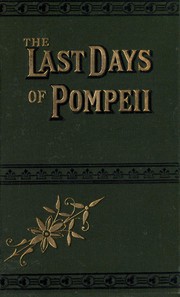
The Last Days of Pompeii is a novel written by Edward Bulwer-Lytton in 1834. The novel was inspired by the painting The Last Day of Pompeii by the Russian painter Karl Briullov, which Bulwer-Lytton had seen in Milan. It culminates in the cataclysmic destruction of the city of Pompeii by the eruption of Mount Vesuvius in AD 79.
The novel uses its characters to contrast the decadent culture of 1st-century Rome with both older cultures and coming trends. The protagonist, Glaucus, represents the Greeks who have been subordinated by Rome, and his nemesis Arbaces the still older culture of Egypt. Olinthus is the chief representative of the nascent Christian religion, which is presented favourably but not uncritically. The Witch of Vesuvius, though she has no supernatural powers, shows Bulwer-Lytton's interest in the occult—a theme which would emerge in his later writing, particularly The Coming Race.
A popular sculpture by American sculptor Randolph Rogers, Nydia, the Blind Flower Girl of Pompeii (1856), was based on a character from the book.
Main characters
Glaucus – The protagonist, a handsome Athenian nobleman and Ione's betrothed.
Ione – A beautiful and intelligent high-born Greek set to marry Glaucus. Orphaned in childhood, she was Arbaces' ward and becomes the target of his evil attempts at seduction.
Arbaces – The antagonist, a scheming Egyptian sorcerer and a high priest of Isis, and the former guardian of Ione and Apaecides. Murders Apaecides and frames Glaucus for the crime. Repeatedly attempts to seduce Ione.
Nydia – A young blind slave stolen from high-born parents by kidnappers in Thessaly. She weaves and sells garlands of flowers to earn coins for her tyrannical owners, Burbo and Stratonice. Nydia pines for Glaucus and eventually commits suicide rather than suffer unrequited love.
Apaecides – Ione's brother who is murdered by Arbaces. In the 1984 adaptation, his name is changed to Antonius.
Sallust – A good-hearted epicurian and friend of Glaucus.
Calenus – A greedy priest of the cult of Isis who witnesses Arbaces murder Apaecides. First blackmails Arbaces, then tells the truth when Arbaces turns on him.
Burbo – Calenus's brother, who robs the Temple of Isis during the eruption.
Olinthus – A Christian who converts Apaecides to Christianity. Sentenced to death for his religion.
Diomed – A rich, dyspeptic merchant known in Pompeii for his lavish banquets. Julia's father.
Julia – The handsome but spoiled daughter of Diomed. Has eyes for Glaucus and obtains a potion that will make him love her; instead receives a potion that will make him insane.
Clodius – A spendthrift noble with a gambling problem. Becomes Julia's suitor after she loses interest in Glaucus.
Lepidus – Another noble, a friend of Glaucus, Sallust, and Clodius.
The Witch of Vesuvius – The Witch who provides the mental potion for Arbaces. She eventually prophecies danger and flees Pompeii.
Pansa – An aedile of Pompeii, based on the historical Pompeiian Gaius Cuspius Pansa.
Lydon – A gladiator who fights in Pompeii's Amphitheatre to earn money to pay for his father's freedom.
Medon – A slave of Diomed, a part of Pompeii's Christian community, Lydon's father.
Stratonice – Nydia's former mistress who treated her with utmost cruelty; wife of Burbo.
Plot summary
Pompeii, A.D. 79. Athenian nobleman Glaucus arrives in the bustling and gaudy Roman town and quickly falls in love with the beautiful Greek Ione. Ione's former guardian, the malevolent Egyptian sorcerer Arbaces, has designs on Ione and sets out to destroy their budding happiness. Arbaces has already ruined Ione's sensitive brother Apaecides by luring him to join the vice-ridden priesthood of Isis. The blind slave Nydia is rescued from her abusive owners, Burbo and Stratonice, by Glaucus, for whom she secretly pines. Arbaces horrifies Ione by declaring his love for her, and flying into a rage when she refuses him. Glaucus and Apaecides rescue her from his grip, but Arbaces is struck down by an earthquake, a sign of Vesuvius' coming eruption.
Glaucus and Ione exult in their love, much to Nydia's torment, while Apaecides finds a new religion in Christianity. Nydia unwittingly helps Julia, a rich young woman who has eyes for Glaucus, obtain a love potion from Arbaces to win Glaucus's love. But the love potion is really a poison that will turn Glaucus mad. Nydia steals the potion and administers it; Glaucus drinks only a small amount and begins raving wildly. Apaecides and Olinthus, an early Christian, determine to publicly reveal the deception of the cult of Isis. Arbaces, recovered from his wounds, overhears and stabs Apaecides to death; he then pins the crime on Glaucus, who has stumbled onto the scene. Arbaces has himself declared the legal guardian of Ione, who is convinced that Arbaces is her brother's murderer, and imprisons her at his mansion. He also imprisons Nydia, who discovers that there is an eyewitness to the murder who can prove Glaucus's innocence—the priest Calenus, who is yet a third prisoner of Arbaces. She smuggles a letter to Glaucus's friend Sallust, begging him to rescue them.
以上文字摘自英文维基百科「The Last Days of Pompeii」(有删节,去掉了参考文献等尾部小节),按 CC BY-SA 4.0 使用,作者为维基百科的各位编者。
资料卡
- 原题
- The Last Days of Pompeii
- 原作语言
- 英语
- 首次出版
- 1834 年
- 作品形式
- 长篇小说
- 体裁
- 历史类虚构作品
- 首版出版社
- 理查德·班特利
- 故事发生地
- 古罗马
- 主要人物
- Glaucus
资料卡来自 Wikidata Q1218985(CC0),众包数据,个别字段可能不全。
改编作品
电影2
- The Last Days of Pompeii
- 《火山大灾难》The Last Days of Pompeii
舞台剧 / 歌剧 / 芭蕾1
- 《琼恩》Jone
取材于它的书1
- 《喀拉喀托戏剧》Drama dari Krakatau
名单来自 Wikidata(CC0):只列条目里写明「改编自 / 取材于」这本书的作品,不按名字猜;众包数据,可能不全。