书单
百科
这个词条暂时没有中文维基百科条目,下面是英文维基百科的内容(英文原文):
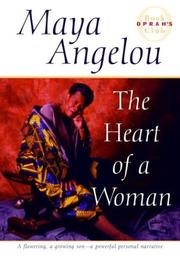
The Heart of a Woman (1981) is an autobiography by American writer Maya Angelou. The book is the fourth installment in Angelou's series of seven autobiographies. The Heart of a Woman recounts events in Angelou's life between 1957 and 1962 and follows her travels to California, New York City, Cairo, and Ghana as she raises her teenage son, becomes a published author, becomes active in the civil rights movement, and becomes romantically involved with a South African anti-apartheid fighter. One of the most important themes of The Heart of a Woman is motherhood, as Angelou continues to raise her son. The book ends with her son leaving for college and Angelou looking forward to newfound independence and freedom.
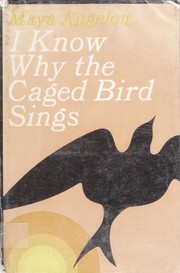
Like Angelou's previous volumes, the book has been described as autobiographical fiction, though most critics, as well as Angelou, have characterized it as autobiography. Although most critics consider Angelou's first autobiography I Know Why the Caged Bird Sings more favorably, The Heart of a Woman has received positive reviews. It was chosen as an Oprah's Book Club selection in 1997.
Critic Mary Jane Lupton says it has "a narrative structure unsurpassed in American autobiography" and that it is Angelou's "most introspective" autobiography. The title is taken from a poem by Harlem Renaissance poet Georgia Douglas Johnson, which connects Angelou with other female African-American writers. African-American literature critic Lyman B. Hagen states, "Faithful to the ongoing themes of survival, sense of self, and continuing education, The Heart of a Woman moves its central figures to a point of full personhood". The book follows Angelou to several places in the US and Africa, but the most important journey she describes is "a voyage into the self."
Background
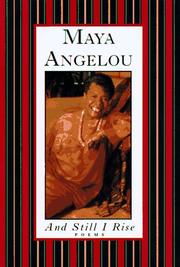
The Heart of a Woman, published in 1981, is the fourth installment of Maya Angelou's series of seven autobiographies. The success of her previous autobiographies and the publication of three volumes of poetry had brought Angelou a considerable amount of fame by 1981. And Still I Rise, her third volume of poetry, was published in 1978 and reinforced Angelou's success as a writer. Her first volume of poetry, Just Give Me a Cool Drink of Water 'fore I Diiie (1971), was nominated for a Pulitzer Prize.
Writer Julian Mayfield states that Angelou's work set a precedent not only for other black women writers but for the genre of autobiography as a whole. Angelou had become recognized and highly respected as a spokesperson for Blacks and women through the writing of her life stories. It made her, as scholar Joanne Braxton stated, "without a doubt ... America's most visible black woman autobiographer." Angelou was one of the first African-American female writers to discuss her personal life publicly, and one of the first to use herself as a central character in her books. Writer Hilton Als calls her a pioneer of self-exposure, willing to focus honestly on the more negative aspects of her personality and choices. While Angelou was composing her second autobiography, Gather Together in My Name, she was concerned about how her readers would react to her disclosure that she had been a prostitute. Her husband Paul Du Feu talked her into publishing the book by encouraging her to "tell the truth as a writer" and to "be honest about it."
In 1957, the year The Heart of a Woman opens, Angelou had appeared in an off-Broadway revue that inspired her first film, Calypso Heat Wave, in which Angelou sang and performed her own compositions, something she does not mention in the book. Also in 1957 and not discussed in the book, her first album, Miss Calypso, was released; it was reissued as a CD in 1995. According to Als, Angelou sang and performed calypso music because it was popular at the time, and not to develop as an artist. As described in The Heart of a Woman, Angelou eventually gave up performing for a career as a writer and poet. According to Chuck Foster, who wrote the liner notes in Miss Calypso's 1995 reissue, her calypso music career is "given short shrift" and dismissed in the book.
Title
The heart of a woman goes forth with the dawn,
As a lone bird, soft winging, so restlessly on,
Afar o'er life's turrets and vales does it roam
In the wake of those echoes the heart calls home.
The heart of a woman falls back with the night,
And enters some alien cage in its plight,
And tries to forget it has dreamed of the stars
While it breaks, breaks, breaks on the sheltering bars.
-— "The Heart of a Woman", by Georgia Douglas Johnson
Angelou takes the title of her fourth autobiography from a poem by Georgia Douglas Johnson, a Harlem Renaissance writer. Critic Lyman B. Hagan states that although the title is "less striking or oblique than titles of her preceding books," it is appropriate because Johnson's poem mentions a caged bird and provides a connection to Angelou's first autobiography, whose title was taken from a poem by Paul Laurence Dunbar. The title suggests Angelou's painful loneliness and exposes a spiritual dilemma also present in her first volume. Johnson's use of the metaphor is different from Dunbar's because her bird is a female whose isolation is sexual rather than racial. The caged bird may also refer to Angelou after her failed marriage, but writer Mary Jane Lupton says that "the Maya Angelou of The Heart of a Woman is too strong and too self-determined to be kept in a cage".
The Heart of a Woman is the first time Angelou identifies with another female African-American writer. Her early literary influences were men, including James Weldon Johnson, Paul Laurence Dunbar, and William Shakespeare. Angelou has stated that she always admired women writers like Anne Spencer, Jessie Fauset, Nella Larsen, and Zora Neale Hurston. Her choice of title for this book is an acknowledgment of her legacy as a Black woman writer.
以上文字摘自英文维基百科「The Heart of a Woman」(有删节,去掉了参考文献等尾部小节),按 CC BY-SA 4.0 使用,作者为维基百科的各位编者。
资料卡
- 原题
- The Heart of a Woman
- 原作语言
- 英语
- 首次出版
- 1981 年
- 体裁
- 自传
- 首版出版社
- 兰登书屋
- 前作
- 像圣诞节一样欢快地歌唱
- 续作
- All God's Children Need Traveling Shoes
资料卡来自 Wikidata Q7739201(CC0),众包数据,个别字段可能不全。
更多资料与书评
在哪读
同系列 / 前后作品
马娅·安杰卢 的其他作品
作者页 ›