书单
百科
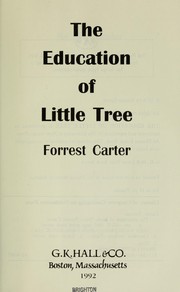
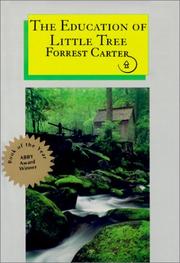
《少年小树之歌》(The Education of Little Tree),是艾萨·卡特化名佛瑞斯特·卡特(Forrest Carter)所创作的一部回忆录式小说。该作品描绘了主角幼时与祖父母在1930年代前后于美国东部的生活故事,并藉之深刻阐述人类与大自然之间的互动关系。本书出版时曾标榜是作者亲身经历,但卡特死后,作者的真实身份被人揭露,因而被证明这是夸大不实的宣传。
该作品曾在1997年被改编翻拍为电影。
以上文字摘自维基百科「少年小樹之歌」(去掉了参考文献等尾部小节),按 CC BY-SA 4.0 使用,作者为维基百科的各位编者。
中文维基百科的条目比较短,下面附上英文维基百科的内容(英文原文):
The Education of Little Tree is a memoir-style novel written by Asa Earl Carter under the pseudonym Forrest Carter. When first published in 1976 by Delacorte Press, it was promoted as an authentic autobiography recounting Forrest Carter's youth experiences with his Cherokee grandparents in the Appalachian mountains. However, the book was proven to be a literary hoax orchestrated by Asa Earl Carter, a Ku Klux Klan member from Alabama heavily involved in segregationist causes before he launched his career as a novelist. Although claimed to be autobiographical originally, it is now known to be based on Carter's fanciful and fraudulent family claims.
The book was a modest success at its publication, attracting readers with its message of environmentalism and simple living and its mystical Native American theme. It became a bigger popular success when the University of New Mexico Press reissued it in paperback, and it saw another resurgence in interest in 1991, entering the New York Times Best Seller list and receiving the first American Booksellers Association Book of the Year (ABBY) award. It also became the subject of controversy the same year when historian Dan T. Carter definitively demonstrated that Forrest Carter was Asa Earl Carter, spurring several additional investigations into his biography. It was revealed that he had been a Klansman and segregationist political figure in Alabama who wrote speeches for George Wallace. Carter's claim that he had Cherokee ancestry on his maternal grandparents' side is controversial within his family.
Carter was planning a sequel titled The Wanderings of Little Tree at the time of his death in 1979. A film adaptation was released in 1997. The book has been the subject of a number of scholarly articles, many focusing on the hoax and on the impact of the author's white supremacist background on the work.
Synopsis
The fictional memoirs of Forrest "Little Tree" Carter begin in the late 1920s, when his parents die, and he is given to the care of his part-Cherokee grandfather and his Cherokee grandmother at the age of five. The book was going to be called Me and Grandpa, according to the book's introduction. The story centers on the child's relationship with his Scottish-Cherokee grandfather, a man named Wales (an overlap with Carter's other fiction).
The boy's Cherokee "Granpa" and "Granma" call him "Little Tree" and teach him about nature, farming, whiskey making, mountain life, society, love, and spirit by a combination of gentle guidance and encouragement of independent experience.
The story takes place during the fifth to tenth years of the boy's life, as he comes to know his new home in a remote mountain hollow. Granpa runs a small moonshine operation during Prohibition. The grandparents and visitors to the hollow expose Little Tree to supposed Cherokee ways and "mountain people" values. Encounters with outsiders, including "the law," "politicians," "guv'mint," "city slickers," and "Christians" of various types add to Little Tree's lessons, each phrased and repeated in catchy ways. (One of the devices the book uses frequently is to end paragraphs with short statements of opinion starting with the word 'which,' such as "Which is reasonable.")
The state eventually forces Little Tree into a residential school, where he stays for a few months. At the school, Little Tree suffers from the prejudice and ignorance of the school's caretakers toward Indians and the natural world. Little Tree is rescued when his grandparents' Native American friend Willow John notices his unhappiness and demands Little Tree be withdrawn from the school.
At the end, the book's pace speeds up dramatically and its detail decreases. A year or so later, Willow John gets sick, sings the passing song, and then dies. Two years after that, Granpa dies from complications of a fall, telling the boy "It was good, Little Tree. Next time, it will be better. I'll be seein' ye."
以上文字摘自英文维基百科「The Education of Little Tree」(有删节,去掉了参考文献等尾部小节),按 CC BY-SA 4.0 使用,作者为维基百科的各位编者。
资料卡
- 原题
- The Education of Little Tree
- 原作语言
- 英语
- 首次出版
- 1976 年
- 作品形式
- 长篇小说
- 体裁
- 历史小说
- 首版出版社
- 戴尔出版社
资料卡来自 Wikidata Q373413(CC0),众包数据,个别字段可能不全。