 书单
百科
这个词条暂时没有中文维基百科条目,下面是英文维基百科的内容(英文原文):
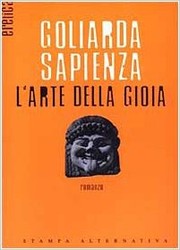
The Art of Joy (L'arte della gioia) is a historical Italian novel by Goliarda Sapienza. Written over a nine-year period, the novel was finished in 1976 but was rejected by Italian publishers because of its length (of 540 pages) and its portrayal of a woman unrestrained by conventional morality and traditional feminine roles. It details a woman's pursuit of cultural, financial and sexual independence in early-20th-century Sicily, during which she sleeps with both men and women, commits incest and murders a nun. It was only published after Sapienza's death, with the success of its French, German, and Spanish editions earning Sapienza comparisons to D. H. Lawrence and Stendhal.
Plot
The novel follows a woman, Modesta, who is born on 1 January 1900 and her experiences through her life in the twentieth century. The text is written for the most part in the first person (by Modesta), but sometimes also in the third person, especially in the first part of the novel.
Part one
Modesta, the main character, lives with her mother and her disabled sister in impoverished conditions in rural Sicily. Modesta has her first sexual encounter in the first few pages, with an older boy from town. She is then molested by a man who claims to be her biological father in the midst of a fire that kills her mother and sister. Modesta is sent to a convent, where she is educated. Affectionate exchanges with Leonora, the mother superior lead to an altercation and a simulated suicide attempt in an attempt by Modesta in order to avoid being sent to an orphanage. The only friend she has at the convent is the gardener Mimmo. The death of Leonora, who had mentioned Modesta in her will, opens to the protagonist the possibility of moving in with Leonora's noble and wealthy family, the Brandifortis. Initially Modesta believed she would have to take vows in order to lead a dignified life; however, during her stay at the family's villa, Modesta realizes that she can stay even without having to take vows. She develops a lesbian relationship with Beatrice, who is Leonora's daughter and granddaughter of the elderly princess who heads the family, Gaia. Modesta begins to help Gaia in managing the family's affairs and in this way wins her trust. For this reason, Gaia organizes for Modesta a marriage of convenience with her disabled son Ippolito. Modesta discovers culture with Ippolito's uncle Jacopo and how to manipulate people thanks to Gaia. Having only previously experienced lesbian relationships, Modesta is exposed to heterosexual experiences with Carmine who manages the property of Gaia. Modesta becomes pregnant but the child who is named Prando is passed off as Ippolito’ son.
Part two
Following the death of Gaia, Modesta goes to live in Catania. Modesta begins to understand the burden of being the female head of the family, forced to do business and without time for herself or Beatrice. Both women know the doctor Carlo, a Milanese and a Communist. The Brandiforti family moves to a villa by the sea, Villa Suvarita, which will become the center of the protagonist's life. There Carmine visits Modesta several times with the two spending long nights of lovemaking. The shy doctor Carlo falls in love with Modesta but fails to grasp the immensity of her desire. Beatrice, unaware of this, falls in love with Carlo, marries him and moves with him to Catania. The two will soon have a daughter, Bambolina also called Bambù. During the 1920s, Carlo comes and goes from the north of Italy returning with new ideas and stories. Carmine dies and Modesta begins a relationship with Carmine's son Mattia, treating him as immature and looking for the much loved Carmine in him. Ippolito, who has been in the care of other caregivers for some time, has a relationship with one of these, Inès, who gives birth to Jacopo. Modesta, now passionate about politics, enters the Communists circles of Catania and enrolls in the university. Carlo is seriously injured by a group of fascists and dies. His Communist friends avenge him, in particular Modesta, thanks to the help of trusted family friend Pietro.
Part three
Modesta and Mattia wound each other without killing each other, but leaving an indelible mark. Widowed Beatrice lets herself die. This wave of death brings with it many children into that house, Prando, Jacopo and Bambolina. Modesta hires Stella as a helper along with her son, 'Ntoni. At Pietro's suggestion, Modesta also adopts another girl, Mela, who turns out to be a great musician. Modesta, now a point of reference for left-wing intellectuals of the time, gives refuge to Joyce, a wealthy psychologist who escapes fascism. The two begin a relationship that lasts for many years. Together they are intoxicated by culture and the many children grow up. However, Modesta's relationship with Joyce has a number of ups and downs due to Joyce's depression which causes her to make several suicide attempts. Joyce's brother Timur, who is a Nazi supporter, comes to look for her at Modesta's house. Joyce attempts suicide again and Modesta realizes she has fallen out of love with her.
以上文字摘自英文维基百科「The Art of Joy」(有删节,去掉了参考文献等尾部小节),按 CC BY-SA 4.0 使用,作者为维基百科的各位编者。
资料卡
- 原题
- L'arte della gioia
- 原作语言
- 意大利语
- 首次出版
- 1998 年
- 体裁
- 自传
资料卡来自 Wikidata Q17354844(CC0),众包数据,个别字段可能不全。
改编作品
电视剧 / 剧集1
名单来自 Wikidata(CC0):只列条目里写明「改编自 / 取材于」这本书的作品,不按名字猜;众包数据,可能不全。