 书单
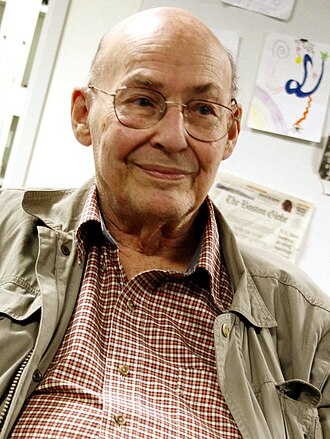
马文·闵斯基
- 生卒
- 1927 – 2016
- 国籍
- 美国
- 外文名
- Marvin Minsky
照片:The original uploader was Sethwoodworth at English Wikipedia.,CC BY 3.0,来自维基共享资源「Marvin Minsky at OLPCb (3x4 cropped).jpg」(经缩小)。
生平与创作
马文·李·闵斯基(英语:Marvin Lee Minsky,1927年8月9日—2016年1月24日),生于美国纽约州纽约市,美国科学家,专长于认知科学与人工智能领域,麻省理工学院人工智能实验室的创始人之一,著有几部人工智能和哲学方面的作品。1969年,因为在人工智能领域的贡献,获得图灵奖。
生平
生于犹太人家庭中,高中就读菲利普斯学院。高中毕业后,在1944年至1945年间,服役于美国海军,参与第二次世界大战。1950年于哈佛大学获得数学学士学位,1954年于普林斯顿大学获得数学博士学位。自1958年起在麻省理工学院任教,担任东芝媒体艺术与科学教授(Toshiba Professor of Media Arts and Sciences)、麻省理工学院电子工程与计算机科学教授,直到他过世为止。
他有数项发明,如1957年发表的共聚焦显微镜,1963年发表的头戴式显示器。他与西摩尔·派普特共同发展了第一个以Logo语言建构的机器人,命名为海龟(Turtle)。1951年,他设计并建构了第一部能自我学习的人工神经网络机器,SNARC。1952年,他发明会自行关闭电源的无用机器(Useless Machine)
1956年,他与约翰·麦卡锡组织了达特茅斯会议,在这场会议中,人工智能的概念被提出,在之后形成了一个新的学门。在麻省理工学院,他与约翰·麦卡锡共同创立了人工智能研究室(MIT计算机科学与人工智能实验室的前身)。
闵斯基奠定了人工神经网络的研究基础。
2016年1月24日,闵斯基因脑内出血病逝,享寿88岁。
荣誉
闵斯基曾获得多项荣誉。他是美国工程院和美国科学院院士,于1969年获得图灵奖,1990年获得日本国际奖,1991年获得IJCAI卓越研究奖,2001年获得富兰克林奖章。
以上文字摘自维基百科「马文·闵斯基」(去掉了参考文献等尾部小节),按 CC BY-SA 4.0 使用,作者为维基百科的各位编者。
中文维基百科的条目比较短,下面附上英文维基百科的内容(英文原文):
Marvin Lee Minsky (August 9, 1927 – January 24, 2016) was an American mathematician who conducted research in the cognitive and computer science aspects of artificial intelligence (AI). After three years as a Junior Fellow of the Harvard Society of Fellows, Minsky joined the faculty at the Massachusetts Institute of Technology (MIT) in 1958 and spent the rest of his career at that institution. There, he co-founded MIT's AI laboratory, among other initiatives, and wrote extensively about AI and philosophy. Minsky, Claude Shannon, Nathaniel Rochester, and John McCarthy have been called the "fathers of AI" due to their participation in the Dartmouth workshop. At the time he was made emeritus, Minsky was the Toshiba Professor of Media Art & Sciences at MIT.
Minsky received many accolades and honors for his work, including the ACM Turing Award in 1969, the Golden Plate Award of the American Academy of Achievement in 1982, the Japan Prize in 1990, the Benjamin Franklin Medal in 2001, and of the past-present-future trio of Dan David Prizes in 2014, the "Future"-oriented prize for "Artificial Intelligence, the Digital Mind". He was elected to the U.S. National Academy of Sciences in 1973 and the U.S. National Academy of Engineering in 1989, and was inducted into IEEE Intelligent Systems' AI Hall of Fame for contributions to AI and intelligent systems in 2011.
Early life and education
Marvin Lee Minsky was born on August 9, 1927, into a Jewish family in New York City. His mother was Fannie (Reiser), a Zionist activist, and his father was Henry, an eye surgeon. Minsky attended the Ethical Culture Fieldston School and the Bronx High School of Science. He later attended Phillips Academy in Andover, Massachusetts. He served in the U.S. Navy from 1944 to 1945 before returning to his education and earning a A.B. in mathematics from Harvard University (1950) and a Ph.D. in mathematics from Princeton University (1954). His doctoral dissertation was titled "Theory of neural-analog reinforcement systems and its application to the brain-model problem".
Career
Minsky began his academic career as a Junior Fellow of the Harvard Society of Fellows from 1954 to 1957. He joined the MIT faculty in 1958 and remained there until his death. He joined the staff at MIT Lincoln Laboratory in 1958; a year later, he and John McCarthy initiated what was, as of 2003, named the MIT Computer Science and Artificial Intelligence Laboratory.
At the time of his death, Minsky was the Toshiba Professor of Media Arts and Sciences as well as professor of electrical engineering and computer science at MIT.
Contributions in computer science
Minsky's inventions include the first head-mounted graphical display (1963) and the confocal microscope (1957, a predecessor to today's widely used confocal laser scanning microscope). With Seymour Papert, he developed the first Logo programming language-driven "turtle robot". In 1951, Minsky built SNARC, which is often considered the first artificial neural network. In 1962, he worked on small universal Turing machines and published his well-known 7-state, 4-symbol machine.
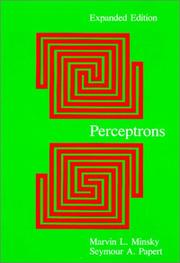
Minsky and Papert's book Perceptrons attacked the work of Frank Rosenblatt on Perceptrons and became the foundational work in the analysis of artificial neural networks. The book is controversial, as some claim it greatly discouraged research on neural networks in the 1970s and contributed to the so-called "AI winter". Minsky also developed several other AI models. His paper "A Framework for Representing Knowledge" created a new paradigm in knowledge representation. Perceptrons is now viewed as of more historical than practical interest, but his theory of frames was in wide use as of 1975.
Minsky's book Society of Mind describes how intelligence can emerge from the cooperation of many non-intelligent "agents".
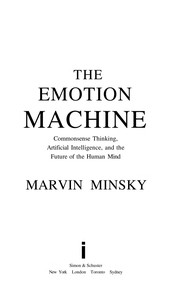
In 2006, Minsky published The Emotion Machine, a book that critiques many popular theories of how the human mind works, and suggests alternative theories, often replacing simple ideas with more complex ones.
以上文字摘自英文维基百科「Marvin Minsky」(有删节,去掉了参考文献等尾部小节),按 CC BY-SA 4.0 使用,作者为维基百科的各位编者。
资料卡
- 母语名
- Marvin Lee Minsky
- 出生
- 1927 年 8 月 9 日
- 出生地
- 纽约
- 逝世
- 2016 年 1 月 24 日
- 逝世地
- 波士顿
- 职业
- 数学家、计算机科学家、大学教师、人工智能研究者、自然科学家、讲师、哲学家
- 使用语言
- 英语
- 就读学校
- 哈佛大学(1946)、普林斯顿大学(1951)、伦理文化菲尔斯顿学校、菲利普斯学院、布朗克斯科学高级中学 等 6 项
- 领域
- 人工智能、认知科学、精神哲学、计算机科学
- 所属团体
- 美国国家科学院(1973)、美国文理科学院、美国国家工程院(1989)、美国人工智能协会、自由编程联盟 等 6 项
- 配偶
- Gloria Minsky
- 代表作
- 感知器、心智社会、情感机器、Computation: Finite and Infinite Machines
- 获奖
- 图灵奖(1969)、日本国际奖(1990)、IJCAI卓越研究奖(1991)、富兰克林研究所奖项(2001)、丹大卫奖(2014)、计算机先驱奖(1995)、R·W·伍德奖(2001)、BBVA基金会前沿奖(2013)、人工智能促进协会会士(1990)、怀疑调查委员会会员、名誉博士(1987);另有 4 项只有外文名
资料卡来自 Wikidata Q204815(CC0),众包数据,个别字段可能不全。
本站收录的作品(3)
作品年表(5 本)
本站书库里署名马文·闵斯基的书(Open Library 上至少 10 人加过书架的才收),按首版年份排(有本站书页的用 Wikidata 记的首版年,其余用 Open Library 的);年份偶尔记成后来的版本或译本,以原书为准。全部作品见 Open Library。
- 1967Computation: finite and infinite machines书架 17
- 1968Semantic information processing书架 15
- 1969感知器Perceptrons书架 23
- 1986心智社会The society of mind书架 74
- 2006情感机器The emotion machine书架 32