书单
百科
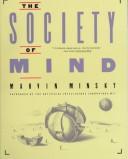
《心智社会》(英语:Society of Mind)是马文·闵斯基于1986年出版的哲学人文著作,在书中闵斯基一步一步地构建了一个人类智力的模型,该模型是由称为“智能体”(agent)的简单部分的交互作用建立起来的,而这些“智能体”本身是无意识的。
以上文字摘自维基百科「心智社会」(去掉了参考文献等尾部小节),按 CC BY-SA 4.0 使用,作者为维基百科的各位编者。
中文维基百科的条目比较短,下面附上英文维基百科的内容(英文原文):
The Society of Mind is both the title of a 1986 book and the name of a theory of natural intelligence as written and developed by Marvin Minsky.
In his book of the same name, Minsky constructs a model of human intelligence step by step, built up from the interactions of simple parts called agents, which are themselves mindless. He describes the postulated interactions as constituting a "society of mind", hence the title.
The book
The work, which first appeared in 1986, was the first comprehensive description of Minsky's "society of mind" theory, which he began developing in the early 1970s. It is composed of 270 self-contained essays which are divided into 30 general chapters. The book was also made into a CD-ROM version.
In the process of explaining the society of mind, Minsky introduces a wide range of ideas and concepts. He develops theories about how processes such as language, memory, and learning work, and also covers concepts such as consciousness, the sense of self, and free will; because of this, many view The Society of Mind as a work of philosophy.
The book was not written to prove anything specific about AI or cognitive science, and does not reference physical brain structures. Instead, it is a collection of ideas about how the mind and thinking work on the conceptual level.
The theory
Minsky first started developing the theory with Seymour Papert in the early 1970s. Minsky said that the biggest source of ideas about the theory came from his work in trying to create a machine that uses a robotic arm, a video camera, and a computer to build with children's blocks.
Nature of mind
A core tenet of Minsky's philosophy is that "minds are what brains do". The society of mind theory views the human mind – and any other naturally evolved cognitive system – as a vast society of individually simple processes known as agents. These processes are the fundamental thinking entities from which minds are built, and together produce the many abilities we attribute to minds. The great power in viewing a mind as a society of agents, as opposed to the consequence of some basic principle or some simple formal system, is that different agents can be based on different types of processes with different purposes, ways of representing knowledge, and methods for producing results.
This idea is perhaps best summarized by the following quote:
What magical trick makes us intelligent? The trick is that there is no trick. The power of intelligence stems from our vast diversity, not from any single, perfect principle. —Marvin Minsky, The Society of Mind, p. 308
以上文字摘自英文维基百科「Society of Mind」(去掉了参考文献等尾部小节),按 CC BY-SA 4.0 使用,作者为维基百科的各位编者。
资料卡
- 首次出版
- 1986 年
资料卡来自 Wikidata Q2414313(CC0),众包数据,个别字段可能不全。