 书单
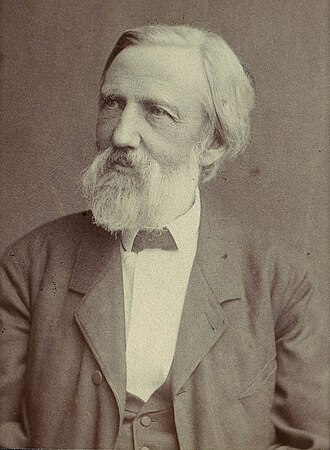
海因里希·霍夫曼
- 生卒
- 1809 – 1894
- 国籍
- 普鲁士王国、德国
- 外文名
- Heinrich Hoffmann
照片:作者不详,公有领域,来自维基共享资源「Heinrich Hoffmann1.jpg」(经缩小)。
生平与创作
这个词条暂时没有中文维基百科条目,下面是英文维基百科的内容(英文原文):
Heinrich Hoffmann (June 13, 1809 – September 20, 1894) was a German psychiatrist, who also wrote some short works including Der Struwwelpeter, an illustrated book portraying children misbehaving.
Early life and education
Hoffmann was born in Frankfurt on Main to an architect father, Philipp Jakob Hoffmann, who was responsible for the city's streets and waterways. Hoffmann's mother died when he was a baby. His father later married his mother's sister, Antoinette Lausberg, who was a loving and more than adequate mother to him. Lazy and easily distracted, Hoffmann at first struggled at school, but became a successful student after conforming to the strict discipline imposed by his demanding father. At university in Heidelberg, he immersed himself into the corps student culture. His zest for dueling was small, but owing to his sociability, good humour and wit, Hoffmann soon became the center of many social circles, a pattern that would later repeat itself in his hometown. His progress in his medical studies was slow because of the many distractions. To flee these, he left Heidelberg for Halle, where he concentrated on his studies under Professor Peter Krukenberg, the founder of a charity clinic. His first brush with medical practice coincided with a cholera outbreak in Halle. After getting his medical degree, he intended to spend a year in Paris (funded by the Frankfurt Bethmann Bank) to improve his knowledge of surgery. Due to the deteriorating health of his father, he had to return home early.
Family life
Hoffmann married Therese Donner and had three children by her, two of whom survived him, as did his wife. He was known to draw comic sketches for his children as well as for his wife. Karl Hessenberg, the mathematician, was his great-grandson.
Professional life as a physician and psychiatrist
Hoffmann worked for a pauper's clinic and had a private practice. He also taught anatomy at the Senckenberg Foundation. None of this paid very well, and when the Frankfurt lunatic asylum's previous doctor (who was a friend of his) retired in 1851, he was eager to take the post even though he had no expertise in psychiatry. This changed quickly, as his later competent publications in the field show. Hoffmann portrays himself as a caring, humane psychiatrist, who strove to be the sunshine in the life of his miserable patients. His gregarious personality may well have been popular with many of them. His statistical compilations show that up to 40% of the people with acute cases of what would today be called schizophrenia were discharged after a few weeks or months and stayed in remission for years and perhaps permanently. Always a skeptic, Hoffmann voices doubts whether this was due to any therapy he may have given them. Much of his energy from 1851 onwards went into campaigning for a new, modern asylum building with gardens in the city's green belt. He was successful and the new clinic was built at the site of today's Frankfurt University's Humanities campus. (The original building was demolished in the 1920s.)
Professional life as a writer
Hoffmann published poems and a satirical comedy before, in 1845, a publisher friend persuaded him to have a collection of illustrated children's verses printed, which Hoffmann had done as a Christmas present for his son. The book, later called Struwwelpeter after one of its anti-heroes, became popular with the public and had to be reprinted regularly; many foreign translations followed. "Struwwelpeter" was not perceived as cruel or overly moral by Hoffmann's contemporaries. The original title, "Funny stories and droll pictures", indicates that entertainment was at least partly the author's intention.
After the book's success, Hoffmann felt persuaded to write other children's books, of which only the first, König Nussknacker und der arme Reinhold, became popular. He also kept on writing satires and (often comic) poems for adults. His satires show his strong skepticism towards all kinds of ideology and his distaste for religious, philosophical, or political bigotry. Even in Germany, he is today largely remembered for his Struwwelpeter.
Hoffmann was a man of liberal sympathies, campaigned for the goal of a constitutional monarchy, participated in the Vorparlament, and joined the Freemasons but later left due to their refusal to admit Jews.
Pro-bono public activities
Hoffmann, a popular and well-connected figure in his hometown, became an active member of several non-political public bodies during his lifetime. Among them were the administration of the Städel and the Mozart Foundation (who funded Max Bruch, among others).
In popular culture
He wrote under the following names:
Polykarpus Gastfenger (The given name is the German version of that of a Christian martyr; the surname sounds like "Gastfänger", which could be translated as "guest-catcher".)
Heulalius von Heulenburg
Heinrich Hoffmann
Heinrich Hoffmann-Donner (The second half of the compound surname is the maiden name of his wife Therese. It would mean "thunder" as a common noun.)
Heinrich Kinderlieb (The surname means roughly "child-friendly"/"nice to children")
Reimerich Kinderlieb
Peter Struwwel (This name reverses the order of the components of "Struwwelpeter".)
Zwiebel (As a common noun, this would mean "onion")
In Frankfurt there is a Heinrich-Hoffmann-Museum.
He is the subject of the historical novel, 98 Reasons For Being, written by Clare Dudman.
He and his book Der Struwwelpeter are mentioned in The Office episode "Take Your Daughter to Work Day".
One of the short stories contained within Der Struwwelpeter, "Die Geschichte vom Daumenlutscher" or "The Story of Little Suck-a-Thumb" is the loose basis for the song "Scissor Man" by the British band XTC. The story involves a little boy whose punishment for sucking his thumbs is getting them cut off by the tailor. The song was more popularly covered by Primus.
Struwwelpeter's statue stands in the center of Frankfurt am Main, in Hoffmann's honour.
以上文字摘自英文维基百科「Heinrich Hoffmann (author)」(去掉了参考文献等尾部小节),按 CC BY-SA 4.0 使用,作者为维基百科的各位编者。
资料卡
- 母语名
- Heinrich Hoffmann
- 出生
- 1809 年 6 月 13 日
- 出生地
- 美因河畔法兰克福
- 逝世
- 1894 年 9 月 20 日
- 逝世地
- 美因河畔法兰克福
- 职业
- 作家、精神科医师、儿童文学作家、插画家、诗人、医生、剧本作者
- 使用语言
- 德语
- 写作语言
- 德语
- 就读学校
- 哈雷-维滕贝格大学、海德堡大学
- 代表作
- 蓬头彼得
资料卡来自 Wikidata Q215724(CC0),众包数据,个别字段可能不全。
本站收录的作品(1)
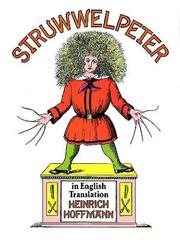
作品年表(1 本)
本站书库里署名海因里希·霍夫曼的书(Open Library 上至少 10 人加过书架的才收),按首版年份排(有本站书页的用 Wikidata 记的首版年,其余用 Open Library 的);年份偶尔记成后来的版本或译本,以原书为准。全部作品见 Open Library。
- 1845蓬头彼得Struwwelpeter书架 109