 书单
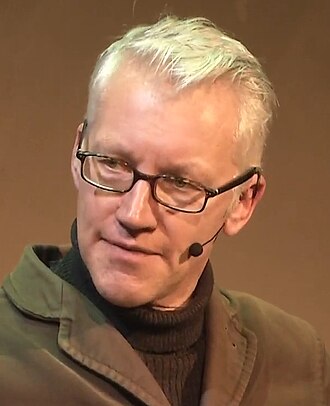
汤姆·霍兰
- 生卒
- 1968 –
- 国籍
- 英国
- 外文名
- Tom Holland
照片:De Balie,CC BY 3.0,来自维基共享资源「Writer Tom Holland, February 2020.jpg」(经缩小)。
生平与创作
这个词条暂时没有中文维基百科条目,下面是英文维基百科的内容(英文原文):
Thomas Holland (born 5 January 1968) is a British novelist, popular historian and podcaster.
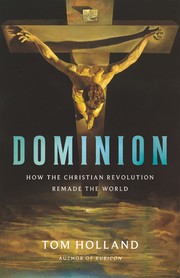
Originally a writer of Gothic fiction, he is the author of many books, including works of classical history. He is especially known for the book Dominion, on the Christian roots of Western morality.
He has worked with the BBC to create historical television documentaries and presented the radio series Making History. He co-hosts the podcast The Rest Is History with the historian Dominic Sandbrook; it is the highest-ranked UK history podcast on Spotify and Apple.
Early life and education
Born in 1968, Thomas Holland grew up in the village of Broad Chalke near the cathedral city of Salisbury in Wiltshire, the elder of two sons. His younger brother James Holland is an author whose focus is the Second World War. Holland has said that his two passions as a child were dinosaurs and ancient civilisations: "I had the classic small boy's fascination with dinosaurs – because they're glamorous, dangerous and extinct – and essentially the appeal of the empires of antiquity is much the same. There's a splendour and a terror about them that appealed to me – and that kind of emotional attachment is something that stays with you."
Holland attended Chafyn Grove preparatory school in Salisbury, and the independent Canford School, near Wimborne Minster, in Dorset. He then went on to Queens' College, Cambridge, graduating with a "double first" (first-class honours in both parts I and II of the course of study in the English Tripos), specialising in the works of Virgil and the English Romantic poets. He began working on a doctoral dissertation on Lord Byron at the University of Oxford, but soon quit after deciding that he was "fed up with universities and fed up with being poor" and instead began working.
Writing career
Novels
Holland's first books were Gothic horror novels about vampires, set in various time periods.
His first novel, The Vampyre: Being the True Pilgrimage of George Gordon, Sixth Lord Byron (1995), drew on his knowledge of Byron from his university studies and recast the 19th-century poet as a vampire. It was re-titled Lord of the Dead: The Secret History of Byron for the 1996 U.S. release. The Los Angeles Times called it "a good vampire yarn—elevated and elegant enough to make you feel you needn't conceal it behind the dust jacket of some self-help work, yet happily gory and perilous" although they felt "the newly plowed plot ground is sometimes hurried through as if to get to the scholarly stuff, where the author feels perhaps on more solid ground." Its sequel, Supping with Panthers, was published in 1996 (it was also re-titled for the U.S. release, as Slave of My Thirst).
Holland stayed with the supernatural horror genre for his next few books, continuing to use his knowledge of ancient cultures and settings. In Attis (1996) he took historical figures from the ancient Roman Republic like Pompey and the poet Catullus and put them in a modern setting among a string of brutal murders. He set 1997's Deliver Us From Evil in 17th-century England, with a man named Faustus leading an army of the undead. 1999's Sleeper in the Sands is set in Egypt, starting with the discovery of the Tomb of Tutankhamun in 1922 and travelling backward in time as a deadly secret is unveiled. Dominic Montserrat, an Egyptologist, wrote that Holland utilised the material of the Amarna period of Ancient Egypt "subtly and intelligently" and in a "deft and original way". Robert Macfarlane praised the book, writing that "This is high adventure with gothic edges and a black undertow, ballasted with serious historical research. Imagine Tintin and the Pharaohs, Dracula and Sherlock Holmes stirred together and shaken up".
Holland's last novel to date departed from the supernatural. The Bone Hunter (1999) is a thriller about the rivalry between 19th-century palaeontologists Edward Drinker Cope and Othniel Charles Marsh, around whom people begin dying.
Historical non-fiction books
Holland's interest in history was renewed after reading From Alexander to Actium by the historian Peter Green, as research for The Bone Hunter. Despite having no formal qualifications in either classics or history, he gave up writing fiction and turned to writing history.
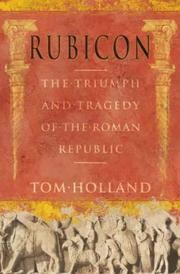
His first book of history, Rubicon: The Last Years of the Roman Republic, was published in 2003 and garnered positive reviews. It was called "gripping and hugely entertaining" by The Sunday Times, "informative, balanced and accessible" by BookPage, and "a model of exactly how a popular history of the classical world should be written" by The Guardian. Rubicon won the 2004 Hessell-Tiltman Prize, awarded to the best work of non-fiction of historical content. But the book also received reviews of a more negative tone, for example from Professor Ronald J. Weber of the University of Texas:
From the scholar's point of view the question is not whether Rubicon is a good book but whether it is a good history book. It lacks a thorough critical analysis of its primary sources. Also, Holland draws almost exclusively from written accounts, ignoring the physical remains of the period. His account focuses on politics over social and economic trends, and his consideration of the vast amounts of scholarship about the period is limited to a very narrow selection of work. The history students would do better with the 1995 reissue of Erich Gruen's The Last Generation of the Roman Republic. However, for casual readers this story goes well in a favorite chair in front of a warm fire with a hot drink.
Persian Fire (2005) is an account of the 5th-century B.C. Graeco-Persian Wars. It was reviewed positively by Paul Cartledge, a professor of Greek history at Cambridge, for The Independent: "If Persian Fire does not win the Samuel Johnson Prize, there is no justice in this world." Writing in The Sunday Telegraph, the historian Dominic Sandbrook called it "riveting" and praised the "enormous strengths" of the author. It won the Anglo-Hellenic League's 2006 Runciman Award.
以上文字摘自英文维基百科「Tom Holland (author)」(有删节,去掉了参考文献等尾部小节),按 CC BY-SA 4.0 使用,作者为维基百科的各位编者。
资料卡
- 出生
- 1968 年 1 月 5 日
- 出生地
- 牛津
- 职业
- 作家、历史学家、剧作者、表演艺术家、编剧、播客、有声书解说员、新闻工作者
- 使用语言
- 英语
- 写作语言
- 英语
- 就读学校
- 剑桥大学女皇学院、坎德福学校、Chafyn Grove School
- 代表作
- 卢比孔河:罗马共和国的衰亡、Persian Fire、In the Shadow of the Sword
- 获奖
- 皇家文学学会会员(2016)、朗西曼奖(2006);另有 1 项只有外文名
资料卡来自 Wikidata Q1236243(CC0),众包数据,个别字段可能不全。
本站收录的作品(4)
作品年表(4 本)
本站书库里署名汤姆·霍兰的书(Open Library 上至少 10 人加过书架的才收),按首版年份排(有本站书页的用 Wikidata 记的首版年,其余用 Open Library 的);年份偶尔记成后来的版本或译本,以原书为准。全部作品见 Open Library。
- 2003卢比孔河:罗马共和国的衰亡Rubicon书架 97
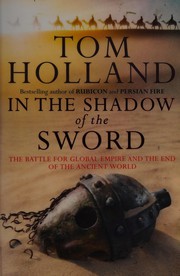
- 2012In the Shadow of the Sword书架 17
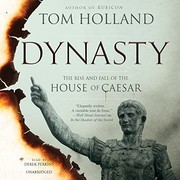
- 2015Dynasty书架 13
- 2019Dominion书架 53