书单
百科
这个词条暂时没有中文维基百科条目,下面是英文维基百科的内容(英文原文):
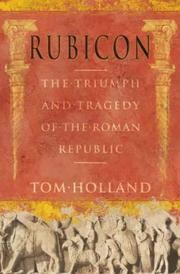
Rubicon: The Last Years of the Roman Republic, or Rubicon: The Triumph and Tragedy of the Roman Republic, is a popular history book written by Tom Holland, published in 2003.
The book tells the story of the end of the Roman Republic and the consequent establishment of the Roman Empire. The book takes its title from the river Rubicon in the northern Italian peninsula. In 49 BC, Julius Caesar crossed this river with his army and marched on Rome, breaking a sacred law of the Roman Republic and throwing the nation into a civil war.
Reception
The book won the 2004 Hessell-Tiltman Prize. The Hessell-Tiltman prize is awarded annually for a non-fiction book of specifically historical content. Entrants are to be books of high literary merit – that is, not primarily written for the academic market – and can cover all historical periods. It was also shortlisted for the Samuel Johnson Prize for the same year.
The Observer described the book as "a modern, well-paced and finely observed history which entertains as it informs... That he makes a complicated historical period comprehensible is a tribute to broad research." A reviewer in the German Damals magazine wrote that while the book contributed nothing essentially new it was still an asset for bringing a whole era back to life in a sovereign and coherent manner. Rubicon has received favorable reviews from the Houston Chronicle, The Seattle Times, the Los Angeles Times, and others.
以上文字摘自英文维基百科「Rubicon: The Last Years of the Roman Republic」(去掉了参考文献等尾部小节),按 CC BY-SA 4.0 使用,作者为维基百科的各位编者。
资料卡
- 原题
- Rubicon
- 原作语言
- 英语
- 首次出版
- 2003 年 8 月 28 日
- 体裁
- 历史类非虚构作品
- 所属系列
- History of Rome
- 续作
- Persian Fire
资料卡来自 Wikidata Q1917079(CC0),众包数据,个别字段可能不全。