书单
百科
这个词条暂时没有中文维基百科条目,下面是英文维基百科的内容(英文原文):
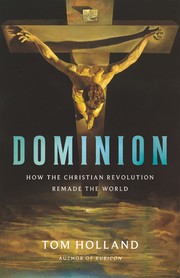
Dominion: The Making of the Western Mind (published as Dominion: How the Christian Revolution Remade the World in the United States) is a 2019 non-fiction history book by British author Tom Holland.
The book is a broad history of the influence of Christianity on the world, focusing on its impact on morality – from its beginnings to the modern day. According to the author, the book "isn’t a history of Christianity" but "a history of what's been revolutionary and transformative about Christianity: about how Christianity has transformed not just the West, but the entire world."
Holland states that Western morality, values and social norms ultimately are products of Christianity, saying "in a West that is often doubtful of religion's claims, so many of its instincts remain — for good and ill — thoroughly Christian". Holland further argues that concepts now usually considered non-religious or universal, such as secularism, liberalism, science, socialism and Marxism, revolution, feminism, and even homosexuality, "are deeply rooted in a Christian seedbed", and that the influence of Christianity on Western civilization has been so complete "that it has come to be hidden from view".
It was released to generally positive reviews.
Background
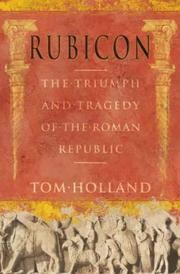
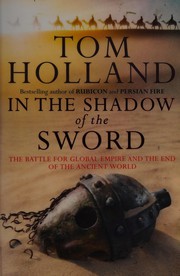
Tom Holland has previously written several historical studies on Rome, Greece, Persia and Islam, including Rubicon, Persian Fire, and In the Shadow of the Sword. According to Holland, over the course of writing about the "apex predators" of the ancient world, particularly the Romans: "I came to feel they were increasingly alien, increasingly frightening to me". "The values of Leonidas, whose people had practised a peculiarly murderous form of eugenics and trained their young to kill uppity Untermenschen by night, were nothing that I recognised as my own; nor were those of Caesar, who was reported to have killed a million Gauls, and enslaved a million more." This led him to investigate the process of change leading to today, concluding that "in almost every way, what makes us distinctive today reflects the influence over two thousand years of the Christian story".
Prefiguring the book, in 2016 Holland had penned an essay in the New Statesman describing how he had been "wrong about Christianity".
Overview
In Holland's view, pre-Christian societies and deities, such as in the Greco-Roman world, tended to focus on and glorify strength, might and power; this was inverted with the spread of Christianity, which proclaimed the primacy of the weak and suffering. Humanism, instead of springing from ancient Greek philosophy or Enlightenment thinking, "derives ultimately from claims made in the Bible: that humans are made in God's image; that his Son died equally for everyone; that there is neither Jew nor Greek, slave nor free, male nor female." The concept of human rights and equality, as well as solidarity with the weak against the strong, Holland argues, ultimately derive from the theology built on the teachings of Jesus and Paul the Apostle.
The success of what he calls the "Christian revolution" in changing our sensibilities, Holland argues, is evident in how complete its central claims now are taken for granted by "believers, atheists and those who never paused so much as to think about religion". Holland also argues that many of those who most clearly recognised the "radical" implications of Christianity, and its departure from earlier morality, were those fundamentally opposed to it – including Friedrich Nietzsche, the Marquis de Sade and the Nazi Party.
Reception
Terry Eagleton, writing for The Guardian, described the book as "an absorbing survey of Christianity's subversive origins and enduring influence" and an "illuminating study", concluding "Holland is surely right to argue that when we condemn the moral obscenities committed in the name of Christ, it is hard to do so without implicitly invoking his own teaching". Philosopher John Gray, writing for the New Statesman, called Dominion "a masterpiece of scholarship and storytelling". Gray wrote that: “Dominion surpasses Holland’s earlier books in its sweeping ambition and gripping presentation ... Holland comes into his own when he shows how Christianity created the values of the modern Western world…What makes the book riveting… is the devastating demolition job it does on the sacred history of secular humanism".
Other reviews were more mixed. A review in The Economist described Holland as a "superb writer", though also writing that "his theory has flaws", and that "correlation is not causation". Samuel Moyn, writing for the Financial Times, similarly stated that "Holland shines in his panoramic survey of how disruptive Christianity was for the ethical and political assumptions that preceded it", while criticising how "the illustration of the conquest of the west by Christianity risks becoming so total that it explains everything and nothing". The scholars James Orr, G.R. Evans and Samuel Moyn all regarded the book’s earlier sections on Ancient history as stronger than its later sections on more modern history. Evans wrote that: "The third section on “Modernitas” is perhaps the least successful, because of the degree of compression which it attempts".
以上文字摘自英文维基百科「Dominion (Holland book)」(有删节,去掉了参考文献等尾部小节),按 CC BY-SA 4.0 使用,作者为维基百科的各位编者。
资料卡
- 原题
- Dominion: The Making of the Western Mind
- 原作语言
- 英语
- 首次出版
- 2019 年 9 月 5 日
- 体裁
- 历史类非虚构作品
- 主题
- 基督教
资料卡来自 Wikidata Q118905709(CC0),众包数据,个别字段可能不全。