 书单
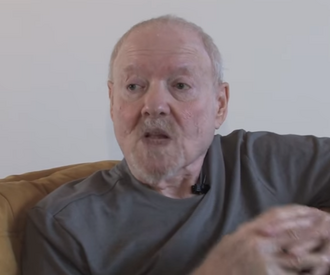
丹尼尔·奎因
- 生卒
- 1935 – 2018
- 国籍
- 美国
- 外文名
- Daniel Quinn
照片:Plasmodio,CC BY-SA 4.0,来自维基共享资源「Daniel Clarence Quinn.png」(经缩小)。
生平与创作
这个词条暂时没有中文维基百科条目,下面是英文维基百科的内容(英文原文):
Daniel Clarence Quinn (October 11, 1935 – February 17, 2018) was an American author (primarily, novelist and fabulist), cultural critic, and publisher of educational texts, best known for his novel Ishmael, which won the Turner Tomorrow Fellowship Award in 1991 and was published the following year. Quinn's ideas are popularly associated with environmentalism, though he criticized this term for portraying the environment as separate from human life, thus creating a false dichotomy, and the mainstream environmental movement as misguided and ultimately ineffective. Instead, Quinn referred to his philosophy as "new tribalism".
Biography
Daniel Quinn was born in Omaha, Nebraska, where he graduated from Creighton Preparatory School. He went on to study at Saint Louis University, at the University of Vienna, through IES Abroad, and at Loyola University Chicago, receiving a bachelor's degree in English in 1957. He delayed part of this university education, however, while a postulant at the Abbey of Our Lady of Gethsemani in Bardstown, Kentucky, where he hoped to become a Trappist monk; however his spiritual director, Thomas Merton, prematurely ended Quinn's postulancy. Quinn went into publishing, abandoned his Catholic faith, and married twice unsuccessfully, before marrying Rennie MacKay Quinn, his third and final wife of 42 years.
In 1975, Quinn left his career as a publisher to become a freelance writer. He is best known for his book Ishmael (1992), which won the Turner Tomorrow Fellowship Award in 1991. Several judges disputed giving the entire $500,000 award to Quinn for Ishmael, rather than dividing the money among several authors, though judge Ray Bradbury, for one, supported the decision. Ishmael became the first of a loose trilogy of novels by Quinn, including The Story of B and My Ishmael, all of which brought increasing fame to Quinn throughout the 1990s. He became a well-known author to followers of the environmental, simple living, and anarchist movements, although he did not strongly self-identify with any of these.
Quinn traveled widely to lecture and discuss his books. While response to Ishmael was mostly very positive, Quinn's ideas have inspired the most controversy with a claim mentioned in Ishmael but made much more forcefully in The Story of B's Appendix that the total human population grows and shrinks according to food availability and with the catastrophic real-world conclusions he draws from this.
In 1998, Quinn collaborated with environmental biologist Alan D. Thornhill in producing Food Production and Population Growth, a video elaborating in-depth the science behind the ideas he describes in his fiction.
Quinn's book Tales of Adam was released in 2005 after a long bankruptcy scuffle with its initial publisher. It is designed to be a look through the animist's eyes in seven short tales; Quinn first explores the idea of animism as the original worldwide religion and as his own dogma-free belief system in The Story of B and his autobiography, Providence: The Story of a Fifty-Year Vision Quest.
In February 2018, Quinn died of aspiration pneumonia in hospice care.
Philosophy and themes
Daniel Quinn was largely a philosophical fiction writer who explored the culturally biased world-view ("mythology", in his terms) driving modern civilization and its destruction of the natural world. He sought to recognize and criticize some of civilization's most unchallenged "myths", narratives, and assumptions, which he considered to include the following: that the Earth was made especially for humans, so humans are destined to conquer and rule it; that humans are innately and inevitably flawed; that humans are separate from and superior to nature (which Quinn called "the most dangerous idea in existence"); and that all humans must be made to live according to some one right way.
Quinn described civilization as primarily a single global economy and culture, whose total dependence on agriculture requires ever-more expansion, in turn generating ever-more population growth (an escalating vicious cycle he identifies as the "food race"). As a result, he viewed modern civilization, by definition, as unsustainable. He commonly analyzed and defended the effectiveness of traditional indigenous tribal societies—regarded by anthropological research as fairly egalitarian, ecologically well-adapted, and socially secure —as role models for developing a new diversity of workable human social structures in the future.
Quinn self-admittedly avoided presenting simplistic or universal solutions, though he strongly encouraged a worldwide paradigm shift away from the self-destructive myths of civilization and towards the values and organizational structures of a "new tribalism". He clarified that this did not refer to the old style of ethnic tribalism so much as new groupings of individuals as equals trying to make a living communally, while still subject to evolution by natural selection. He eventually named this hypothetical, gradual shift the "New Tribal Revolution". Quinn cautioned that his admiration for the sustainable lifestyles of indigenous tribes is not intended to encourage a massive "return" to hunting and gathering. Rather, he intended merely to acknowledge the enormous history of relative ecological harmony between humans and the rest of the environment (from which humans are never separate) and embrace the basic natural unit of a tribe as an effective model for human societies (just as the pack works for wolves, the hive works for bees, etc.).
Other common themes included ecology, environmental ethics, culture, and an in-depth look at human population dynamics. Although Quinn himself regarded the following associations as coincidental, his philosophy is sometimes compared with deep ecology, dark-green environmentalism, or anarcho-primitivism.
以上文字摘自英文维基百科「Daniel Quinn」(有删节,去掉了参考文献等尾部小节),按 CC BY-SA 4.0 使用,作者为维基百科的各位编者。
资料卡
- 母语名
- Daniel Quinn
- 出生
- 1935 年 10 月 11 日
- 出生地
- 奥马哈
- 逝世
- 2018 年 2 月 17 日
- 逝世地
- 休斯敦
- 职业
- 作家、小说家、自传作者、未来学家
- 使用语言
- 英语
- 就读学校
- 克里顿预备学校
- 领域
- 哲学与文学
资料卡来自 Wikidata Q546511(CC0),众包数据,个别字段可能不全。
本站收录的作品(3)
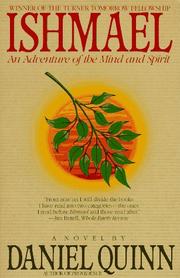
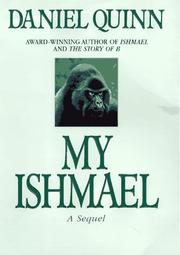
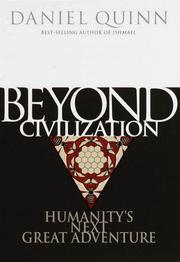
作品年表(4 本)
本站书库里署名丹尼尔·奎因的书(Open Library 上至少 10 人加过书架的才收),按首版年份排(有本站书页的用 Wikidata 记的首版年,其余用 Open Library 的);年份偶尔记成后来的版本或译本,以原书为准。全部作品见 Open Library。
- 1991Ishmael书架 160
- 1996The story of B书架 10
- 1997My Ishmael书架 25
- 1999超越文明Beyond civilization书架 12