书单
百科
这个词条暂时没有中文维基百科条目,下面是英文维基百科的内容(英文原文):
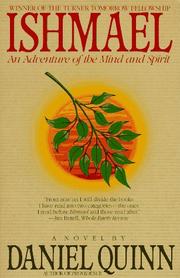
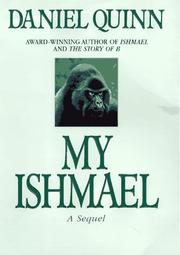
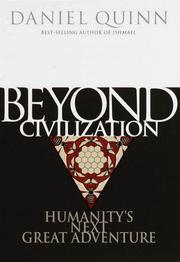
Beyond Civilization (subtitled Humanity's Next Great Adventure) is a book by Daniel Quinn written as a non-fiction follow-up to his acclaimed Ishmael trilogy—Ishmael, The Story of B, and My Ishmael—as well as to his autobiography, Providence: The Story of a Fifty-Year Vision Quest.
Beyond Civilization is written both to illuminate further the arguments and ideas made in his previous books and as a sort of guide to offer possible solutions to the problems he sees with the current state of civilization.
Beyond Civilization is Quinn's foremost text on new tribalism. The book contains one-page explorations into a variety of topics, in the form of reflections, parables, autobiographical accounts, essay-style writings, and deliberate clarifications of ideas introduced in his previous books.
Synopsis
Within the main body of Beyond Civilization, each page contains its own chapter-like heading and a few paragraphs exploring the topic of that heading. The book as whole is divided into seven parts:
Part 1: Closing In on the Problem
Quinn states his reasons for writing the book and focuses on clarifying his idea in The Story of B that "If the world is saved, it will not be by old minds with new programs but by new minds with no programs at all". He articulates how successful situations often have no visible indicators and that this is true in the community of life whose successes, in general, through natural selection are easy to overlook. He expands upon the nature of his idea of a cultural "vision", including how such a vision can go wrong and how a successful vision results in an easily overlooked lack of symptoms such as social problems. He also introduces Richard Dawkins's concept of the meme, which he merges into the discourse of his own philosophy.
Part 2: Closing In on the Process
Quinn discusses the memes that are regarded as infallible within the own world-dominating culture. These range from "Growing all your own food is the best way to live" to "Civilization must continue at ANY cost and must not be abandoned under ANY circumstance". He explores the history of tribal societies who developed civilization by beginning to take up full-time agriculture (for example, the Maya and the Olmec), but who unlike modern society realized the failures of civilization and abandoned it in favor of a return to tribalism. Quinn finds it peculiar that the working masses in modern culture have often historically been moved to rebellion against their hierarchal oppressors but never moved to simply walking away from the system of hierarchy itself, which will lead time after time to the majority's displeasure. He also makes use of an analogy of "pyramid-building" to represent the idea of modern culture's people perpetuating a system which repeatedly fails them because they see no alternative: they think they must continue to "build pyramids" even when they overthrow the despots who originated such an idea. He claims that they also see themselves as having no choice in the matter, as if "pyramid-building" is somehow inherently a part of human nature.
Part 3: Walking Away from the Pyramid
Quinn clarifies that he does not mean to say tribalism is perfect, but it is a more workable system than civilization and is in accord with natural selection. He claims also that tribes are not inherently a matter of "spears and caves" but that some circuses or traveling shows still function as tribes, even today. He also chronicles the passage of a society from one practicing tribalism to one practicing hierarchalism. He states that modern culture uses three reasons to justify its resolve in not abandoning civilization: the just-world fallacy, the possibility for transcendence, and the capacity for revolution (which, he argues, merely shuffles the hierarchy around but does not eliminate it altogether).
Part 4: Toward the New Tribalism
Quinn states that abandonment is a more workable technique to be rid of hierarchy when compared with violent upheaval; this is because, unlike with upheaval, the people in power have no way to defend themselves against abandonment. He also claims that people do not (and cannot) transform a culture toward tribalism in one single event and, therefore, do not need to wait for conditions to improve before starting to act more tribally (for example, by first ending sexism or racism before moving on to tribal endeavors). Quinn proposes an "incremental revolution" in which groups of people begin to form tribes little by little. These tribes, he speculates, would not be based on shared ethnicity like their historical precedents, but rather, on shared occupational interests. In addition, he proposes that no move beyond civilization could cause greater harm to the environment than modern society already does, which he thus terms the "culture of maximum harm", since it incites each and all of its members to attain the highest, most world-destructive point of affluence.
Part 5: The Tribe of Crow
Quinn goes into detail about homelessness. He comments on modern culture's paradox of aiming to both aid the survival of the homeless, by trying to temporarily house and feed them, but also to thwart their survival, by outlawing and demonizing many of their typical survival-based activities. The homeless perform many of these activities merely in order to continue surviving while remaining outside a system that is clearly failing them: creating makeshift shelters in parks, dumpster diving for food, etc. Quinn proposes that city officials should help the homeless by listening to their wants rather than trying to end homelessness altogether by ignoring and hindering their survival tactics in a foolish effort to somehow frustrate them back into the work-force. He also provides a few quotations from homeless people who explain their pleasant sense of cohesion and of departure from restrictive social obligations in their current condition.
以上文字摘自英文维基百科「Beyond Civilization」(有删节,去掉了参考文献等尾部小节),按 CC BY-SA 4.0 使用,作者为维基百科的各位编者。
资料卡
- 原题
- Beyond Civilization
- 原作语言
- 英语
- 首次出版
- 1999 年
- 体裁
- 非虚构作品
- 首版出版社
- Three Riverst出版
- 前作
- Ishmael、B的故事 等 3 项
资料卡来自 Wikidata Q4899950(CC0),众包数据,个别字段可能不全。