书单
百科
这个词条暂时没有中文维基百科条目,下面是英文维基百科的内容(英文原文):
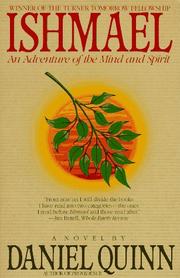
Ishmael is a 1992 philosophical novel by Daniel Quinn. The novel examines the hidden cultural biases driving modern civilization and explores themes of ethics, sustainability, and global catastrophe. Largely framed as a Socratic conversation between two characters, Ishmael aims to expose that several widely accepted assumptions of modern society, such as human supremacy, are actually cultural myths that produce catastrophic consequences for humankind and the environment. The novel was awarded the $500,000 Turner Tomorrow Fellowship Award in 1991, a year before its formal publication.
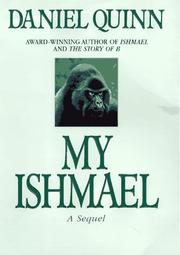
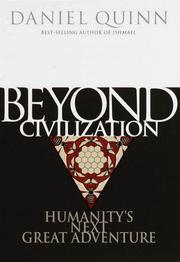
Ishmael is part of a loose trilogy that includes The Story of B (a 1996 spiritual sequel), and My Ishmael (a 1997 "sidequel.") Quinn also details how he arrived at the ideas behind Ishmael in his 1994 autobiography, Providence: The Story of a Fifty-Year Vision Quest. Yet another related book is Quinn's 1999 short treatise, Beyond Civilization.
Plot summary
Implicitly set in the early 1990s, Ishmael begins with a newspaper advertisement: "Teacher seeks pupil. Must have an earnest desire to save the world. Apply in person". The nameless narrator and protagonist thus begins his story, telling how he first reacted to this ad with scorn because of the absurdity of "wanting to save the world", a notion he feels that he once naïvely embraced himself as an adolescent during the counterculture movement of the 1960s. Feeling he must discover the ad's publisher, he follows its address, surprisingly finding himself in a room with a live gorilla. On the wall is a sign with a double meaning: "With man gone, will there be hope for gorilla?" Suddenly, the gorilla, calling himself Ishmael, begins communicating to the man telepathically. At first baffled by this, the man learns the story of how the gorilla came to be here and soon accepts Ishmael as his teacher, regularly returning to Ishmael's office. The novel continues from this point mainly as a dialogue between Ishmael and his new student.
Ishmael's life began in the African wilderness, though he was captured at a young age and has lived mostly in a zoo and a menagerie (before living permanently in a private residence), which caused Ishmael to start thinking about ideas that he never would have thought about in the wild, including self-awareness, human language and culture, and what he refers to as the subject he specifically teaches: "captivity". The narrator admits to Ishmael that he has a vague notion of living in some sort of cultural captivity and being lied to in some way by society, but he cannot articulate these feelings fully.
The man frequently visits Ishmael over the next several weeks, and Ishmael proceeds to use the Socratic method to deduce with the man what "origin story" and other "myths" modern civilization subscribes to. Before proceeding, Ishmael lays down some basic definitions for his student:
A story is an interrelation between the gods, humans, and the earth—with a beginning, middle, and end.
To enact is to behave in such a way to make a story (however true or not) come true.
A culture is a people who are enacting a story.
Takers are "civilized" people, particularly, members of the culture that first emerged in an Agricultural Revolution starting 10,000 years ago in the Near East that has developed into today's globalized society (the culture of Ishmael's pupil and, presumably, the reader).
Leavers are people of all other non-civilized cultures existing in the past and the present; often derogatorily referred to by Takers as "primitive".
At first, the narrator is certain that civilized people no longer believe in any "myths", but Ishmael proceeds to gradually tease from him several hidden but widely accepted premises of "mythical" thinking being enacted by the Takers:
Humans (especially Takers) are the pinnacle of evolution.
The world was made for humans, and humans are thus destined to conquer and rule the world.
This conquest is meant to bring about a paradise, as humans increase their mastery over controlling nature.
However, humans are always failing in this conquest because they are flawed beings, who are unable to ever obtain the knowledge of how to live best.
Therefore, however hard humans labor to save the world, they are just going to go on defiling and destroying it.
Even so, civilization—the great human project of trying to control the whole world—must continue, or else humans will go extinct.
Ishmael points out to his student that when the Takers decided all of this, especially the idea that there is something fundamentally wrong with humans, they took as evidence only their own particular culture's history: "They were looking at a half of one percent of the evidence taken from a single culture. Not a reasonable sample on which to base such a sweeping conclusion".
On the contrary, Ishmael asserts that there is nothing inherently wrong with humans and that a story that places humans in harmony with the world will cause humans to enact this harmony, while a destructive story such as this will cause humans to destroy the world, as humans are doing now. Ishmael goes on to help his student discover that, contrary to this Taker world-view, there is indeed knowledge of how humans should live: biological "laws" that life is subject to, discernible by studying the ecological patterns of other living things. Together, Ishmael and his student identify one set of survival strategies that appear to be true for all species (later dubbed the "law of limited competition"): in short, as a species, "you may compete to the full extent of your capabilities, but you may not hunt down competitors or destroy their food or deny them access to food. In other words, you may compete but you may not wage war". All species inevitably follow this law, or as a consequence go extinct; the Takers, however, believe themselves to be exempt from this law and flout it at every point, which is therefore rapidly leading humanity towards extinction.
以上文字摘自英文维基百科「Ishmael (Quinn novel)」(有删节,去掉了参考文献等尾部小节),按 CC BY-SA 4.0 使用,作者为维基百科的各位编者。
资料卡
- 原题
- Ishmael
- 原作语言
- 英语
- 首次出版
- 1991 年
- 作品形式
- 长篇小说
- 续作
- B的故事、My Ishmael 等 3 项
- 主题
- 世界历史、社会
资料卡来自 Wikidata Q206503(CC0),众包数据,个别字段可能不全。
改编作品
电影1
- 《本能反应》Instinct
名单来自 Wikidata(CC0):只列条目里写明「改编自 / 取材于」这本书的作品,不按名字猜;众包数据,可能不全。