 书单
Brian O'Nolan
- 生卒
- 1911 – 1966
- 国籍
- 爱尔兰
生平与创作
这个词条暂时没有中文维基百科条目,下面是英文维基百科的内容(英文原文):
Brian O'Nolan (Irish: Brian Ó Nualláin; 5 October 1911 – 1 April 1966), whose pen names included Flann O'Brien, was an Irish Civil Service official, novelist, playwright and satirist, who is now considered a major figure in twentieth-century Irish literature. Born in Strabane, County Tyrone, he is regarded as a key figure in modernist and postmodern literature. His four English-language novels, At Swim-Two-Birds (1939), The Hard Life (1961), The Dalkey Archive (1964) and The Third Policeman (1967), were published under the pen name Flann O'Brien. His many satirical columns in The Irish Times and an Irish-language novel, An Béal Bocht (1941), were written under the name Myles na gCopaleen.
O'Brien's novels have attracted a wide following both for their unconventional humour and as prominent examples of modernist metafiction. As a novelist, O'Brien was influenced by James Joyce. He was nonetheless sceptical of the "cult" of Joyce, saying "I declare to God if I hear that name Joyce one more time I will surely froth at the gob."
Biography
Family and early life
O'Brien's father, Michael Vincent O'Nolan, was an official in HM Customs, a role that required frequent moves between cities and towns in England, Scotland and Ireland. Although of apparently trenchant Irish republican views, because of his role and employment he needed to be discreet about them. At the formation of the Irish Free State in 1921, O'Nolan senior joined the Irish Revenue Commissioners.
O'Brien's mother, Agnes (née Gormley), was also from an Irish nationalist family in Strabane, and this largely nationalist and Catholic town formed somewhat of a base for the family during an otherwise peripatetic childhood. Brian was the third of 12 children: Gearóid, Ciarán, Roisin, Fergus, Kevin, Maeve, Nessa, Nuala, Sheila, Niall, and Micheál (in that period, known as the Gaelic Revival, giving one's children Gaelic names was something of a political statement). Though relatively well-off and upwardly mobile, the O'Nolan children were home-schooled for part of their childhood using a correspondence course created by his father, who would send it to them from wherever his work took him. It was not until his father was permanently assigned to Dublin that Brian and his siblings regularly attended school.
School days
O'Brien attended Synge Street Christian Brothers School, Dublin, of which his novel The Hard Life contains a semi-autobiographical depiction. The Christian Brothers in Ireland had a reputation for excessive, prolific and unnecessary use of violence and corporal punishment, which sometimes inflicted lifelong psychological trauma upon their pupils.
Blackrock College, however, where O'Brien's education continued, was run by the Holy Ghost Fathers, who were considered more intellectual and less likely to use corporal punishment against their students. Blackrock was, and remains, a very prominent school, having educated many of the leaders of post-independence Ireland, including presidents, taoisigh (prime ministers), government ministers, businessmen and the elite of "Official Ireland" and their children.
O'Brien was taught English by the President of the College, and future Archbishop, John Charles McQuaid.
According to Farragher and Wyer:
Dr McQuaid himself was recognised as an outstanding English teacher, and when one of his students, Brian O'Nolan, alias Myles na gCopaleen, boasted in his absence to the rest of the class that there were only two people in the College who could write English properly, namely, Dr McQuaid and himself, they had no hesitation in agreeing. And Dr McQuaid did Myles the honour of publishing a little verse by him in the first issue of the revived College Annual (1930)—this being Myles' first published item.
The poem itself, "Ad Astra", read as follows:
Student years
O'Brien wrote prodigiously during his years as a student at University College Dublin (UCD), which was then situated in various buildings around Dublin's south city centre (with its numerous pubs and cafés). There he was an active, and controversial, member of the well-known Literary and Historical Society. He contributed to the student magazine, called in Irish Comhthrom Féinne (Fair Play), under various guises, in particular the pseudonym Brother Barnabas. Significantly, he composed a story during this same period titled "Scenes in a Novel (probably posthumous) by Brother Barnabas", which anticipates many of the ideas and themes later to be found in his novel, At Swim-Two-Birds. In it, the putative author of the story finds himself in riotous conflict with his characters, who are determined to follow their own paths regardless of the author's design. For example, the villain of the story, one Carruthers McDaid, intended by the author as the lowest form of a scoundrel, "meant to sink slowly to absolutely the last extremities of human degradation", instead ekes out a modest living selling cats to elderly ladies and begins covertly attending Mass without the author's consent. Meanwhile, the story's hero, Shaun Svoolish, chooses a comfortable, bourgeois life rather than romance and heroics:
'I may be a prig', he replied, 'but I know what I like. Why can't I marry Bridie and have a shot at the Civil Service?'
'Railway accidents are fortunately rare', I said finally, 'but when they happen they are horrible. Think it over.'
In 1934 O'Brien and his university friends founded a short-lived literary magazine called Blather. The writing here, though clearly bearing the marks of youthful bravado, again somewhat anticipates O'Brien's later work, in this case, his "Cruiskeen Lawn" column as Myles na Gopaleen:
Blather is here. As we advance to make our bow, you will look in vain for signs of servility or of any evidence of a desire to please. We are an arrogant and depraved body of men. We are as proud as bantams and as vain as peacocks.
Blather doesn't care. A sardonic laugh escapes us as we bow, cruel and cynical hounds that we are. It is a terrible laugh, the laugh of lost men. Do you get the smell of porter?
以上文字摘自英文维基百科「Flann O'Brien」(有删节,去掉了参考文献等尾部小节),按 CC BY-SA 4.0 使用,作者为维基百科的各位编者。
资料卡
- 母语名
- Brian Ó Nualláin
- 笔名
- Myles na gCopaleen、Flann O'Brien、Myles na Gopaleen、Brother Barnabas 等 6 项
- 出生
- 1911 年 10 月 5 日
- 出生地
- 斯特拉班
- 逝世
- 1966 年 4 月 1 日
- 逝世地
- 都柏林
- 职业
- 作家、小说家、新闻工作者、剧作家
- 使用语言
- 爱尔兰语、英语
- 写作语言
- 爱尔兰语
- 就读学校
- 都柏林大学
- 领域
- 现代主义文学、后现代主义文学、散文、戏剧、讽刺 等 6 项
- 代表作
- At Swim-Two-Birds、The Third Policeman、An Béal Bocht、The Hard Life、The Dalkey Archive
资料卡来自 Wikidata Q469093(CC0),众包数据,个别字段可能不全。
本站收录的作品(1)
作品年表(4 本)
本站书库里署名Brian O'Nolan的书(Open Library 上至少 10 人加过书架的才收),按首版年份排(有本站书页的用 Wikidata 记的首版年,其余用 Open Library 的);年份偶尔记成后来的版本或译本,以原书为准。全部作品见 Open Library。
- 1939At Swim-Two-Birds书架 53
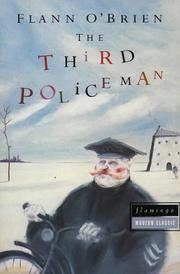
- 1967The Third Policeman书架 68
- 1967The Third Policeman书架 10
- 2007Third Policeman书架 10